Most ant problems in Phoenix are not a kitchen problem. They are a foundation problem that ends in the kitchen. Find the gap, close it correctly, and the trail stops being an argument you have every week.
Why Phoenix homes leak at the foundation line
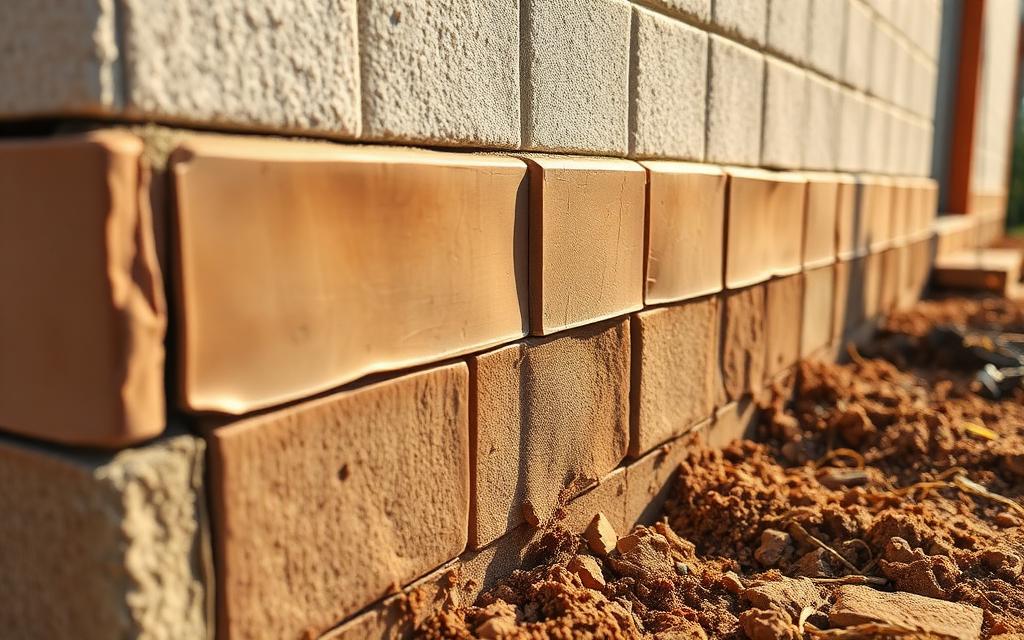
Valley homes are typically slab-on-grade with a stucco wall sitting on a weep screed. That screed is designed to let moisture escape — which means there is a deliberate, continuous opening running around your house at ground level. Add expansion and contraction from 40-degree daily swings and irrigation running against the slab, and small gaps open up along the seam.
Finding the actual entry
Follow the trail backwards, not forwards. Ants lay a pheromone line and stick to it, so the workers you see on the counter will lead you to a wall, then to a baseboard, then outside to a specific point at the foundation. Do it in the early morning while the trail is busiest.
Sealing it so it stays sealed
- Clean the seam first — a wire brush and a blow-out with compressed air. Sealant over dust fails within a season.
- Use a paintable exterior-grade polyurethane or hybrid sealant, not interior acrylic caulk. It has to survive UV and heat.
- Never seal the weep screed shut along its whole length. Close the specific gaps and keep the drainage path open, or you trade an ant problem for a moisture problem.
- Backer rod first for anything wider than about 6 mm, then sealant over it.
Break the trail, not just the ants
Wiping the counter is not enough — the pheromone line survives on the wall and the skirting. Clean the whole run with a mild detergent or a vinegar solution so the next scouts have nothing to follow. If the line comes straight back, the colony is established and ant control covers what changes then.
The part homeowners usually miss
Sealing stops entry, but it does not touch the colony. Fire, pavement, and ghost ants all nest outside and will simply test another seam. Colony-level baiting alongside the seal is what actually ends it — the workers carry the bait home, and the pressure at the wall drops instead of moving three feet sideways.
Keep irrigation off the slab
Drip emitters running right against the foundation keep the soil damp year-round, which is exactly what ants want. Move emitters at least 30 cm out from the wall and the whole foundation line becomes much less attractive.
What that gap actually is, and why you must not just fill it
Before you seal anything, it is worth knowing what you are looking at, because the instinct — grab a tube of caulk and close it — causes a more expensive problem than the one it solves.
Stucco is not waterproof. It is a cladding that will absorb and pass water, and every stucco wall is built assuming some water will get behind it. Underneath the stucco there is a water-resistive barrier, and at the bottom of the wall there is a metal weep screed: an edge with a lip and a row of openings. Water that gets behind the finish runs down the barrier, reaches the screed and drains out through those openings.
Fill them with caulk or expanding foam and the water has nowhere to go. It sits in the base of the wall, and over a few seasons you get exactly what you would expect — staining, deteriorating stucco at the base, damp framing, and a repair bill considerably larger than a pest problem. So the rule for this whole job is simple: screen the gap, never block it.
Finding the line on your own house
Go outside and run your hand along the very bottom of the stucco. On most Phoenix homes built from the 1980s onward you will feel a metal edge a few inches above the soil or gravel, with a slight lip and small openings behind it. That is the weep screed.
If you cannot find it, one of two things is happening. On older block construction there may not be one, and the entries are elsewhere — at the block cells, the sill plate and the utility penetrations. Or, more often, it is buried. Landscaping gravel, raised planting beds, added concrete or years of soil creep have covered it. That is worth knowing about for reasons well beyond pests: a buried weep screed cannot drain, and stucco held against damp soil deteriorates. Pulling the grade back down is the fix, and it is the same fix that closes the pest route.
Screening it so it stays sealed
The method is straightforward and the materials are cheap. What matters is being thorough, because insects only need the section you skipped.
- Clean the line first. Brush out the gravel, cobwebs and dust along the whole run. You cannot see what you are sealing through a layer of debris, and nothing adheres to it either.
- Use stainless or copper mesh, not steel wool. Steel wool rusts within a season here and stains the wall it is packed into. Fine stainless mesh or copper mesh holds indefinitely.
- Cut strips slightly oversize and push them in. The mesh should sit inside the opening, held by friction, leaving the drainage path clear behind it. It is a filter, not a plug.
- Where a gap is too large for mesh alone, back it with quarter-inch hardware cloth cut to fit, then finish with the finer mesh.
- Do the whole perimeter, including behind the AC unit, under the patio slab edge, along the side yard nobody walks down, and behind stored items. That side yard is where most people stop.
Work in daylight and kneel down. Standing up and looking along the wall, you will miss half of it.
The part that undoes all your work: grade and irrigation
Sealing the wall and then keeping the soil wet against it is a job half done, and it is the most common reason this work does not hold.
Ground should fall away from the house, not towards it. Where it does not, you get water sitting against the foundation after every irrigation cycle, and that water does two things: it draws in everything that needs moisture — roaches, crickets, earwigs, silverfish and the scorpions that eat them — and it keeps the soil at the base of the wall soft and workable, which is precisely the condition subterranean termites need to build up to your timber.
- Move drip emitters and spray heads away from the wall. A head that hits the stucco is watering the building, not the plant.
- Fix leaking valves and bubblers rather than living with them. A slow leak beside a foundation is a permanent invitation.
- Pull mulch, bark and dense ground cover back off the wall. Mulch against stucco holds moisture and gives cover for everything travelling along the line.
- Keep gravel below the weep screed, not piled over it.
- Do not plant anything that will grow to touch the wall. Living branches against stucco are a bridge and a shade line at the same time.
Everything else along the same line
The weep screed is the headline, but the base of the wall has several other openings that all deserve ten minutes.
- Hose bibs. Drilled oversize, almost never sealed properly, and usually damp. Backer rod then exterior sealant.
- AC line sets and condensate lines. The foam collar perishes in the sun within a few years and leaves a hole straight into the wall cavity.
- Electrical and gas penetrations, and irrigation valve wiring. Same treatment, same neglect.
- Expansion joints where a patio or driveway meets the house. The filler shrinks and lifts, opening a channel along the slab edge.
- The garage slab-to-wall junction, which on many homes is open into the framed wall above.
- Dryer and bathroom vent terminations, where cracked plastic louvres stick open.
Tools and materials
None of this is specialist. A stiff brush, a utility knife, tin snips, a caulking gun, a headtorch, gloves and knee protection cover the labour. For materials: fine stainless or copper mesh, quarter-inch hardware cloth for the larger openings, backer rod in a couple of diameters, a good exterior-grade sealant rated for masonry and UV, a garage door bottom seal and corner blocks, and door sweeps. Expect a full perimeter on an average single-storey home to take most of a weekend the first time.
When to stop and call someone
Hand this over if the weep screed is buried under concrete rather than gravel, if the stucco at the base is already crumbling or stained, if you find mud tubes on the footing while you are down there, or if the entry point turns out to be at the roof line rather than the ground. The first three are building problems that a sealant tube will not fix, and the fourth needs a ladder and a different approach. Other seasonal guides are collected on the blog.
Scorpion control and rodent control both start with this same line, and termite work is what mud tubes on a footing lead to.
If your house is block rather than stucco-over-frame
Plenty of the Valley's older housing — much of central and south Phoenix, older Mesa, Glendale and Tempe — is painted concrete block rather than stucco over a framed wall. There is no weep screed to screen, and the entry points sit in different places.
- The block cells themselves. Concrete block is hollow. Where the top course is open, or a cell has been broken during a renovation, the wall is a vertical highway from the ground to the roof space.
- The sill plate line. Where the roof framing sits on the block, the gap between the timber and the masonry is often open, sometimes along a whole elevation.
- Old penetrations. Forty years of cable runs, swamp cooler lines, disused gas pipes and abandoned conduit leave holes that nobody filled when the service was removed. Look for the ones that are no longer connected to anything.
- Mortar joints and settlement cracks. Fine on a wall in good order; a real route where the wall has moved.
- Window and door frames. Original metal frames in older block homes rarely seal well against the masonry.
The materials are the same — mesh, hardware cloth, backer rod, exterior sealant — but on block you are usually filling rather than screening, because you are closing a structural void rather than a designed drainage gap. The exception is any opening that is deliberately there for ventilation, such as attic or crawl vents, which get backed with quarter-inch hardware cloth and left open.
Checking your own work
Sealing feels finished long before it is. These four checks catch most of what gets missed, and they take about half an hour between them.
- The daylight test. Close every exterior door on a bright afternoon and look from inside. Any light along the bottom or the sides is a gap. Do the garage-to-house door as well; it is the one everyone forgets.
- The paper test. Close a door on a sheet of paper and pull. If it slides out without resistance, the seal is not touching, whatever it looks like.
- The night walk. Go round the outside after dark with a torch held flat against the wall, sweeping along the line. Raking light picks up gaps and shadows that a torch pointed straight at the wall completely hides.
- The re-check. Come back to the whole perimeter after one Phoenix summer. Sealant that was not rated for UV will have cracked, foam collars will have perished, and door sweeps take a set in the heat. This is a maintenance line, not a one-off job.
Write down what you sealed and where. In a year's time you will not remember, and knowing which sections are original and which you did makes the re-check far quicker.
What sealing the foundation line will not do
It is the highest-value job on the house, and it is still only part of the picture. Being clear about the limits saves you from concluding it did not work.
It does nothing about anything already inside — the spring scorpion guide covers what to do about the ones already in the house, and the kitchen guide does the same indoors. Sealing a wall with a population living in it changes what gets in next; it does not remove what is there now. On a rodent job in particular, sealing without trapping first is how people end up with something dead in a wall cavity.
It does not close the roof line. Roof rats, and a good share of scorpions, come in at the tile edge, the vent penetrations and the gable vents rather than at the ground. If you have sealed the base thoroughly and activity has not changed, look up.
It does not stop termites. Subterranean termites travel through soil and build their own tunnels up a footing; they are not using the gaps you just closed. Older housing changes this picture: parts of Glendale sit on raised floors over crawl spaces, so the sealing job starts underneath the house rather than at the skirting. If you turn something up while you are down there and cannot place it, the Arizona spider guide is the quickest way to rule out the ones that worry people, or send us a photograph. What the same walk-round does give you is the chance to spot mud tubes early, which is worth far more than the sealing itself.
And give it a few weeks before you judge it. You are cutting off recruitment, not clearing the property, so the change shows up as fewer new sightings over a month rather than silence the following night.
Foundation sealing questions we get asked
Will sealing this line keep scorpions out as well?
It helps a great deal, because they use the same route. The screed line is one of the two or three ways anything at ground level gets from the soil into a wall cavity, so closing it properly works against several things at once rather than only the trail you were chasing. It is the single reason this job is worth more than the afternoon it costs. See scorpion control for the rest of that picture.
How long does the seal last in Phoenix sun?
Anything on a south or west elevation lives a harder life than the product label assumes. Check it once a year, in autumn, and look for shrinkage at the ends of a run and chalking on the surface rather than obvious holes. Repairs are small if you catch them early and a whole re-run if you do not.
Do I have to do the whole perimeter, or only where I see them?
Start where the evidence is, but accept that a partial job moves the problem rather than ending it. Insects do not need the nearest opening, only an opening, so sealing the kitchen wall often just relocates the trail to the far side of the house. If you are going to do it at all, plan on finishing the run even if it takes two weekends.
Is weep screed the same as the gap under my siding?
Not quite, although they do the same job. Weep screed is the metal edge at the bottom of a stucco wall, and the gap you can see is deliberate drainage. Siding has its own equivalent detail at the bottom course. Either way, the rule is identical: it exists to let water out, so it must be screened rather than filled.
I rent. Is this something I am allowed to do?
Screening and a tidy bead of sealant are modest enough that most landlords are glad of it, but ask first and put the request in writing, because you are altering the building envelope. The parts you can do without asking anybody are the ones that are not attached to the house at all: moving stored items off the wall, pulling gravel back, and fixing whatever is wetting the ground.
Will they just find another way in?
Some will, and that is not a reason to skip the work. You are not aiming for a sealed box; you are removing the easy routes so that what remains is a smaller number of harder ones, which is what makes everything else you do effective. A house with one awkward entry left is a very different proposition from one with a continuous open line around it.