Rodent control in Phoenix, from the roof down
Roof rats get in high, not low — along fences, citrus branches and utility lines, then through a roof vent or a tile gap. We trap what is inside, seal what let it in, and clean up what it left behind.
Get a free quote
No obligation. We reply within 2 hours.
What rodent control in Phoenix actually involves
Rodent control in Phoenix is an exclusion job with trapping attached, not a baiting job. Baiting alone reduces the count for a few weeks and then the population recovers, because nothing about the property has changed — the same gaps are open, the same food is available, and the next generation moves straight back in.
It also matters which rodent you have. The Valley has three common ones and they behave differently enough that the same treatment plan will not work for all of them. That is why every job here starts with an inspection rather than a price list.
The three rodents we deal with most in Phoenix
Getting the species right changes where traps go, how high we work, and what gets sealed.
Roof rats
Slim, dark, excellent climbers, and the most common rat in Phoenix. They live above you — attics, soffits, garage rafters — and travel along fence tops, block walls, citrus branches and power lines. Chewed citrus still hanging on the tree is a classic sign. The older irrigated neighbourhoods are where we see it most, and the Mesa page explains why the irrigation calendar matters so much on that side of the Valley.
House mice
Small, curious, and fast breeders. They stay closer to floor level, nest in wall voids, pantries, and behind appliances, and can pass through a gap the width of a pencil. Droppings show up before the mice do.
Pack rats (woodrats)
A desert species that builds bulky stick nests under sheds, in engine bays, around pool equipment and in cactus clumps. They chew wiring, which is why the first sign is often a car that will not start rather than a noise in the ceiling.
Signs you have rodents, not something else
Scratching that moves
Rodent noise travels along a run — you hear it cross the ceiling. A single fixed scratching spot is more often a bird or a wasp nest.
Droppings in a line
Rats and mice leave droppings along a route, not scattered. Where they cluster tells us where the runway is.
Chewed citrus on the tree
Fruit hollowed out and left hanging is roof rat. Fruit on the ground with bites is usually something else.
Rub marks
Dark greasy smears along skirting, rafters and pipe entries, from the same route used night after night.
Gnawed wiring or irrigation
Pack rats and roof rats both chew. Irrigation line damage in the yard often shows up before anything is heard indoors.
A smell that appears later
A rodent that dies inside a wall after eating bait somewhere else. This is the usual cost of a bait-only approach.
How we run a rodent job
The four steps below run in that order for a reason, and skipping one is why some rodent jobs never seem to finish. The inspection decides where traps go. The trapping decides when sealing is worth doing. The sealing decides whether you are doing this again next winter. The job is finished when activity reads zero across consecutive visits, not when a certain number of traps have filled.
Inspection
Interior, attic, roofline and yard. We identify the species, map the routes, and list every entry point — including the ones that are not obvious from the ground.
Trapping
Snap traps and monitored stations placed on the actual runways, not scattered. Traps go inside so nothing dies in an inaccessible void.
Exclusion
Sealing the gaps: roof and gable vents, tile roof edges, weep screeds, garage door seals, plumbing and A/C line penetrations, and the gaps around sewer stacks.
Follow-up
Return visits until activity reads zero, then a check on the sealing work. Attic cleanup and insulation replacement quoted separately if the infestation was long-running.
We do not close a rodent job on the first visit. A property with an active population needs at least one return trip, and we would rather tell you that up front than surprise you with it later. In a food business the same job carries an inspection and a paper trail on top of the work itself, and that side of it is described on our restaurant pest control page. If you are wondering why none of that starts with a box of bait, our guide to what rat poison actually does sets out the reasoning, including where a poisoned rat usually ends up.
Why rodents do so well in some Phoenix neighbourhoods
Roof rat pressure is not evenly spread across the Valley. It concentrates where three things line up. In the Sun Cities the deciding feature is the roof rather than the yard. Concrete tile, vented eaves and a trussed attic give roof rats a route that has nothing to do with the garden, which is why pest control in Sun City West starts at the eaves.
Mature citrus
Established grapefruit, orange and lemon trees are a year-round food source. Older irrigated lots in Arcadia, central Phoenix and parts of Scottsdale have far more pressure than newer subdivisions a few miles away.
Flood irrigation
Standing water on irrigation day plus dense mature landscaping is close to ideal habitat. Newer desert-landscaped lots offer much less cover.
Connected rooflines
Overhanging branches, block walls that run to the fascia and utility lines all act as bridges. Rats rarely climb a bare stucco wall when there is an easier route.
Tile roofs
The gap at the edge of a tile roof, and unscreened gable and dormer vents, are the two entry points we find most often on Phoenix homes.
What rodent control costs in Phoenix
For context on the wider market, ongoing residential cover in Phoenix tends to sit in the $40 to $100 a month range, with a single general treatment somewhere between $110 and $300. A rodent job is quoted separately from that, after inspection, because the work varies more than any other service we run.
How many entry points
Sealing is the bulk of the cost. A home with two gaps is a different job to one with fifteen.
Where they are
Ground-level weep screeds are quick. Roof vents, tile edges and second-storey soffits take longer and need working at height.
Attic condition
If droppings and contaminated insulation need removing, that is a separate scope and we will say so before quoting.
How long it has run
A population that has been established for a season needs more return visits than one caught in the first week.
You get a flat number after the inspection and before any work starts. If the scope changes once we are in the attic, we tell you and get your agreement first.
How rodents actually get in, and which gaps matter
Exclusion is the part of the job that decides whether the problem comes back, so it is worth understanding what we are looking for. The numbers are smaller than most people expect. A house mouse gets through roughly a quarter of an inch — about the width of a pencil. A roof rat needs about half an inch. Neither of them has to gnaw a hole to start with; they find one, and then widen it.
On a Phoenix house the same handful of openings come up again and again, and almost all of them are original to how the house was built rather than damage:
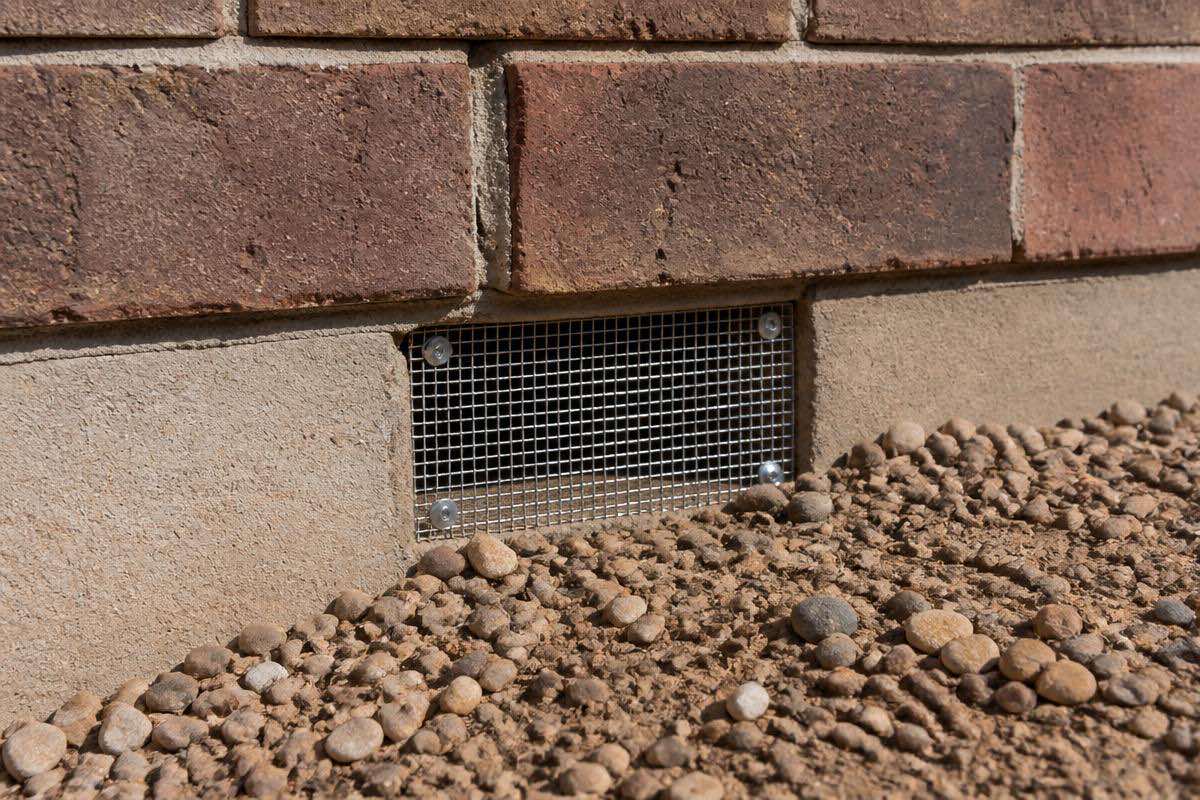
Weep holes and stucco veneer
Block and stucco walls are built with drainage gaps at the base. They have to stay open, so the fix is stainless mesh inserts sized to the hole, not sealant.
Barrel tile roof edges
The half-round gap where each tile meets the fascia is a doorway for roof rats. Foam or metal bird-stop closures go in along the whole run, not just where you have heard scratching.
Garage door bottom corners
The two triangles either side where the seal curves away from the slab. This is the single most common mouse entry we find, and a corner seal kit fixes it in minutes.
Roof and plumbing penetrations
Vent stacks, swamp cooler curbs, AC line sets and satellite mounts all pass through the roof deck. The mastic around them cracks in the sun and opens a gap into the attic.
Dryer and bathroom vents
Plastic louvres crack or stick open. A vent guard with a damper keeps the airflow and closes the entry.
Gable and soffit vents
Insect screen keeps out flies but a rat pushes straight through it. It gets backed with quarter-inch hardware cloth.
What we seal with matters as much as where. Expanding foam on its own is chewed through in a night, and steel wool rusts and stains the wall it is packed into. Copper mesh bedded in sealant, quarter-inch hardware cloth, and sheet metal on any edge a rodent can get its teeth around are what actually hold. If a quote for a rodent job does not mention sealing at all, you are being sold trapping on a subscription.
The route in, and how to close it from the outside
Roof rats rarely climb a bare wall. They use a path, and once you can see the path you can break it. The usual Phoenix version runs fence line, along the top of a block wall, into a citrus or ficus branch that overhangs the wall, then onto the roof and in at the tile line. Cutting branches back so nothing touches the roof or the wall cap removes the bridge without removing the tree.
The rest of the yard matters for the same reason. Fallen citrus is a food supply that renews itself every few days, and a rat that is fed stays. Bird seed, dog food left out overnight, and open compost do the same job, and dense weed growth along a fence line gives cover for the trip. Flood-irrigated blocks hold water in places that dry ground would not, which is part of why the older irrigated neighbourhoods have pressure that newer gravel-landscaped subdivisions simply do not.
None of this replaces treatment. It changes how long the treatment lasts, which is the difference between a job that closes and one you keep paying for.
What happens to the attic afterwards
Trapping ends the activity. It does not deal with what was left behind, and on a long-running infestation that is a separate decision worth making with clear information rather than under pressure.
Droppings and urine soak into blown-in insulation and stay there. Where the run has been short and confined to one corner, spot removal is enough. Where an attic has been occupied for a season or more, the insulation is compacted along the runways, has lost its R-value where it is soiled, and holds the scent trail that tells the next rodent this is a good place to live. That is when full removal and re-insulation earns its cost — and it is also where the industry does its most enthusiastic upselling, so ask to be shown photographs of your own attic before you agree to anything.
However much of it gets done, the method is the same. Rodent droppings should never be dry-swept or run through a household vacuum, because both put the dust into the air you are standing in. The work is done with a HEPA-filtered vacuum, the material is bagged in the space rather than carried through the house, surfaces are wetted with a disinfectant and left to dwell rather than wiped straight away, and anyone in the attic is wearing a fitted respirator, not a dust mask. If you would rather do a small cleanup yourself, wet everything down first and take the same precautions.
We quote attic work separately, after you have seen what is up there. It is not bundled into the trapping price, because the scope is not knowable until the inspection is done.
Rodent control questions we get asked in Phoenix
How long does it take to get rid of rats?
For a typical Phoenix home, trapping usually brings activity down within one to two weeks, with the exclusion work done alongside it. Properties with heavy citrus cover or a long-running infestation take longer. We keep returning until the traps and monitors read zero rather than closing the job on a schedule.
Do you use poison?
Not as the main method, and not inside your home. Bait kills the rodent wherever it happens to be, which is often inside a wall or ceiling void — and then you have a smell you cannot reach for several weeks. Trapping means we remove what we catch.
Is it a roof rat or a mouse?
Size and location. Roof rats are 6–8 inches in the body with a tail longer than that, and you hear them above you. Mice are small enough to fit through a gap the width of a pencil and stay lower down. Droppings are the quickest tell: rat droppings are around half an inch, mouse droppings are the size of a grain of rice.
Will sealing the house really stop them?
It is the part that makes the difference last. Trapping deals with the population you have now; sealing is what stops the next one moving in. A rodent job that skips exclusion buys you a few quiet months, not a fix.
Do I need to cut down my citrus tree?
No. Trimming branches back so they are not touching the roofline or the block wall removes the bridge, and picking up fallen fruit removes the food. That is usually enough — the tree can stay.
What about droppings in the attic?
Rodent droppings and contaminated insulation should be removed rather than left, particularly if the space is used for storage or shares air with the house. We quote attic cleanup separately after the inspection, because the scope depends entirely on how long the infestation ran.
Do you handle pack rats in the yard?
Yes. Pack rat work is different — it centres on nest removal, clearing the harbourage they build under sheds and around pool equipment, and protecting vehicle wiring. If you are finding stick piles or chewed wiring, mention it when you call.
Related services
Scorpion Control in Phoenix
Blacklight inspection and sealing — the same weep screeds and thresholds that let rodents in.
Termite Control in Phoenix
Subterranean and drywood termite treatment, plus WDIIR inspections for escrow.
Commercial Pest Control
Rodent programmes for restaurants, warehouses and multi-family buildings.
Think you have rodents?
Tell us what you are hearing and where, and whether there is citrus on the property. We can usually tell you which rodent it is before we arrive.