Most spider questions we get in Phoenix are really one question wearing different clothes: is this the dangerous one? The honest answer is that the spider people are most afraid of — the brown recluse — does not live in Arizona. What does live here is two of its close relatives, and almost nobody explains the difference properly. This page is about telling them apart, using the one feature that actually settles it.
Is it a brown recluse? No — and the part that usually gets reported wrong
The brown recluse, Loxosceles reclusa, is a real spider with a real reputation, and its range is the central and south-eastern United States. It is not native to Arizona and there are no established colonies here. On that much, the University of Arizona and the Arizona Cooperative Extension are clear.
Here is where most articles then go wrong in the opposite direction. They announce that Arizona has no recluse spiders at all. That is false. Arizona has its own recluses, and two of them turn up often enough to matter: the Arizona recluse (Loxosceles arizonica), which is the most prevalent of the group in this state and is also called the Arizona brown spider, and the desert recluse (Loxosceles deserta). They are the same genus. They are not the same species as the one in the headlines.
So both of the confident claims you will read are wrong. “We have brown recluses in Phoenix” is wrong. “There are no recluses in Arizona” is also wrong. The accurate version is narrower and more useful: the famous one is absent, two local relatives are present, and they are genuinely reclusive, which is why encounters are uncommon.
The identification that actually works: count the eyes
Every spider guide you will find leads with the violin marking. It is the wrong thing to lead with, and this is the single most useful paragraph on this page.
Recluse spiders do carry a darker violin or fiddle shape behind the head, pointing backwards. The problem is that plenty of ordinary brown spiders carry a smudge, a stripe or a shadow in roughly that place, and plenty of genuine recluses show a violin so faint it is invisible in a phone photograph. Identifying by the violin alone produces false alarms in both directions, which is how a harmless house spider ends up being reported as a medical emergency.
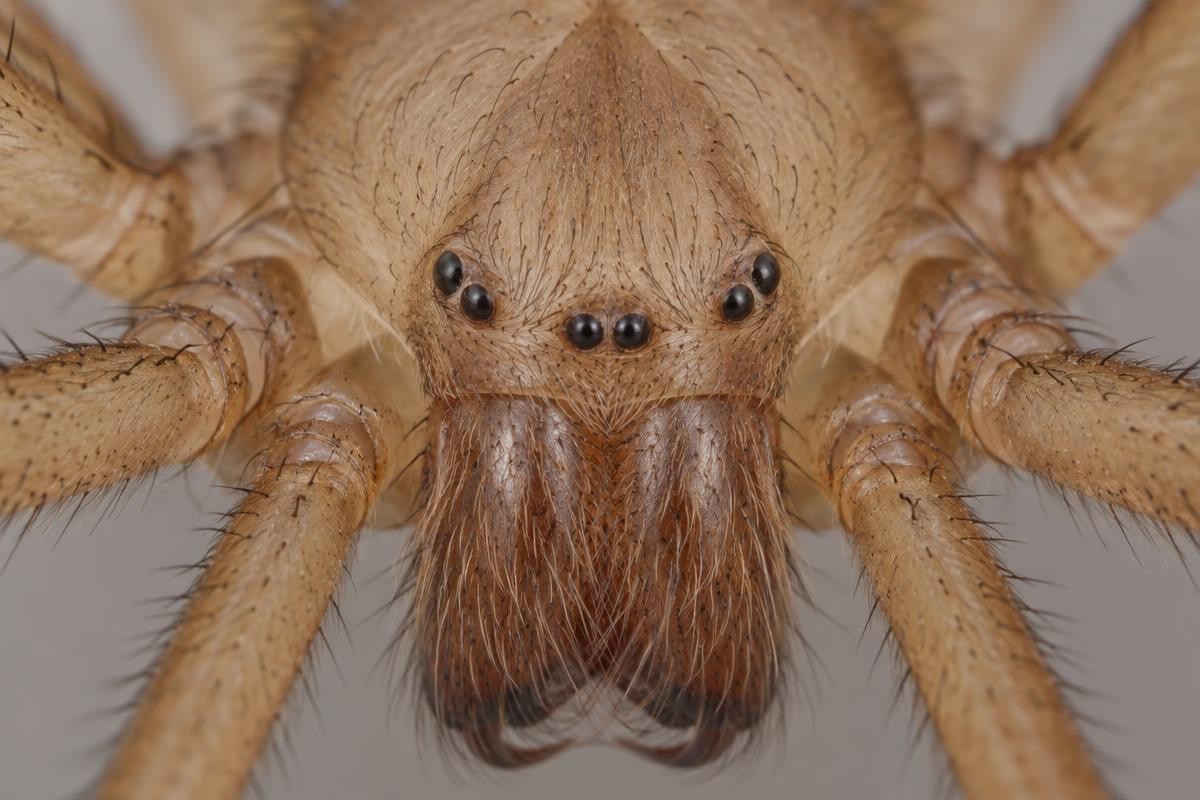
The feature that actually separates them is the eyes. Almost every spider you will meet has eight eyes. A recluse has six, arranged as three widely spaced pairs — one pair in the middle at the front and one pair on each side. Each pair is called a dyad, and the gaps between them are obvious once you know to look. Positive identification needs the violin and the six-eye arrangement, as Matthew Cordes, associate professor emeritus in the University of Arizona’s Department of Chemistry and Biochemistry, puts it. One without the other is not an identification.
This works in your favour, because it is a subtractive test. You do not need to know what a spider is to know what it is not. Count eight eyes and you can stop worrying about recluses entirely, whatever the markings look like.
Six eyes, three pairs
Two at the front centre, two on each side, with clear gaps between the pairs. This is the recluse arrangement and very little else shares it.
Eight eyes
Whatever else it is, it is not a recluse. That covers the overwhelming majority of spiders in a Phoenix house.
The violin alone
Not an identification. Too many brown spiders have a mark there, and too many real recluses show almost nothing.
The spiders you will actually meet in a Phoenix house
Arizona has a long species list and a short list of spiders you will genuinely run into indoors. These are the ones worth being able to name. Our pest identification guide covers how each of them behaves, spider control covers what actually removes them, and this page is about recognising them. The list is much the same across the metro, from central Phoenix out through the suburbs we cover — what changes between neighbourhoods is how much desert is next door, not which spiders live there.
Western black widow
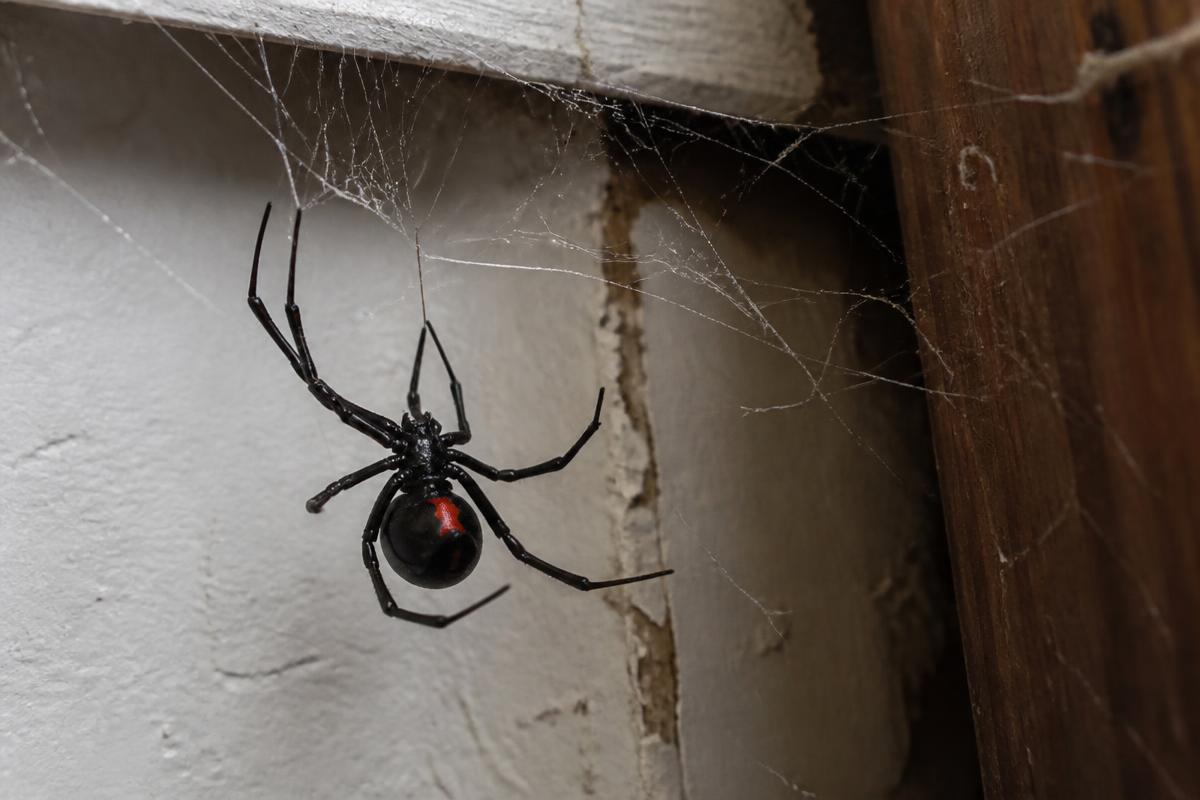
About half an inch of glossy black body with a red hourglass underneath, and the one on this page that is medically significant. Females are the ones with the hourglass; males are smaller, paler and not a concern. Eight eyes. If you find one, the thing to look for next is not the spider but the egg sacs.
Arizona recluse and desert recluse
Small — body around a quarter to half an inch — uniformly sandy or light brown with no stripes, bands or patterning anywhere on the legs or abdomen. That plainness is itself a clue: a brown spider with patterned legs is not a recluse. Long, thin, evenly coloured legs, six eyes in three pairs, and a faint violin behind the head. They live in undisturbed places: sheds, stored boxes, the underside of things that have not moved in a year. The name is accurate. They avoid people, which is why bites are uncommon.
Giant crab spider — the one people call a huntsman
Olios giganteus, and the two names are the same animal as far as anyone searching is concerned. Large, flat, pale tan to grey-brown, with legs held out sideways in a crab posture and a leg span that can reach several inches. It is the spider most likely to produce a scream on a Phoenix summer night, and it is harmless. Flat body, sideways legs, startling speed, eight eyes. Nothing about it resembles a recluse except the colour.
Wolf spider
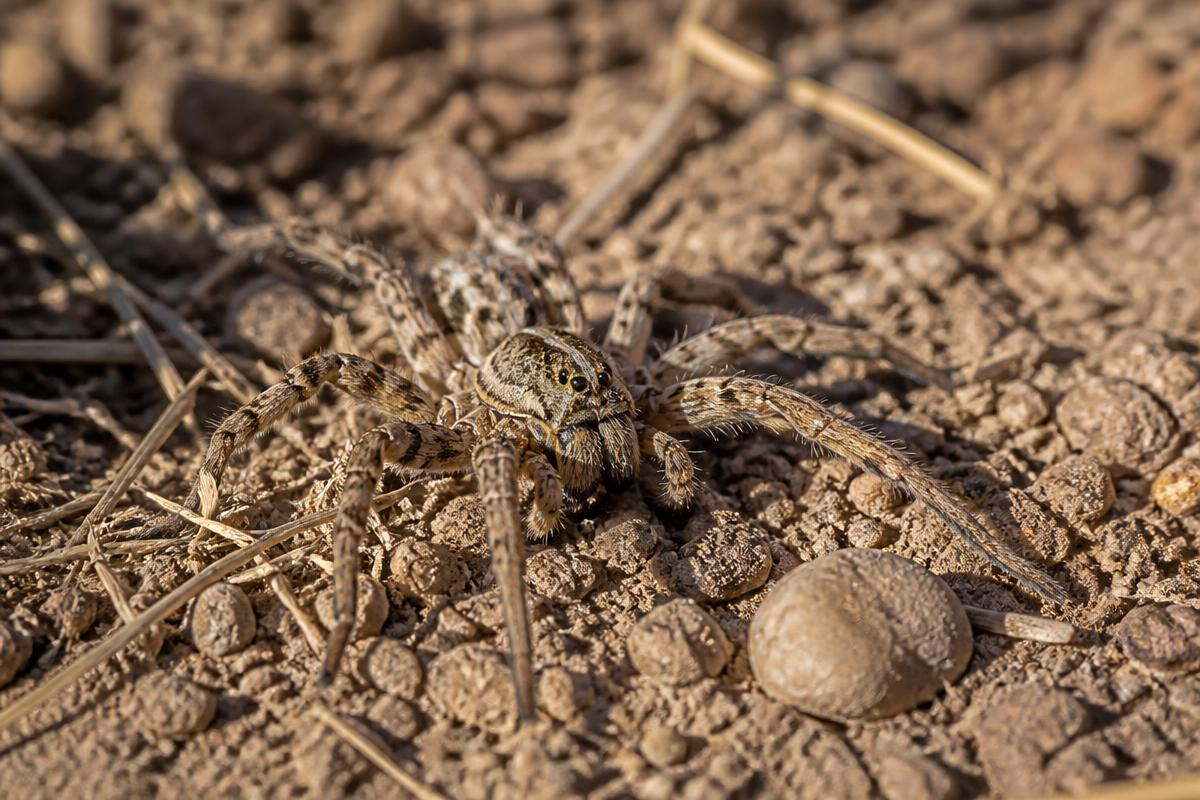
Stocky, brown, hairy, patterned, with legs held underneath the body rather than splayed sideways. Eight eyes, and two of them are large enough to see. Harmless.
Tarantula
Arizona’s tarantulas are Aphonopelma species, and they live outdoors. What people notice is males wandering across roads, driveways and patios during the autumn mating season, which is a seasonal event rather than an infestation. They are slow, they are not aggressive, and their bite is not medically serious. Nobody confuses one with a recluse; they are included because they generate the most alarmed phone calls of any spider in the state.
Everything else
Cellar spiders, jumping spiders, orb weavers and the rest make up most of what is actually indoors, and their diet is the insect population you were already trying to get rid of. None of them is a recluse, and all of them have eight eyes.
The wolf spider did not get in. It has an address.
Almost everyone who finds one asks how it got into the house. It is usually the wrong question. The giant crab spider genuinely lives on your walls, but a wolf spider is a resident of the ground outside with a fixed home you can walk out and find.
The big one here is Hogna carolinensis, about an inch of body length, and like a tarantula it lives in a burrow. The Arizona-Sonora Desert Museum gives the one detail that separates the two holes: a wolf spider builds a turret of silk and twigs that stands up vertically from the entrance, where a tarantula’s burrow has no chimney. In Arizona Upland ground the burrows are described as conspicuous, and that is fair — once you know to look for the little tower, you stop missing them.
That also explains the timing, which is the part people find unnerving. They are nocturnal, active from March through October, and rarely seen in daylight. Adult males then wander right through the summer rainy season looking for mates. So a run of sightings in July and August is not a house filling up. It is the monsoon, and it is males who have left home permanently — a wandering male has no burrow to return to and is not going to establish one in your kitchen.
Which makes this a yard finding rather than a house finding. A burrow down the garden needs nothing done to it; what is worth attention is the route between that ground and your door — the gap under a side door, the garage threshold, the lit wall that gathers what he is hunting. One indoors is a cup-and-card job, and if they arrive steadily enough to annoy you that is a spider control conversation about the supply rather than the spider.
If you are close enough to photograph one, grey to dark brown is unhelpful on its own, but the Desert Museum notes a distinctive peach or orange colour on the front of the chelicerae — the fangs. The torchlight method for finding them after dark is on our pest identification guide. And the Sonoran Spanish names beat anything English has managed: carga hijas and buena madre, she carries her daughters and she is a good mother.
What a bite means, and what it usually turns out to be
Two things are worth knowing, and both of them lower the temperature rather than raising it.
The first is that recluse bites are mostly undramatic. Most go unnoticed or produce mild irritation. Around ten to twenty per cent produce the necrotic damage the spider is known for, and a smaller fraction again become the kind of lesion that needs surgical attention. That is the University of Arizona’s figure, and it is a more honest number than the photographs that circulate online, which are by definition the worst cases anyone had.
The second matters more in a state where the famous species is absent. Suspected recluse bites are frequently misdiagnosed, and bacterial infections — MRSA in particular — are routinely attributed to spiders. That misattribution happens most where the spider does not occur, which describes Arizona precisely. A wound that looks like a bite is often not a bite at all.
None of that is medical advice and we are not qualified to give any. If you have a wound that is spreading, worsening or worrying you, that belongs with a clinician and not with an exterminator, and the Arizona Poison and Drug Information Center takes calls. If you managed to catch the spider, take it with you — identification changes what a clinician is looking at.
How to photograph a spider so it can actually be identified
Most identification photographs we are sent cannot be used, and the reasons are always the same three. This takes thirty seconds to get right and saves a call.
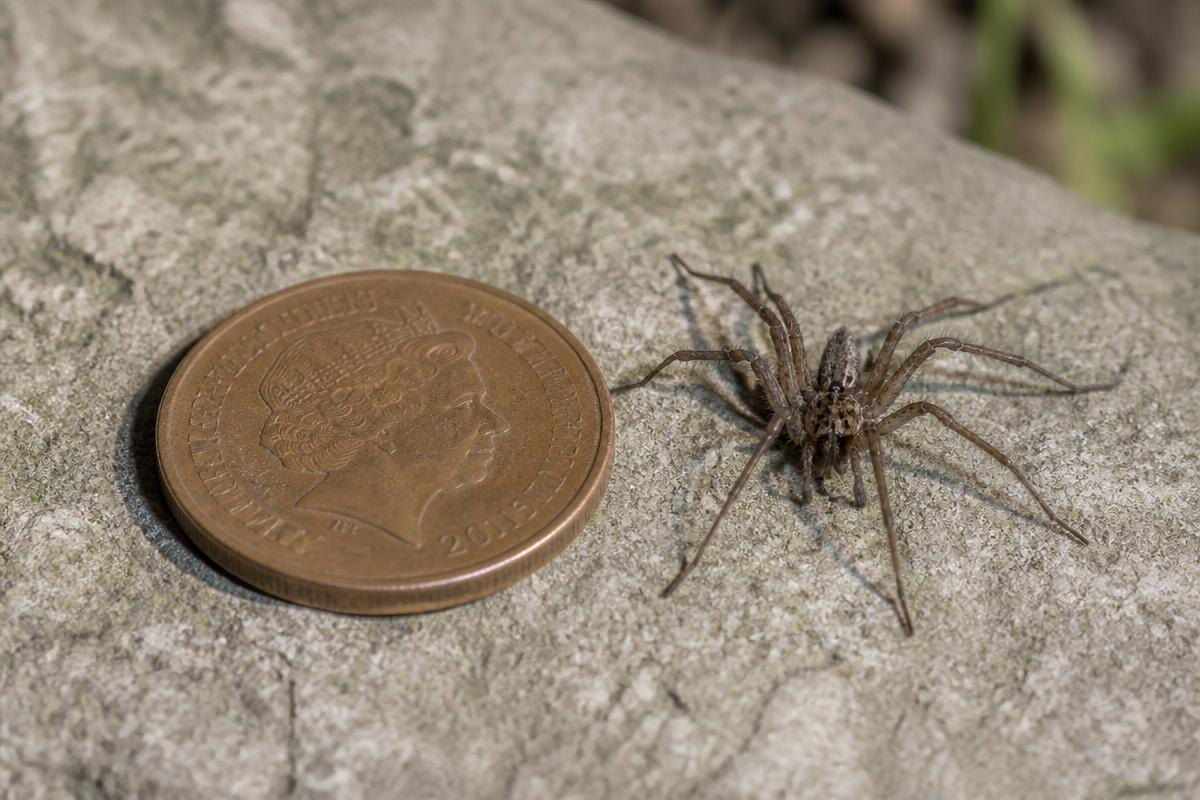
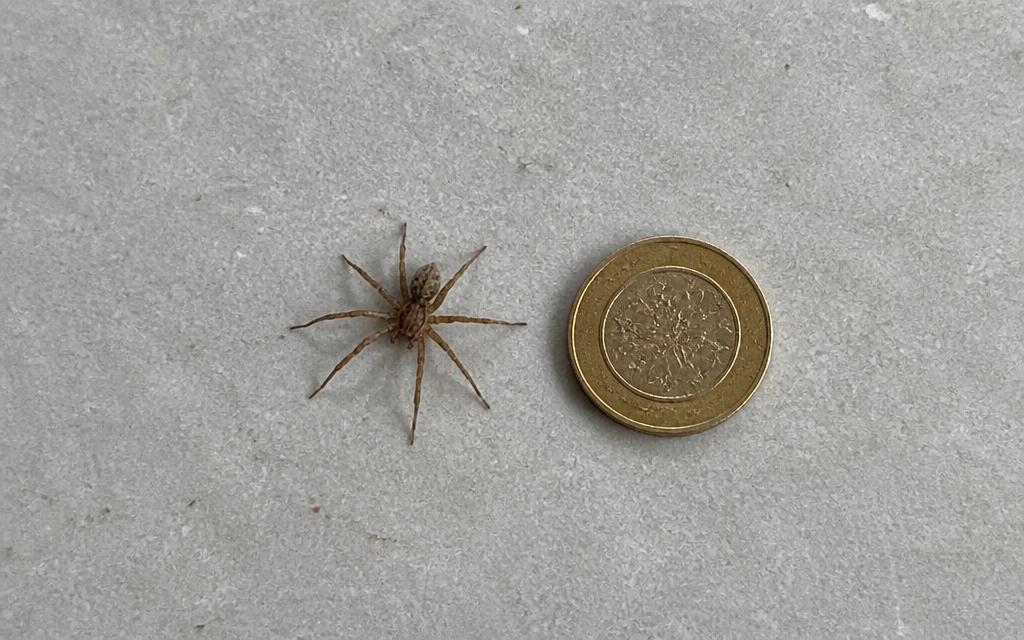
Lay a coin, a key or the edge of a credit card next to it. Scale separates more look-alikes than any marking does, and a photograph with nothing in it for comparison makes a quarter-inch spider and a two-inch spider look identical. Second, get the light on it rather than behind it; a silhouette against a bright window is unusable. Third, if it is safe to do so, take one frame from directly above the front of the body, because that is the only angle that shows the eye arrangement.
If it is dead, photograph it anyway rather than throwing it away. A dead spider holds still, which is more than can be said for the alternative, and a clear photograph of a specimen settles the question in seconds. Send it to us and we will tell you what it is, including when the answer is that it is harmless and needs nothing at all.
Arizona spider questions
Are there brown recluse spiders in Arizona or not?
Not the brown recluse itself. Loxosceles reclusa is a central and south-eastern species and has no established colonies in Arizona. Two related recluse species do live here, the Arizona recluse and the desert recluse, so the correct answer is neither “yes” nor a flat “no” — it is that the famous one is absent and two local relatives are present.
I can see a violin shape. Is that enough?
No, and relying on it is the most common identification mistake. Many ordinary brown spiders have a mark in that position and many genuine recluses show almost nothing. Count the eyes instead: six in three pairs points to a recluse, eight rules it out regardless of what the marking looks like.
Is the big fast one on my wall dangerous?
Almost certainly a giant crab spider, also called a huntsman, and it is harmless. Flat body, legs held out sideways, pale tan, very fast. Size is what makes it alarming and size is exactly what tells you it is not a recluse, which is small and plain.
Do I need the house treated because I found one spider?
Usually not. One spider indoors is ordinary, particularly on a summer night, and most of what comes in is harmless and eating other insects. What changes the answer is finding widow webs with egg sacs in the usual outdoor spots, or repeated sightings in the same room. Send a photograph first and we will tell you honestly which situation you are in.
When are spiders worst in Phoenix?
Indoor sightings rise through the hot months and again when the weather turns, because spiders follow the insects and the insects follow temperature and moisture. Properties backing onto open desert see more of everything that arrives from outside, which is the same pattern described on our Scottsdale and Mesa pages. Tarantula sightings are a separate autumn event caused by males wandering to find mates, not by anything happening at your house.
Something bit me and I think it was a spider. What now?
See a doctor if it is spreading, worsening or painful, and call the Arizona Poison and Drug Information Center if you want immediate guidance. We identify spiders; we do not diagnose or treat bites, and we would rather say so plainly. Bring the spider if you have it, because identification genuinely changes the picture.
Why am I suddenly seeing big hairy spiders in July? Is it an infestation?
Almost certainly not. Wolf spiders are active from March through October, and adult males wander throughout the summer rainy season looking for mates. What you are meeting is one male crossing ground during the monsoon, not a population moving in. He has abandoned his burrow for good and will not build another one indoors.
Are Arizona wolf spiders venomous?
They have venom, as nearly all spiders do, and it does nothing meaningful to a person. No wolf spider in Arizona is a medical concern. What alarms people is the size, the speed and the fact that it does not reliably run away from you. If one has actually bitten, the section above on what a bite means applies.
Related services
Pest Identification Guide
Behaviour, seasonality and what reduces each species — the companion to this page, which is about recognising them. Identify what you found.
Scorpion Control
The other after-dark arrival people ask about, and the one where a night inspection with ultraviolet light genuinely changes the answer. Scorpion control.
Cockroach Control
Spiders go where their prey is, so thinning out the insect population does more across a season than chasing individual spiders. Cockroach control.
Send us the photograph before you worry about it
Coin beside it for scale, light on it rather than behind it. We will tell you what it is, including when the answer is that it needs nothing at all.