Pest control in Mesa, AZ
Mesa is not one pest problem. The original townsite, the ranch blocks that replaced the citrus groves, and the newer edge out towards the Superstitions each get something different. And on the irrigated blocks, the pests move on a calendar you can actually look up.
Get a free quote
No obligation. We reply within 2 hours.
Who actually removes roof rats in Mesa, and who does not
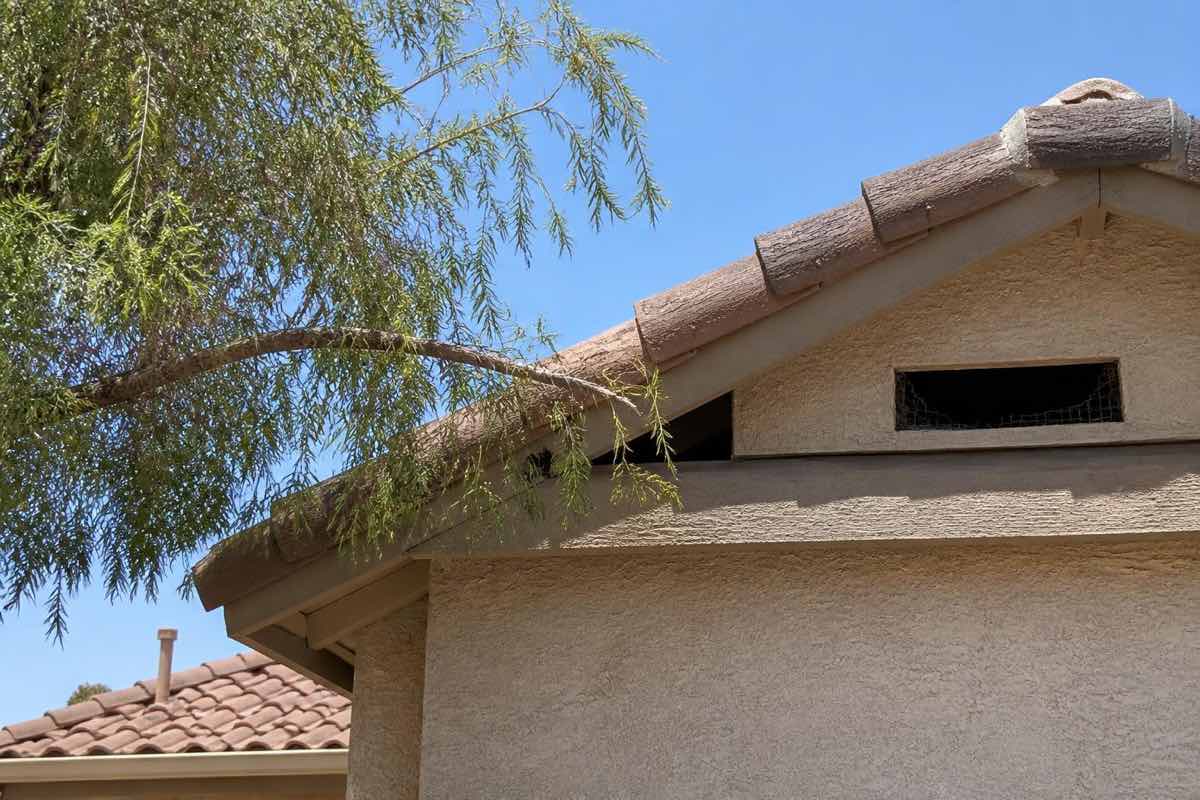
This is the question Mesa homeowners ask first and almost nobody answers plainly, so we will answer it before anything else. If there are roof rats in your attic, no public agency is coming to take them out. Both of the bodies people call have published their position, and both of them stop short of your property line.
The City of Mesa maintains its own roof rat page. It explains the signs and directs residents to report activity to Maricopa County Vector Control. What it does not do is trap or remove anything on private property. It is also careful about two things people assume, and both change how neighbours talk to each other: the appearance of roof rats is not a sign that a neighbourhood is deteriorating, and they are not advancing block by block across the Valley. They are already established wherever the habitat suits them.
Follow that referral and you reach the same boundary from the other side. The county’s guidance is educational: what an infestation looks like, how to screen and seal openings — it names stucco diamond mesh from a building supplier — and how to clean up safely with a bleach solution. There is no county trapping service for private homes. It monitors, informs and watches for disease. The animal in your roof space is not on its list.
So the sequence in Mesa runs like this: you hear something above the ceiling, you call the city, the city sends you to the county, the county sends you a leaflet, and the rats are still there. That is not an agency failing, only where the line is drawn — and knowing where it sits saves you a fortnight of phone calls. Everything past it is private work, and it is the part we do.
What the City of Mesa does
Publishes guidance, describes the signs, and refers residents on to the county. It does not trap or remove roof rats from private property.
What Maricopa County does
Educational material on identification, sealing openings and safe cleanup, plus disease monitoring. No trapping or removal service for private homes.
What is left to you
The actual work. Locating entry points along the roofline, sealing them, removing the animals, and cleaning up after. That is a private job, and it is ours.
Mesa runs on an irrigation calendar, and the pests run on it too
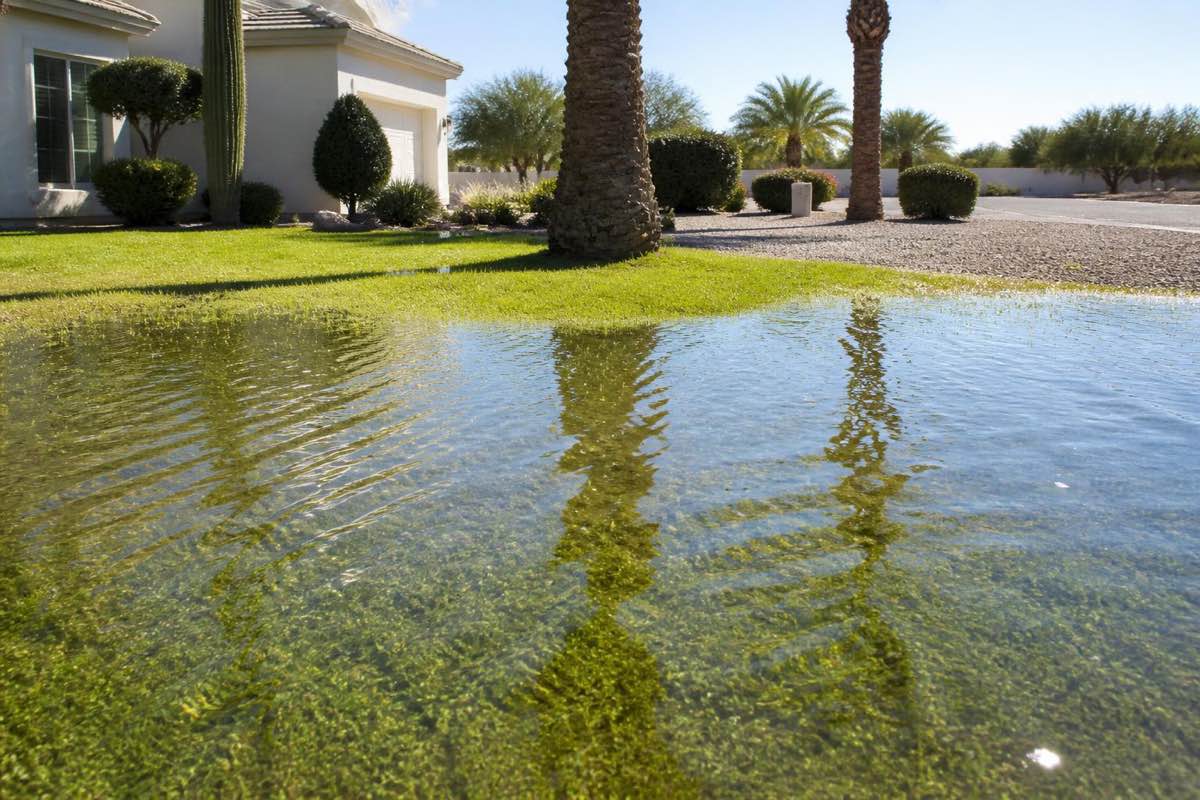
If your block takes Salt River Project flood irrigation, you already have something most homeowners never get: a published schedule for the single biggest thing that moves pests around your yard. Almost nobody uses it. It is the most practical piece of pest timing available in this city.
Here is how delivery works. SRP brings water down the canal system to a gate at the top of your neighbourhood. A zanjero — Spanish for ditch rider, a job as old here as the canals — opens that gate and measures the flow. Past the gate SRP’s part is finished: the private neighbourhood system takes over, and moving water from gate to property is the neighbourhood’s responsibility, not the utility’s. Subdivision accounts receive eighteen irrigation runs a year, and the day of the week the water arrives is set in advance rather than varying.
Now put a pest lens on that. For a day or two after a run, the soil is saturated. Anything that lives in the ground — crickets, roaches, the ants that nest in a lawn, and the scorpions that follow them — is pushed up and out, and the nearest dry sheltered place is the slab edge, the garage threshold and the weep screed at the base of your wall. This is why so many Mesa callers describe a sudden indoor appearance and cannot think of anything they changed. They did not change anything. The water arrived.
The reverse case matters just as much. SRP schedules annual dry-ups, and unscheduled ones can happen at any time of year. When the water stops, a yard that has been reliably damp for months goes dry, and everything relying on it starts hunting the next source: the irrigation box, the hose bib, the air conditioning condensate line, the pet bowl, the kitchen. A dry-up is a quiet line on a utility calendar and a busy fortnight for a pest technician.
So the advice we give every irrigated Mesa property costs nothing: find out your delivery day and tell us. A perimeter treatment laid down shortly before the water arrives is working when the ground floods and the movement starts, rather than applied to soil about to be washed for you. Booking on whichever day happened to be free throws away the one piece of local timing this city hands you.
There are three Mesas, and they do not get the same pests
Mesa covers a lot of ground and a lot of decades. A technician who treats an Evergreen bungalow the same way he treats a house near the Superstition foothills is going to miss on both. The split is roughly by age, and it runs west to east.
The oldest part is the original townsite and the historic districts around it. Robson was listed on the National Register of Historic Places in 2003 and sits inside the original townsite boundary; Evergreen covers a neighbourhood that developed between 1910 and 1948. Houses of that age have had a century for gaps to open — original vents, decades of plumbing penetrations, additions joined to older walls. Rodents and roaches here are an exclusion problem before they are a treatment problem, because there is more than one way in.
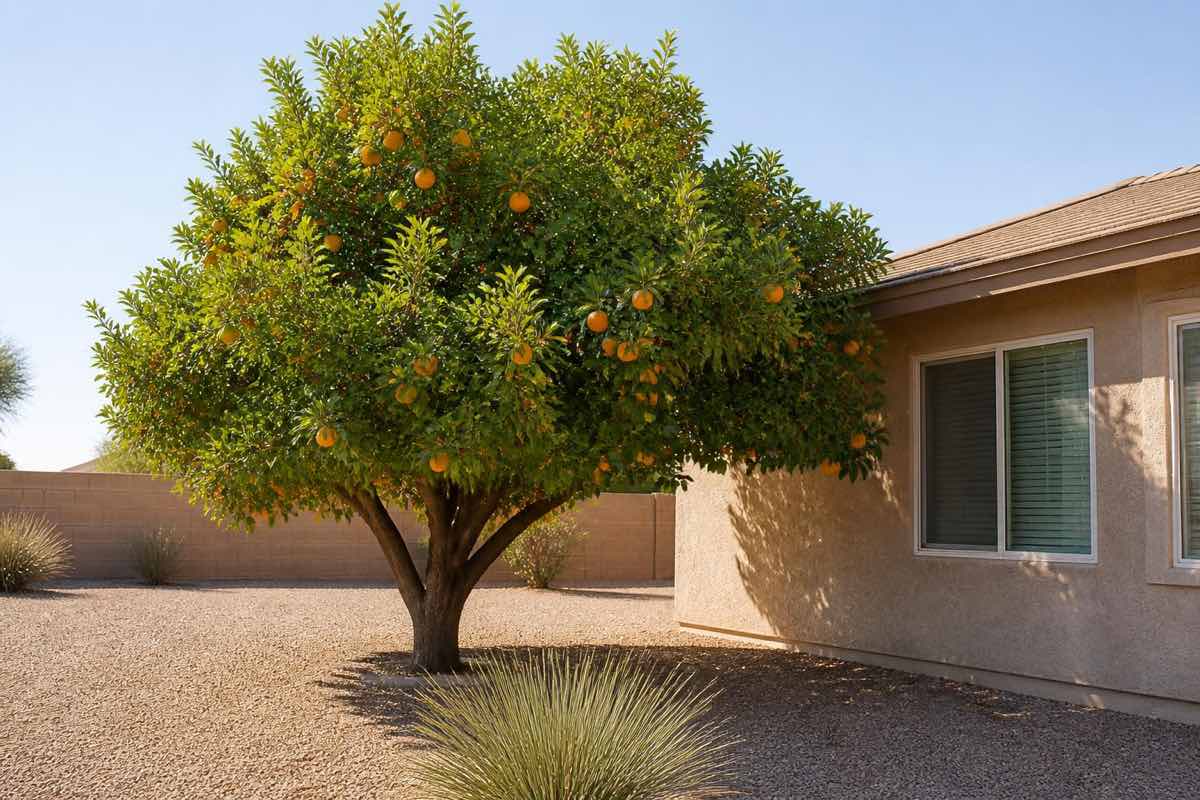
Then the broad middle: ranch houses spreading across central and west Mesa through the 1950s, 60s and 70s. A great deal of that ground was orchard first. The Groves is named for exactly what stood there — oranges, lemons and grapefruit — before the streets went in, and mature fruit trees survived into many of those back gardens. Where the trees stayed and the block kept its irrigation, roof rat pressure is real. Where the trees came out and the yard was graveled, the same street can be quiet. We treat those two differently even when the houses are identical.
East Mesa is the newest and least like the other two. It runs towards the Superstition Mountains with Apache Junction to the south, and that is a desert boundary rather than a suburban one. A property with open desert or an undeveloped parcel alongside it has a supply line that never runs out: bark scorpions, desert rodents, and the occasional visitor that belongs to the mountain. Newer construction here is usually stucco over frame, tighter overall but with a findable weak point at the weep screed along the base of the wall. The work is heavier on the perimeter, lighter inside.
Original townsite and historic districts
Robson, on the National Register since 2003, and Evergreen, developed 1910 to 1948. A century of vents, penetrations and additions. Exclusion work before treatment work.
Central and west Mesa, 1950s to 70s
Ranch houses on former orchard land — The Groves was citrus before it was streets. Surviving fruit trees plus irrigation is the roof rat combination.
East Mesa toward the Superstitions
A live desert edge with Apache Junction to the south. Scorpions and desert rodents arriving continuously. Perimeter-led work, and the weep screed matters.
What we actually do on a Mesa property
The first visit is longer than the ones after it, because most of it is looking rather than spraying. Three things decide the whole programme: whether the block is flood irrigated and on which day, how old the structure is and where it has been altered, and what sits on the other side of your back fence. Two of the three you can tell us on the phone.
On a roof rat call the work is mostly at height and mostly sealing. Rats travel the roofline and enter where a tile edge, a vent, a gable end or a service penetration has opened up, so the survey follows that line rather than the ground. Trapping without sealing just creates a vacancy for the next animal. The detail is on our rodent control page rather than repeated here.
On an east Mesa scorpion call the emphasis moves outward: the perimeter, the block wall, the weep screed and the harbourage between them. Scorpions are a pressure problem rather than a nest problem, so the aim is to make the last few metres hostile and close the gaps. That is covered on the scorpion control page.
Termites deserve a mention because Mesa’s housing age cuts both ways. Older stock has had decades for slab and plumbing to move, giving subterranean termites more to find; newer east Mesa construction sits on ground disturbed for the first time. Either way, many Mesa properties have been treated before, and evidence of a previous treatment changes what a report says. That is covered on our termite inspection page, which publishes what an inspection costs.
What changes the price of pest control in Mesa
We would rather tell you what moves a Mesa quote up or down than give you a headline figure that turns out not to apply to your house. Four things do most of the moving here, and you can assess all four yourself before you call anyone.
Lot size and irrigation come first: a flood-irrigated quarter-acre with mature trees is a bigger, wetter perimeter with more harbourage than a graveled lot on the same street, and usually wants a shorter interval. Second is roof access, because two storeys, tile, or a rat job genuinely at height takes ladder time a single-storey slab job does not. Third is the boundary, since a property backing open desert is resupplied continuously. Fourth is what you are actually dealing with: a one-off wasp nest and an established rodent population needing sealing are different jobs entirely.
Where we have firm figures, we publish them rather than making you ask. A termite inspection is priced on our termite inspection page, bed bug work on the bed bug control page, and commercial programmes by property type on the commercial pest control page. For general residential work in Mesa the honest answer is that the survey sets the number, and you get it before we book rather than after we finish. South of here the picture changes again: pest control in Gilbert deals with ornamental lakes rather than an irrigation calendar, and the insect people report is usually not the one biting them. Immediately west of here the rules change again: pest control in Tempe is shaped by a city that cannot build anything new, where the occupants turn over on a calendar rather than the water.
Mesa pest control questions
Does the City of Mesa get rid of roof rats?
No. The city publishes guidance on identifying roof rats and directs residents to report activity to Maricopa County Vector Control, but it does not trap or remove them from private property. The county’s role is educational and disease monitoring, and it does not run a trapping service for private homes either. Removal on your own property is private work.
Who do I report roof rats to in Mesa?
The City of Mesa points residents to Maricopa County Vector Control. Check the current contact details on maricopa.gov rather than a number quoted on a third-party site, as several circulating online are out of date. Reporting helps county monitoring, but nobody will attend to trap the animals.
Why do I suddenly see insects indoors right after the irrigation runs?
Because the ground they were living in has just been flooded. For a day or two after a delivery the soil is saturated, and ground-dwelling insects move up and outward looking for somewhere dry. The nearest dry shelter is usually your slab edge, garage threshold or the base of an exterior wall, and some of them keep going indoors. Nothing about your house changed. The water arrived.
How often does flood irrigation get delivered, and how do I find my day?
Salt River Project subdivision accounts receive eighteen irrigation runs a year, and the delivery day of the week is set in advance rather than moving around. SRP delivers to a gate at the top of the neighbourhood; past that gate the private neighbourhood system distributes it. Tell us your day when you book and we will work to it.
My yard is gravel with drip lines. Does any of the irrigation advice apply to me?
Very little of it. A graveled, drip-irrigated lot gets no flood cycle, so no flush of ground insects after a delivery, and it holds far less moisture. Two Mesa houses on the same street can sit on genuinely different pest cycles for this reason alone, so it is one of the first questions we ask.
Are scorpions worse in east Mesa than the rest of the city?
Pressure is generally higher the closer you are to a live desert edge, and east Mesa runs out towards the Superstition Mountains with Apache Junction to the south. A property backing open desert or an undeveloped parcel is being resupplied from outside continuously, which is a different problem from an interior lot in a built-out subdivision. It calls for perimeter-led work rather than interior treatment.
Do older Mesa homes get more termite trouble than new builds?
They get different trouble. Decades of slab movement and plumbing penetrations give subterranean termites more openings to find. Newer east Mesa construction has less accumulated history but sits on recently disturbed ground. The more useful Mesa point is that many properties here have been treated before, and evidence of a previous treatment changes what an inspection report says.
Do you cover all of Mesa?
Yes, from the original townsite and historic districts through central and west Mesa out to the eastern edge. Mesa sits in the core of our route, so same-day and next-day appointments are usually available.
Related services
Rodent Control
The roofline survey, sealing and removal that a Mesa roof rat problem actually needs. Rodent control.
Scorpion Control
Perimeter-led work for properties on the eastern desert edge. Scorpion control.
Termite Inspection
What an inspection covers, what evidence of previous treatment means, and what it costs. Termite inspection.
Termite Control
Treatment once a report comes back positive, the routes available, and what a warranty covers. Termite control.
Pest Identification Guide
Droppings, damage and the species behind them, so you know what you are looking at before you call. Identify what you found.
All Service Areas
How pest pressure changes across the rest of the Valley, and everywhere else on our route. The nearest comparison is Chandler — same side of the Valley, a different housing story. Service areas.
Tell us your street and your irrigation day
Those two things get you a more accurate answer than any online quote form can. You get the price before we book, not after we finish, and no obligation to take the work.