Pest control advice written for Phoenix, not for everywhere
Most pest advice online is written for a temperate climate and quietly useless in a desert city. These are field notes from Valley properties: what the pest actually is, why it got in here, and what genuinely stops it.
Get a free quote
No obligation. We reply within 2 hours.
What you will find here
Three kinds of article, and nothing written just to fill a publishing schedule.
Identification
What did you actually find? Species guides for the pests that live in the Sonoran Desert, plus the evidence they leave behind — droppings, mud tubes, frass, rub marks, chewed citrus.
Prevention
The construction and landscaping details that let pests in on Phoenix properties: weep screeds, block walls, tile roof edges, irrigation, mature citrus and slab expansion joints.
Seasonal
What is active this month and what to do before it becomes a problem. Desert pest pressure moves with heat and monsoon rain, not with the calendar you would use anywhere else.
The Phoenix pest year, month by month
Pest pressure in the Valley is seasonal in a way it is not in cooler states. This is roughly how a year runs — treat it as a guide rather than a schedule, because a warm February or an early monsoon shifts everything.
January – February
The quietest stretch. Roof rats are the exception: citrus is ripe, and cooler nights push them towards roof voids and garages. A good window for termite inspections and for sealing work, because you are not fighting the heat.
March – April
Scorpion activity starts climbing as nights warm. Bees swarm and look for cavities — wall voids, irrigation boxes, chimneys. Ant colonies become visible again along irrigation lines and walkways.
May – June
Scorpion pressure builds towards its peak, and it is nocturnal, so a property can look clear by day. Crickets increase, which matters because they are a primary scorpion food source. Termites remain active year-round but are easier to spot now.
July – September
Monsoon season. Standing water means mosquito numbers rise within days of a storm. Rain also drives termite swarms, so discarded wings on a window sill after a wet evening are common. Roaches move indoors as outdoor harbourage floods.
October – November
Scorpion activity falls away as nights cool, and they begin overwintering in sheltered voids — often inside block walls and under stored materials. Rodents start looking for somewhere warm. This is the sensible time to seal.
December
Quiet for most pests, busy for roof rats around fruiting citrus. Also the month people find evidence they have been walking past all year, because garages and storage get cleared out over the holidays.
Quick reference: what the evidence means
Most people arrive at a pest problem through the evidence rather than the pest. This is the shortest version of what each thing points to.
Pencil-width mud tubes
Subterranean termites. Running up a foundation, stem wall or the inside of a garage. The single most common termite sign in the Valley.
Coffee-ground piles
Drywood termite frass, pushed out of the timber they are living in. Different species, different treatment to the tubes above.
Identical wings on a sill
A swarm, usually after warm rain. Termite wings are four of equal length; flying ants have a pinched waist and uneven wings.
Hollowed citrus still on the tree
Roof rats. Fruit bitten and dropped on the ground is usually birds or ground squirrels.
Dark greasy smears
Rodent rub marks along a route used night after night — skirting, rafters, pipe entries.
Droppings in a line
Rodents travel a runway. Size settles it: a rat leaves droppings about half an inch long, a mouse leaves something closer to a grain of rice.
Small piles of soil in a crack
Termites packing an expansion joint or slab crack, where soil has no business being.
A smell that appears after baiting
Something died inside a wall void. The usual cost of a bait-only rodent approach.
Topics we write about
- Scorpions
- Termites
- Roof rats & rodents
- Cockroaches
- Spiders & black widows
- Bees & wasps
- Mosquitoes & monsoon season
- Bed bugs
- Prevention & home sealing
- What pest control costs
- Commercial & restaurants
Latest articles
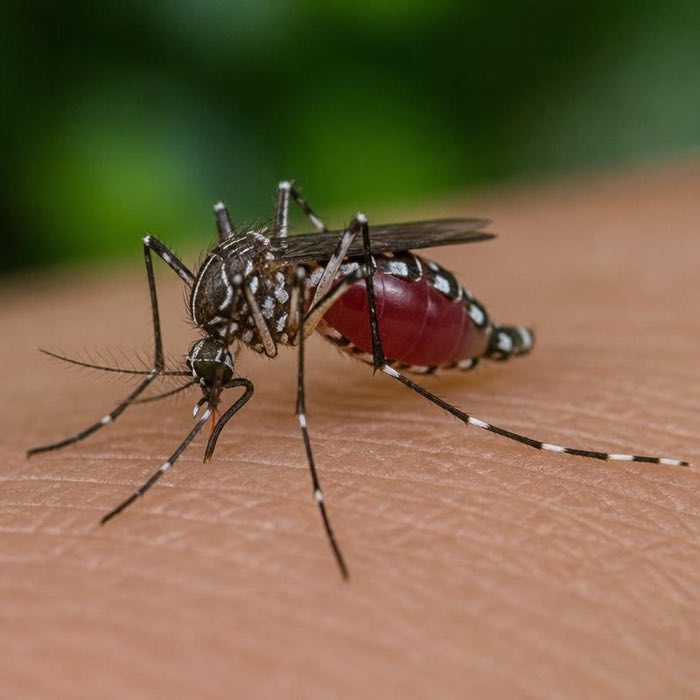
How long do mosquitoes live in your house?
A mosquito that gets indoors and finds nothing to feed on is usually dead inside a…
Read more →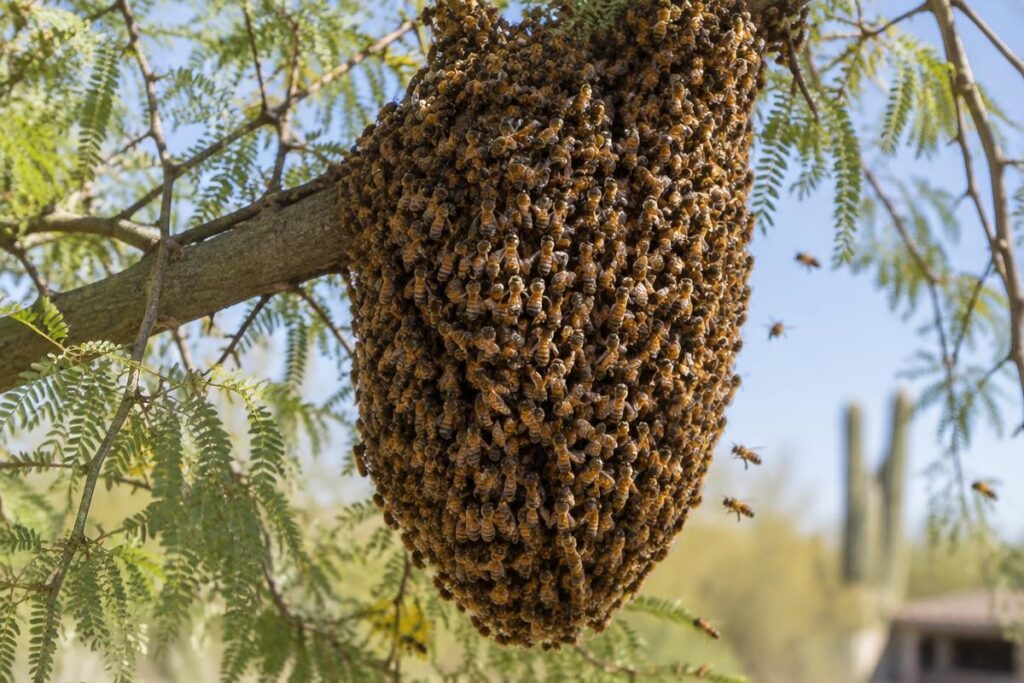
Killer bees in Arizona: same venom, different behaviour
Africanized bees reached southeastern Arizona in June 1993. Their venom is no stronger than an ordinary…
Read more →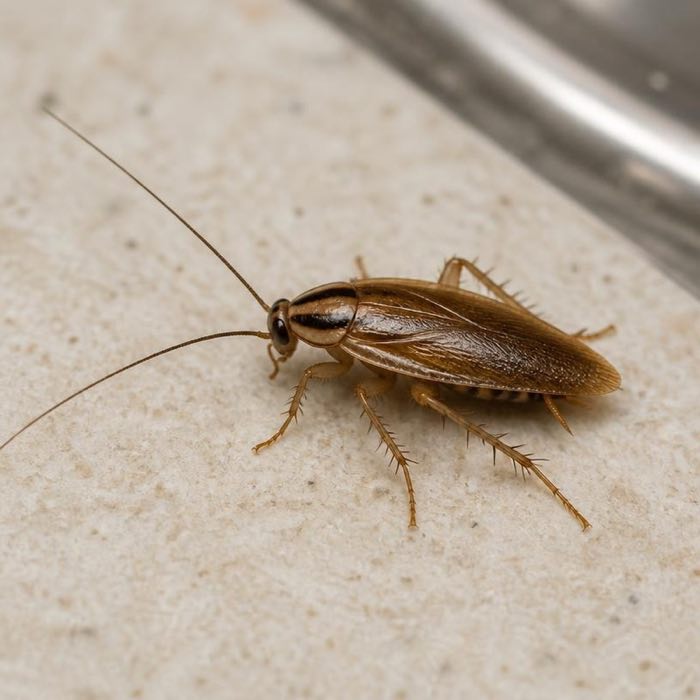
Are cockroaches dirty, and how fast do they multiply?
The disease story most people have heard is softer than it sounds - the research says…
Read more →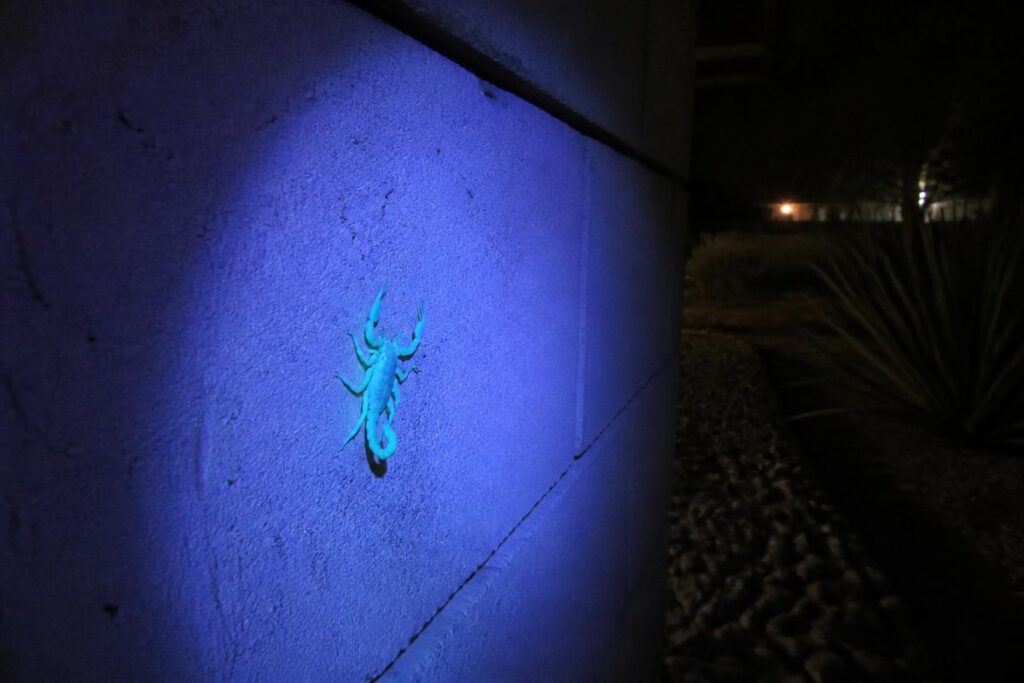
Baby scorpions in Arizona: why small does not mean baby
Someone finds a scorpion the size of a grain of rice and wants to know whether…
Read more →
White mites: what those tiny white specks in your house actually are
Tiny pale specks on a windowsill, around a sink, in the soil of a houseplant. Something…
Read more →
How long do flies live, and where maggots actually come from
Two questions bring most people to a page like this: how long does a fly actually…
Read more →
Centipedes in Arizona: how to tell them apart, and what one indoors means
Almost nobody calls us about a centipede in the garden. They call about the one in…
Read more →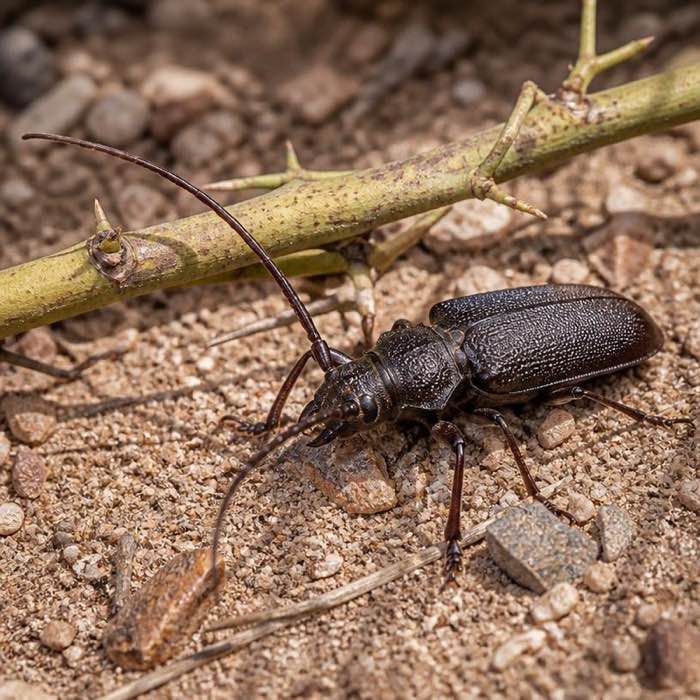
Beetles in Arizona: which ones matter and which ones do not
Arizona has more beetle species than any other group of insect, and almost every one people…
Read more →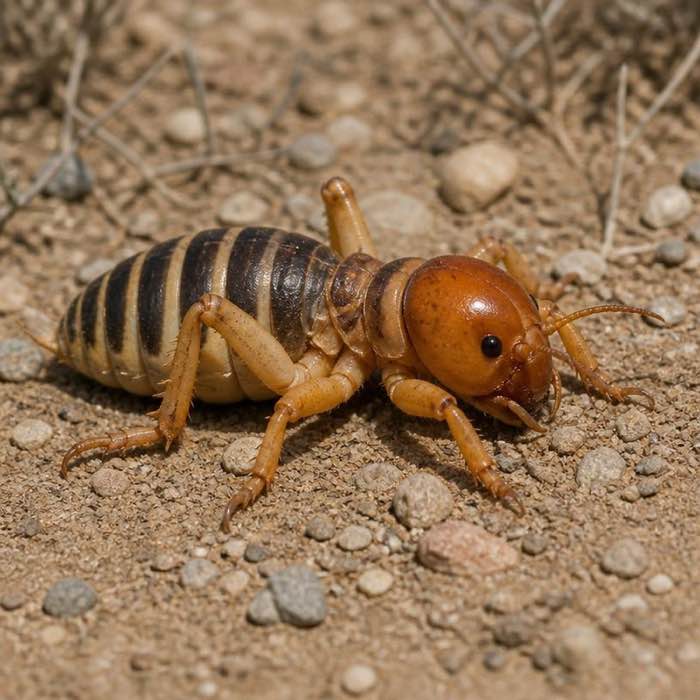
Jerusalem crickets in Arizona: what the child of the earth actually is
More people in Arizona search for this insect than for scorpions, termites or bed bugs. The…
Read more →
Termites in Arizona: seventeen species, and the three that matter
Arizona has at least seventeen termite species and only three are of economic importance. How to…
Read more →
Mosquito repellents: what works in Phoenix, and what is a waste of money
The EPA registers eight repellent actives and the CDC names six. What works on skin, what…
Read more →
Rat poison: what it does, and why we will not put it in your attic
Anticoagulant baits are slow, and a poisoned rat usually dies where you cannot reach it. What…
Read more →Reading about it, or dealing with it?
Plenty of Phoenix pest problems are worth handling yourself — a few ants on a counter, the occasional cricket in the garage. The ones that are not are the structural three: scorpions, termites and rodents. In all three the pest you can see is the symptom, and the gap or colony causing it stays untouched by anything you can buy over the counter.
If an article here leaves you fairly sure you have one of those, the useful next step is an inspection rather than another product. We will tell you what it is and what it costs before anyone starts work.
The words you will keep running into
Pest control has a vocabulary, and a lot of it turns up in quotes and reports without ever being explained. Here is the plain version, so a report you are handed makes sense.
Weep screed
The metal strip and drainage gap at the bottom of a stucco wall. It has to stay open for the wall to drain, which is exactly why it is the entry point in so many Phoenix scorpion and rodent jobs.
Harbourage
Anywhere a pest rests when it is not moving — a wall void, under a paver, a cardboard stack, dense ground cover. Most treatment failures are harbourage that was never found.
Exclusion
The physical sealing work. Mesh, hardware cloth, door sweeps, sealant. The only permanent part of a pest control job, and the part most often left out of a cheap quote.
Frass
Insect droppings. Drywood termite frass is distinctive: hard six-sided pellets, the colour of the wood, kicked out of small holes and collecting in little piles.
Mud tube
A pencil-width earth tunnel built by subterranean termites across a surface they cannot travel exposed, usually running up a footing or foundation wall. The classic Phoenix termite sign.
IPM
Integrated Pest Management. Identify, remove what supports the pest, seal it out, then treat with the narrowest tool that reaches it — and monitor. Not a brand, a working order.
Residual
A product that stays active on a surface for a period after it dries, so pests crossing it later still pick it up. Broken down by sun, heat and water.
IGR
Insect growth regulator. Interrupts the moult so young insects never reach breeding age. Slow, and it breaks the cycle rather than the current generation.
Pre-emergent
A weed treatment that forms a thin layer in the top of the soil, killing seedlings as they germinate. It has to be watered in, and it does not touch weeds that are already up.
Larvicide
Treats mosquito larvae in water rather than adults in the air. Bti, the usual choice, only affects a narrow group of larvae and has to be eaten to work.
WDIIR
Wood-Destroying Insect Inspection Report. The Arizona termite report lenders ask for in escrow. Only a licensed pest control business can issue one.
Nymph / instar
Immature stages of an insect. It matters because immature and adult stages often behave differently and are not always killed by the same thing.
How we decide what is worth writing
There is a lot of pest content online and most of it is the same eight articles rewritten. We try to only publish something when it passes three tests.
Is it specific to here? Generic advice about cockroaches is not much use in a metro where most of the roaches people meet came up a drain from outside rather than breeding in the kitchen. If an article would read identically for Ohio, it is not worth writing.
Can we say why, not just what? “Seal your weep screed” is a task. Explaining that the gap exists so the wall can drain, and therefore has to be screened rather than filled, is the part that stops you doing it wrong.
Would we say it to a customer standing in front of us? That rules out most of the genre. No invented statistics, no “did you know one cockroach means a thousand”, no seasonal fear campaigns, and no pretending a problem needs professional treatment when it needs a cup of water down a dry drain.
The flip side of that: we will happily write something that costs us work, because the alternative is being the kind of company nobody trusts twice.
Where DIY ends
Plenty of what is described on this site is genuinely worth doing yourself, and we would rather you did. There are a few points where it stops being sensible, and they are worth stating plainly.
The label is the law
Every pesticide label is a legal document, and applying a product outside its label — wrong site, wrong rate, indoors when it is outdoor-only — is both illegal and how people get hurt. If you use anything, read the whole label first, not the front.
Never mix products
Combining two products, or adding “a bit extra” for good measure, does not make them work better. It creates something with no tested safety data in your own home.
Bug bombs make things worse
Total-release foggers scatter German cockroaches deeper into voids and adjoining units, do not reach where they live, and leave residue on every surface. There is almost no situation where they are the right tool.
Stop when it is structural
Termites, anything in a wall cavity, anything in the attic, and anything that has spread between units in a shared building. At that point the question is not which product but what is happening inside the building.
Stings and bites are medical
We can tell you what a pest is. We are not a medical service. For a sting or a reaction, Poison Control on 1-800-222-1222 is free and staffed around the clock, and severe symptoms mean emergency care.
Wildlife is a different licence
Snakes, bees in a wall, birds, and larger animals are handled by trades licensed for them. Trying to deal with those yourself is where most serious injuries in this field actually happen.
If you are not sure which side of that line you are on, describing what you have found is free and takes two minutes.
How to read a pest control report
Whoever you use, you should come away from a visit with something written. Most people file it without reading it, which is a shame, because it is the most useful document in the whole transaction.
A report worth having says what was inspected — not “the property”, but which areas were actually reached and which were not, and why. “Attic not accessed, no hatch” is a genuinely important sentence. It says what was found, ideally specifically enough that you could go and look at it yourself. And it says what was applied and where, by product name, with the areas treated and any re-entry interval you need to observe.
The section people skip is usually headed something like conducive conditions, and it is the part that predicts your next twelve months. It is where the inspector lists the things about the property that will keep the problem coming back: a branch on the roofline, a leaking valve, mulch piled against the stucco, a gap under a door, wood stored against the house, grade that has been raised above the weep screed. Those items are the actual fix. A report that lists them and a company that keeps quiet about them are very different propositions.
Keep them. Reports stack up into a history, and that history is worth real money later: it shows whether activity is trending down, it settles arguments about what was covered under a warranty, and a folder of termite records is a genuinely useful thing to hand a buyer during escrow.
Questions about using these guides
I found an insect but it is not on the site. What now?
Send us a photograph with something ordinary next to it for scale. Scale is what separates most of the look-alikes, and we would rather tell you it is a harmless native beetle than have you spray your kitchen.
Are the seasonal timings exact?
No, and treat anyone who gives you exact dates with suspicion. Phoenix pest activity tracks temperature and rainfall rather than the calendar, so a mild winter or an early monsoon shifts everything by weeks. The months given here are the usual pattern, not a schedule.
Why do you not publish scary statistics?
Because most of the ones circulating in this industry cannot be traced to a source. If we cannot point at where a number came from, we would rather describe what we actually see on Valley properties.
Can I follow the DIY advice here safely?
The physical work — sealing, trimming, drain maintenance, removing standing water — yes, and it is the part that lasts. Anything involving a pesticide means reading the entire label first and staying inside it, and there is a section above on where DIY stops being sensible.
Do you write about pests you do not treat?
Yes, where knowing what something is saves you a call. Identifying a snake, a bee colony or a wildlife problem correctly matters even though the fix belongs to a different trade.
How often is this updated?
When something changes that is worth telling you about — a species spreading into a new part of the Valley, a season behaving unusually, or a piece of advice we have decided is wrong. Not on a publishing schedule for its own sake.
Not sure what you have found?
Describe what you are seeing and where on the property. We can usually narrow it down before we arrive, and tell you whether it needs us at all.