Pest control in San Tan Valley, AZ
San Tan Valley became a town on 1 July 2026, and it sits in Pinal County rather than Maricopa. For the pest problems that need somebody official, that changes who you call — and most of the advice written for the Valley gives you the wrong number.
Get a free quote
No obligation. We reply within 2 hours.
What changed on 1 July, and what did not
This is the part worth knowing before you need it, because a pest problem that involves somebody else’s property is the moment people discover they do not know who is responsible for what.
San Tan Valley spent decades as the largest unincorporated community in the state. Proposition 495 went to a special election on 5 August 2025 and passed with about two thirds in favour, 10,133 votes to 5,083. The Pinal County Board of Supervisors formally approved the incorporation and appointed the first seven-member council, which met on 1 October 2025 and chose Daren Schnepf as the first mayor. With a population estimated above a hundred thousand, it was the largest incorporation in Arizona’s history, and it made San Tan Valley the biggest municipality in Pinal County.
The town formally took over on 1 July 2026, having adopted a town code a month earlier, and building permits inside the town boundary now go through the town rather than the county. Pinal County ran everything up to 30 June.
What has not changed is just as useful. Policing is still the Pinal County Sheriff’s Office. Fire cover is still Rural Metro on the same subscription basis as before. County health services carry on as they were. And the town has been straightforward about the fact that some things are still being worked out — how code enforcement will operate is one of them. So on a street where a neglected property is producing a pest problem, the honest answer eleven weeks in is that the route runs through the county for the health side, and the town is still building the rest.
The number to call when the problem is not on your property
Every piece of pest advice written for this metro quotes Maricopa County. In San Tan Valley that is the wrong county, and the difference is not academic when you are trying to get standing water dealt with.
Pinal County Environmental Health runs the vector control programme that covers this side of the line. It monitors mosquitoes across the county for the species that carry human disease, West Nile virus in particular, and it gives guidance to residents, homeowner associations, businesses and utilities on stopping breeding on their own ground. Its stated order of work is source reduction and biological control first, with larvicide or fogging for adults considered only where surveillance justifies it. The numbers published on the county’s page are 520-509-3555 and 888-431-1311, and Environmental Health takes complaints through its own route.
What that means in practice: a pool that has gone green on an empty house two doors down, a lot that holds water for a fortnight after a storm, an irrigation leak nobody is fixing. Those are not our work and they are not the sheriff’s either. They go to the county, and the more specific you are — address, how long it has stood, a photograph — the faster that goes.
What is ours is everything inside your boundary, and there is usually more of it than people expect. Our mosquito control page covers how a property gets surveyed for the water that is actually producing them, including the sources that are nobody’s fault and easy to miss.
A hundred thousand people arrived on open desert
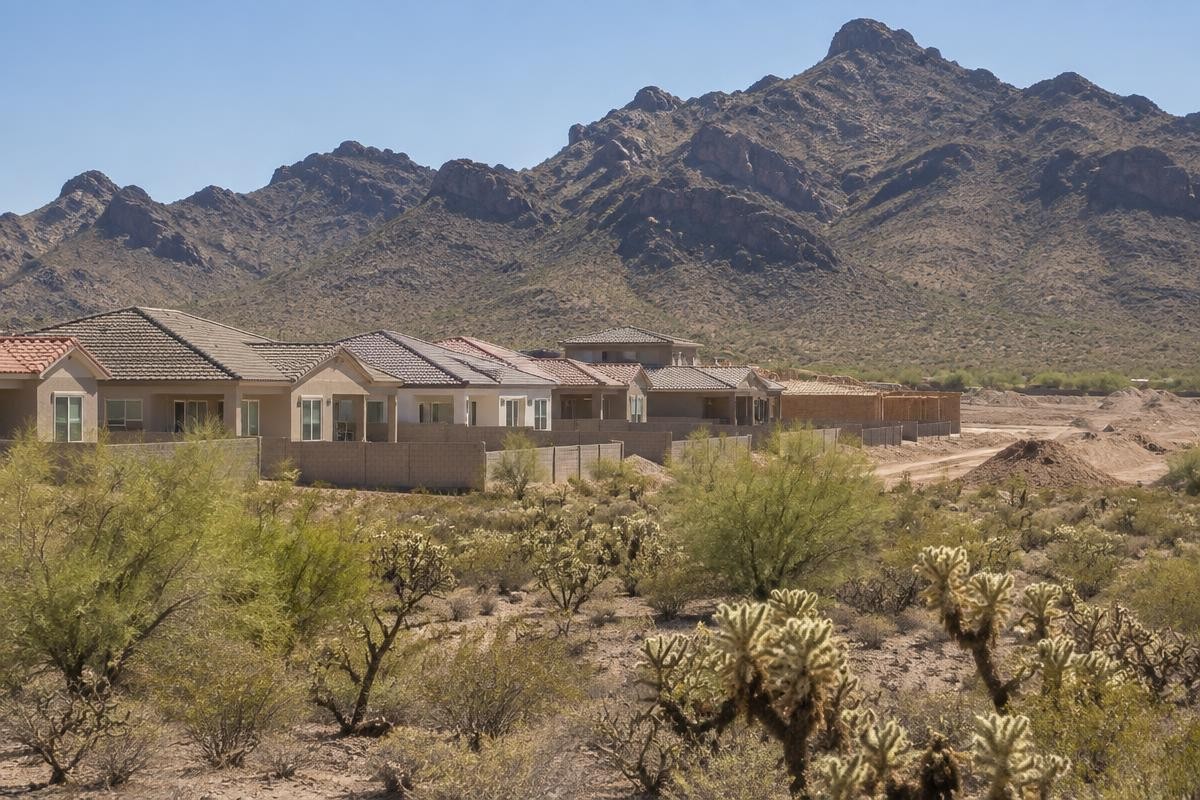
The growth is the other half of the pest story here, and it works on a shorter timescale than anybody expects.
A community that reaches six figures in a couple of decades does it by turning raw ground into streets in phases, and the wildlife that was living on the ground does not leave the area when a phase is scraped. It moves to the nearest cover, which is the phase that was finished last year. That is why the pest pressure on a new street is often worst in its first two or three seasons and then settles, and why the house at the edge of the built area gets more than the identical house four streets in.
Three things follow from that, and they are the ones worth acting on. Pressure arrives from the open side, so the treatment belongs on the boundary facing the undeveloped ground rather than spread evenly around the house. A new build is not a sealed build: weep screed gaps, unsealed utility penetrations and door sweeps that were never adjusted are as common on a two-year-old house as on a twenty-year-old one, and on a new street they are the difference between the two neighbours. And the pressure changes when the next phase starts, which means a programme that worked last year may need moving rather than repeating.
Termites belong in this paragraph too, because a newer house is not exempt and the soil treatment that went in before the slab does not last forever. Our termite inspection page sets out the scope of a formal report, which matters here because so much property in this area changes hands.
The county line runs through the neighbourhood
San Tan Valley and Queen Creek sit against each other, people shop and work across the line daily, and plenty of addresses have been described as both over the years. For a pest problem the line still matters.
North of it you are in Maricopa County, where the vector control division of Maricopa County Environmental Services investigates mosquito, fly, feral bee and roof rat complaints. South of it you are in Pinal County, with a different department, a different phone number and its own programme. Neither one will take a complaint about the other’s territory, and the thirty seconds it takes to work out which side an address falls on saves a wasted call.
The pests do not care, which is the practical point. Roof rats do not check a boundary before crossing a wall, and a mosquito population breeding on one side is biting on both. If your problem is arriving from the Queen Creek side, our Queen Creek page covers what those properties generate, and the treatment on your own ground is the same either way. What changes is only the paperwork. Apache Junction has the same problem in a sharper form, because there the line runs through the city itself and neighbours sit on opposite sides of it.
Scorpions, and the mountains on the doorstep
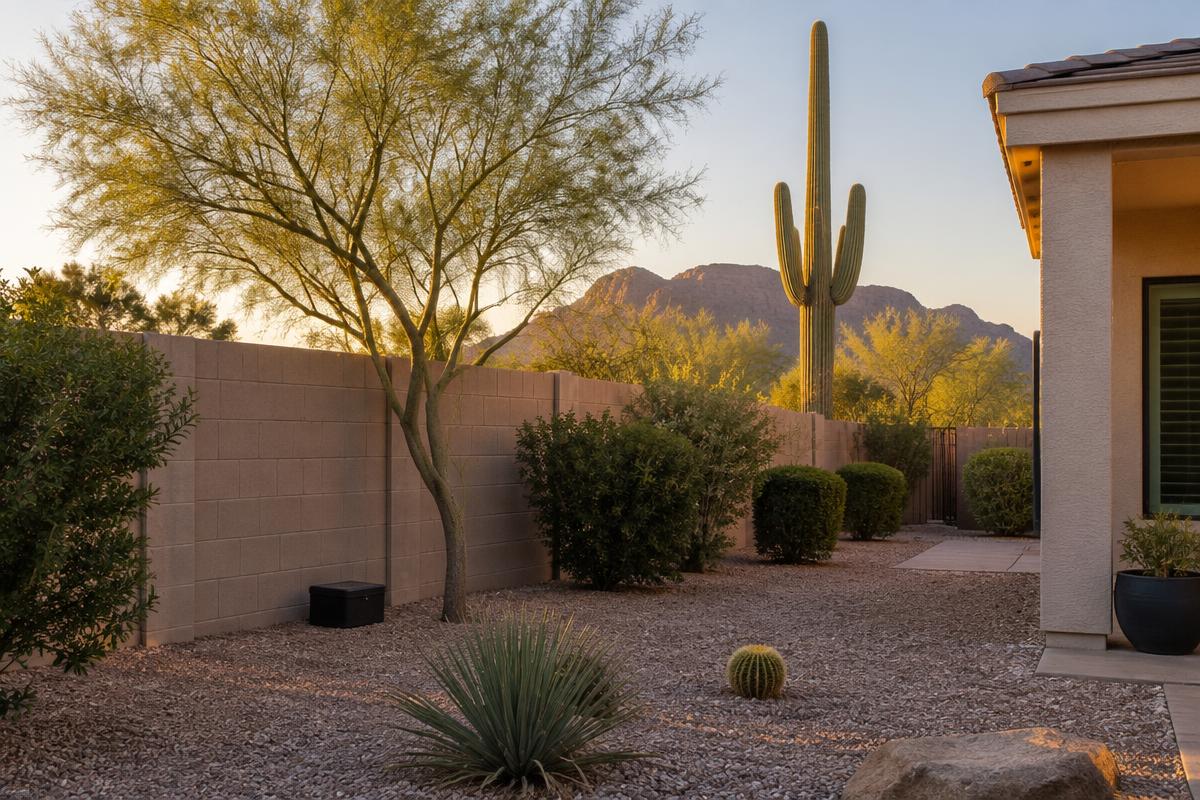
This is the call we take most often from this area in the warm months, and the answer is shorter than people expect.
San Tan Valley runs up against the San Tan Mountains and a good deal of open ground, and bark scorpions come off that ground at night and end up at the first building they meet. Nothing about the incorporation changed that. What decides the outcome is the state of the building rather than the amount of product applied to the yard, because a scorpion that cannot get through a gap is a scorpion in the garden rather than in the bath.
That makes it a sealing job with a treatment attached, and a night inspection is the fastest way to find out where they are actually travelling on your property. Our scorpion control page sets out the ultraviolet walk, the gaps that matter and the order the work goes in.
What we actually do on a San Tan Valley property
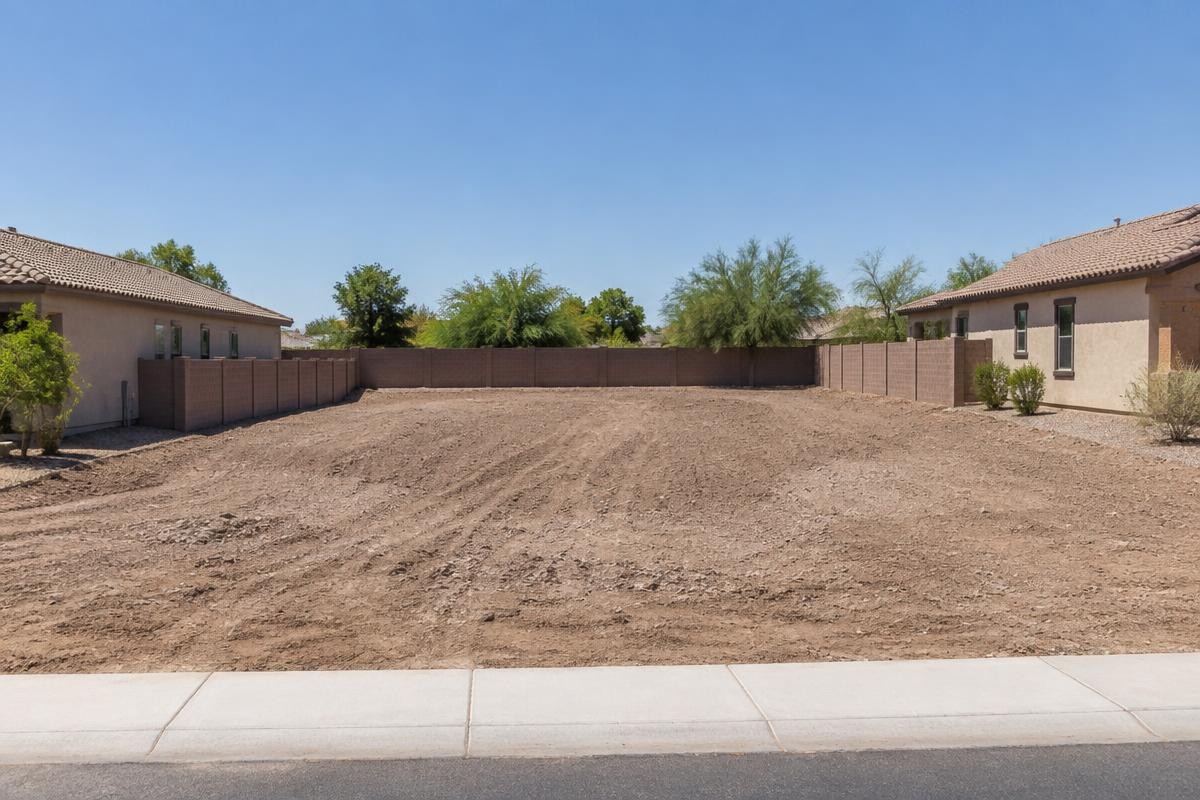
The visit itself is not exotic. What we try to get right is the part most services skip: separating what is yours from what is not.
The survey starts outside and works the boundary first, because on this side of the metro the direction pressure comes from is usually obvious once somebody walks it: the open phase, the wash, the vacant lot, the neighbour’s pool. Then the building — weep screed, thresholds, utility penetrations, roof line, and the places where a new build was finished quickly. Then the interior, and only where you have actually seen something.
You get the findings in writing with the price before anything is booked, and the findings say plainly which items are treatment, which are small repairs that will do more than treatment, and which are off your property altogether. For that last group we will tell you which authority takes it and what to give them, because a complaint with an address, a date and a photograph gets somewhere and a phone call about mosquitoes generally does not.
What changes the price out here
Three things move it, and one of them is geography rather than pests, so it is worth saying out loud.
Distance first. San Tan Valley is at the far south-east corner of the area we cover, so scheduling matters more here than it does in central Phoenix. We group work in this corner, which is why we will sometimes offer you a day rather than a time, and why a same-week slot is easier to promise than a same-day one.
Then the property itself: lot size, how much boundary faces open ground, and whether there are outbuildings. Then what the survey finds, which on a newer house is often a short list of small gaps rather than a treatment programme. Where a problem is being resupplied from outside your boundary, we price the work as maintenance and say so, rather than quoting a one-off cure that the next storm undoes.
San Tan Valley pest control questions
Who do I report a green pool or standing water to now?
Pinal County Environmental Health, not Maricopa. Its vector control programme monitors mosquitoes across the county and gives guidance to residents and HOAs, and the numbers on the county page are 520-509-3555 and 888-431-1311. Give them the address, how long the water has stood and a photograph if you have one.
Did anything about pest control change when San Tan Valley became a town?
Not for the work itself. What changed is the administration around it: the town took over on 1 July 2026 with its own code and permit process, while the Pinal County Sheriff still polices the area, Rural Metro still covers fire on subscription, and county health services are unchanged. How code enforcement will work is one of the things the town has said is still being settled.
Why does my new house get more scorpions than my last one?
Usually it is what lies beyond the fence rather than anything about the house itself. A property at the edge of the built area takes whatever crosses the open ground, and a recently finished build often has gaps at the weep screed and around utility penetrations that nobody has closed yet. Both are fixable, and sealing does more than spraying.
Do you charge more to come out to San Tan Valley?
The work is priced the same way it is anywhere. What distance affects is scheduling: we group jobs in this corner of the map, so you may be offered a day rather than a narrow window, and an urgent same-day visit is harder here than it is in central Phoenix. If timing is the priority, mention it at the first call and you will get a straight answer about what we can actually hold.
My address says Queen Creek but everyone calls it San Tan Valley. Which is it?
For us it makes no difference — we cover both. For anything official it matters, because one is Maricopa County and the other is Pinal, and the two counties run separate departments for mosquito and nuisance complaints. If you are not sure which side you are on, the county recorded on your property tax bill settles it.
Is the pest pressure here worse than in the rest of the Valley?
Not worse, different. There is more open ground close to housing, so scorpions and rodents arrive from outside more often than they do in a built-out suburb, and construction phases keep stirring things up. Against that, the housing stock is newer, which means fewer of the structural problems that make older neighbourhoods difficult.
Do you treat bed bugs in San Tan Valley?
Yes. Worth saying plainly first: nothing about the desert produces bed bugs. They are carried in, and in an area with this much moving in and out they usually arrive on something somebody brought through the door — a second-hand headboard, a mattress from a marketplace listing, a suitcase off a trip, boxes out of a storage unit.
Can bed bugs come in on second-hand furniture?
It is one of the commonest routes, and it changes when you should look rather than whether you should. A new sofa off a delivery van is not the risk; a used one is. The time to check seams, joints and undersides is the day a used item comes into the house, not the week somebody starts waking up with marks on their arms, which is usually a good deal later. Our bed bug control page covers what happens if you find something.
Related services
Scorpion Control in Phoenix
The night inspection and the sealing work that decide whether they get past the wall.
Mosquito Control in Phoenix
Finding the water on your own property, and what to do about the water that is not yours.
Rodent Control in Phoenix
Open ground on one side and a new build on the other is how roof rats and pack rats arrive.
Termite Inspection
The scope of a formal report when a newer house is bought or sold in this area.
Pest Control Queen Creek
Next door, different county, and a lot of properties with animals on them.
All Service Areas
Everywhere else we work, and why one corner of the metro behaves unlike another.
Tell us your cross streets
On this side of the metro the answer usually turns on what is behind you — open ground, a phase still being built, or a finished street. Send the cross streets and what you have seen, and we will tell you what the visit needs to cover.