Pest control across Phoenix and the Valley, seven days a week
We work out of 13832 N 32nd St, Suite D-141, Phoenix, AZ 85032 and cover the city of Phoenix and the surrounding Maricopa County communities. Open 6am to 9pm, every day, so early-morning and weekend appointments are real rather than theoretical.
Get a free quote
No obligation. We reply within 2 hours.
City of Phoenix pest control, and everything around it
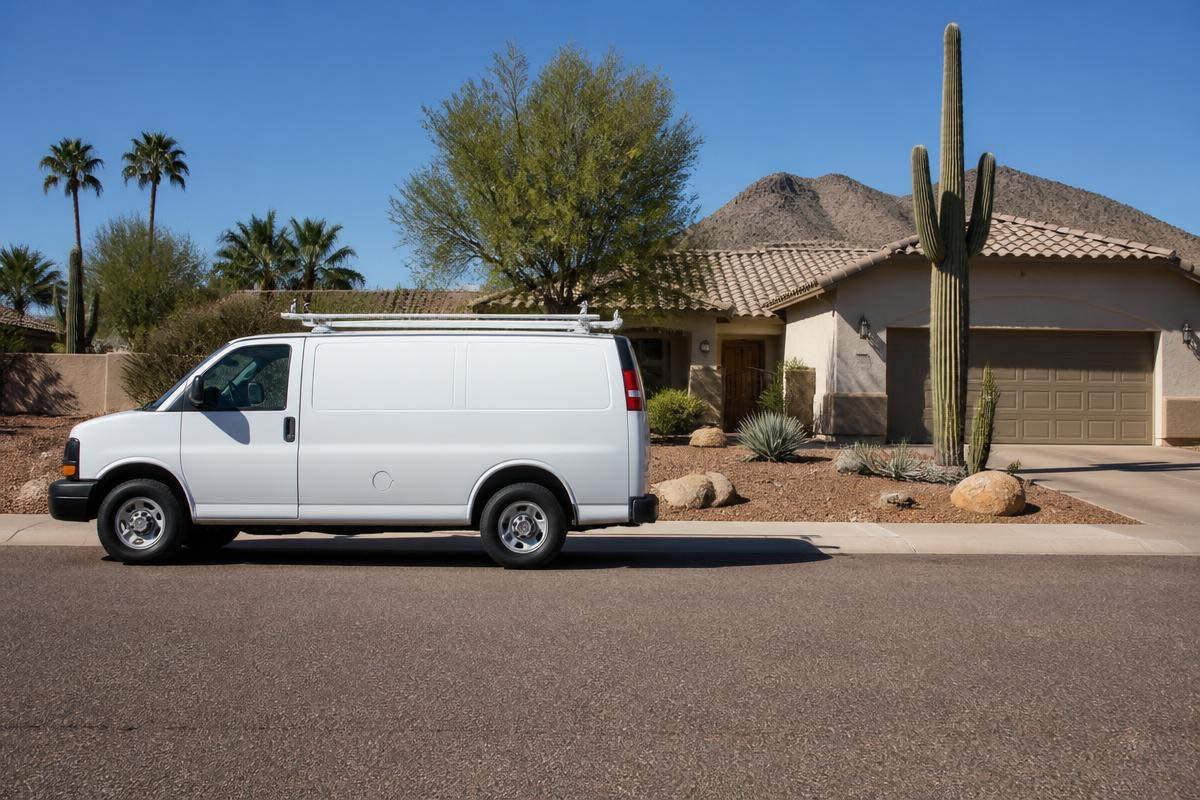
Most of our work is inside the city of Phoenix itself, but the Valley runs together and pest pressure does not stop at a city line. If you are roughly within forty minutes of our base, we cover you, and we will tell you honestly if you are outside that rather than sending a technician on a two-hour round trip and pricing it into your quote.
Same-day and next-day appointments are usually available across the core Valley — Phoenix, Scottsdale, Mesa, Tempe, Chandler, Gilbert and Glendale. Outer communities are normally next-day rather than same-day, and we will say which when you call rather than promising a slot we cannot hold.
Pest pressure is not the same across the Valley
This is the part most service-area pages skip. Two properties fifteen minutes apart can have completely different problems, and it is fairly predictable once you know what drives it.
Backing onto desert preserve
North Phoenix, Cave Creek, Anthem, north Scottsdale and the South Mountain and Estrella edges carry the heaviest scorpion pressure in the Valley, because there is a continuous supply arriving from open desert.
Older irrigated neighbourhoods
Arcadia, central Phoenix and parts of Scottsdale have mature citrus and flood irrigation. That is roof rat country. Newer desert-landscaped subdivisions a few miles away barely see them.
Recently built subdivisions
Queen Creek, Buckeye, Goodyear and the outer growth areas often have a rough first couple of seasons while the population displaced by construction settles.
Everywhere, all year
Termites. Desert subterranean termites are active across the whole Valley regardless of neighbourhood age or landscaping, which is why termite inspections are worth doing on any property.
Dense block-wall streets
Continuous block walling between properties gives scorpions a sheltered route from house to house. One untreated property can supply a street.
Stinknet corridors
The invasive weed has spread heavily through north Phoenix and Scottsdale and south along the I-10. It is a fire risk once dry, and it shrugs off ordinary weed killer.
Cities and communities we serve
Every one of these is inside our regular route. Click through for the service you need, or just call and describe what you are seeing.
- Phoenix, AZ
- Scottsdale, AZ
- Mesa, AZ
- Tempe, AZ
- Chandler, AZ
- Gilbert, AZ
- Glendale, AZ
- Peoria, AZ
- Surprise, AZ
- Goodyear, AZ
- Avondale, AZ
- Paradise Valley, AZ
- Queen Creek, AZ
- San Tan Valley, AZ
- Buckeye, AZ
- Cave Creek, AZ
- Anthem, AZ
- Ahwatukee, AZ
- Laveen, AZ
- Litchfield Park, AZ
- Sun City, AZ
- Sun City West, AZ
- Fountain Hills, AZ
- El Mirage, AZ
- Tolleson, AZ
- Apache Junction, AZ
Not on the list? Call anyway. If you are close to the edge of our area we will tell you straight away, and if you are outside it we would rather point you somewhere sensible than take the booking.
Booked around how the Valley actually runs
Early and late slots
We take calls and book from 6am to 9pm, seven days a week. In summer, early-morning appointments are genuinely better for exterior work.
Scorpion work is after dark
Blacklight inspections only make sense at night, so scorpion appointments are scheduled in the evening rather than squeezed into a daytime round.
Monsoon season moves fast
Mosquito numbers rise within days of a storm. During monsoon months we shorten intervals on mosquito programmes rather than waiting for the next scheduled visit.
Weekend appointments
Saturday and Sunday are normal working days for us, which matters if you cannot be home midweek for an interior treatment.
Why the same job is priced differently across the Valley
People compare notes with friends in other suburbs and wonder why the numbers differ for what sounds like the same service. It is usually one of these, and none of them are about the postcode itself.
How much perimeter there is
Pricing follows the linear footage we have to treat and seal, not the square footage of the house. A single-storey home on a big Cave Creek lot with long block-wall runs takes more work than a larger two-storey on a compact Tempe lot.
What the lot backs onto
A property against desert preserve, a wash or undeveloped land has a live edge that keeps resupplying scorpions and rodents. That needs a heavier perimeter and more frequent attention than an interior lot in a built-out subdivision.
Whether it is irrigated
Flood-irrigated blocks in Arcadia, central Phoenix and parts of Mesa hold moisture that gravel-landscaped yards do not. Moisture drives roaches, crickets and the rodents that follow them.
Two storeys and roof access
Roof-line work, tile edges and second-floor entry points need ladder access and take longer. It changes a rodent or scorpion job significantly.
How far out you are
Anthem, Queen Creek, Buckeye and Gold Canyon are a real drive from the core metro. It rarely changes the price of the work itself, but it does change what we can offer for same-day scheduling.
What is actually there
The single largest factor. A termite job is not a scorpion job. The area only matters because it changes what is likely to be present.
None of this is a surcharge for living somewhere. You get a flat number after the inspection, and if any of the above is what is driving it, we will tell you which one.
New subdivisions and established neighbourhoods need different things
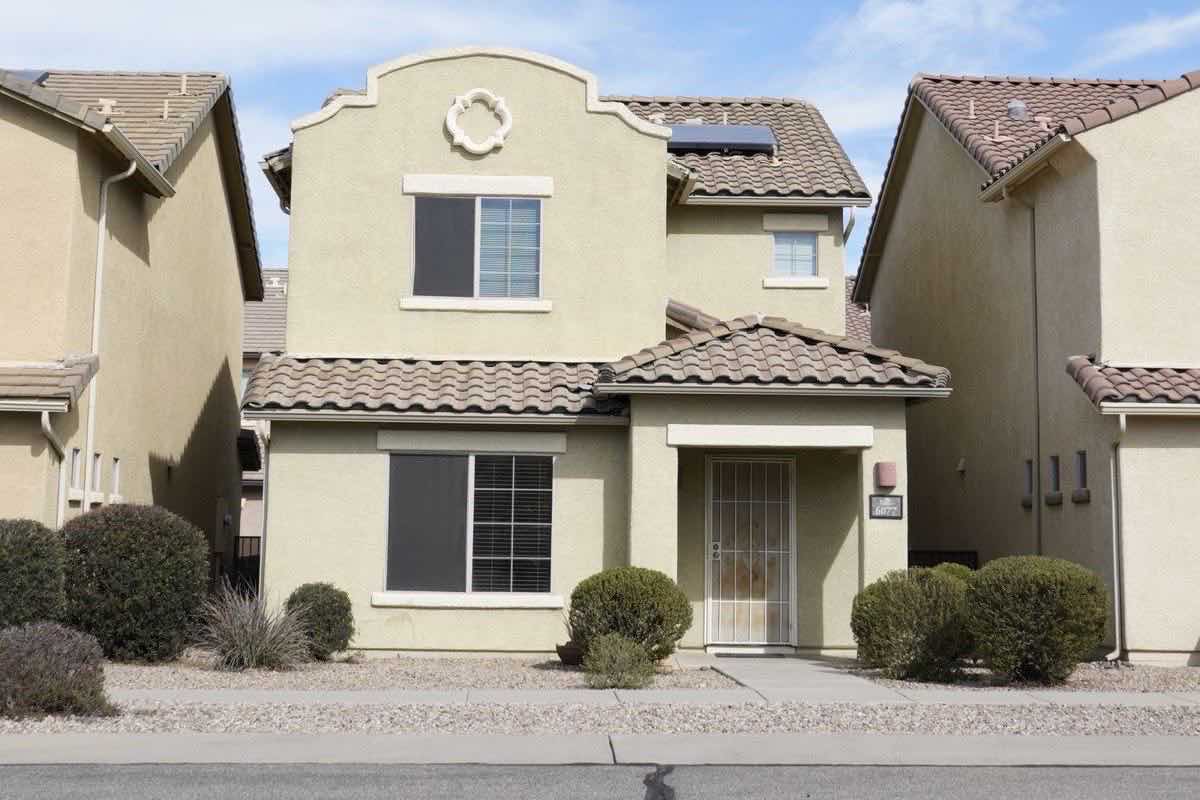
The Valley has grown in waves, and the era a house was built in predicts its pest problems better than almost anything else.
Newer subdivisions — Queen Creek, Buckeye, Goodyear, the edges of Surprise and Gilbert — are still settling into ground that was desert or farmland very recently. The displaced population comes with the development, so scorpions and rodents turn up in brand-new houses whose owners assumed new meant sealed. They are usually stucco over frame with weep screed at the base, which is a specific, findable entry point. Landscaping is immature, so there is less harbourage but also less shade, and the irrigation is new enough that leaks are rare. These properties respond very well to a thorough first exclusion, because there is not yet a decade of accumulated harbourage to deal with.
Established neighbourhoods — Arcadia, central and north-central Phoenix, the older parts of Mesa, Tempe and Glendale — are the opposite. Mature citrus and ficus give roof rats a ladder to the roofline. Flood irrigation puts water on the ground on a schedule. Older block construction, original vents and decades-old penetrations give more ways in, and slab and plumbing that has moved over forty years gives termites more to find. The work here leans towards rodent exclusion, termite inspection and drain work rather than perimeter alone.
If you have just moved, tell us roughly when the house was built. It shapes what we look at first, and the identification guide shows what each era tends to bring with it.
Rentals, HOAs and property managers
A good deal of what we do across the Valley is not a homeowner calling about their own house, and those jobs run differently.
Rentals and multi-unit buildings. Access is the whole problem. Tenants have to be given proper notice before anyone enters, and a single unit that cannot be entered will keep a problem alive for an entire building — roaches and bed bugs move through shared walls, plumbing chases and voids, so treating six units out of eight is not eighty per cent of a result. We would rather schedule around a tenant than skip them.
HOA and common-area work. Common areas, ramadas, pool equipment rooms, mail kiosks and shared landscaping have their own harbourage, and weed control across common ground has to be timed to the germination windows rather than to a board meeting. We provide the documentation boards need without being asked twice.
Property managers. One reporting standard across a portfolio, per-property records that survive a change of manager, and a scope agreed in writing so nobody argues later about whether a bed bug callout was covered. Tell us how many doors and we will quote it properly rather than by unit average.
The geography underneath all of this
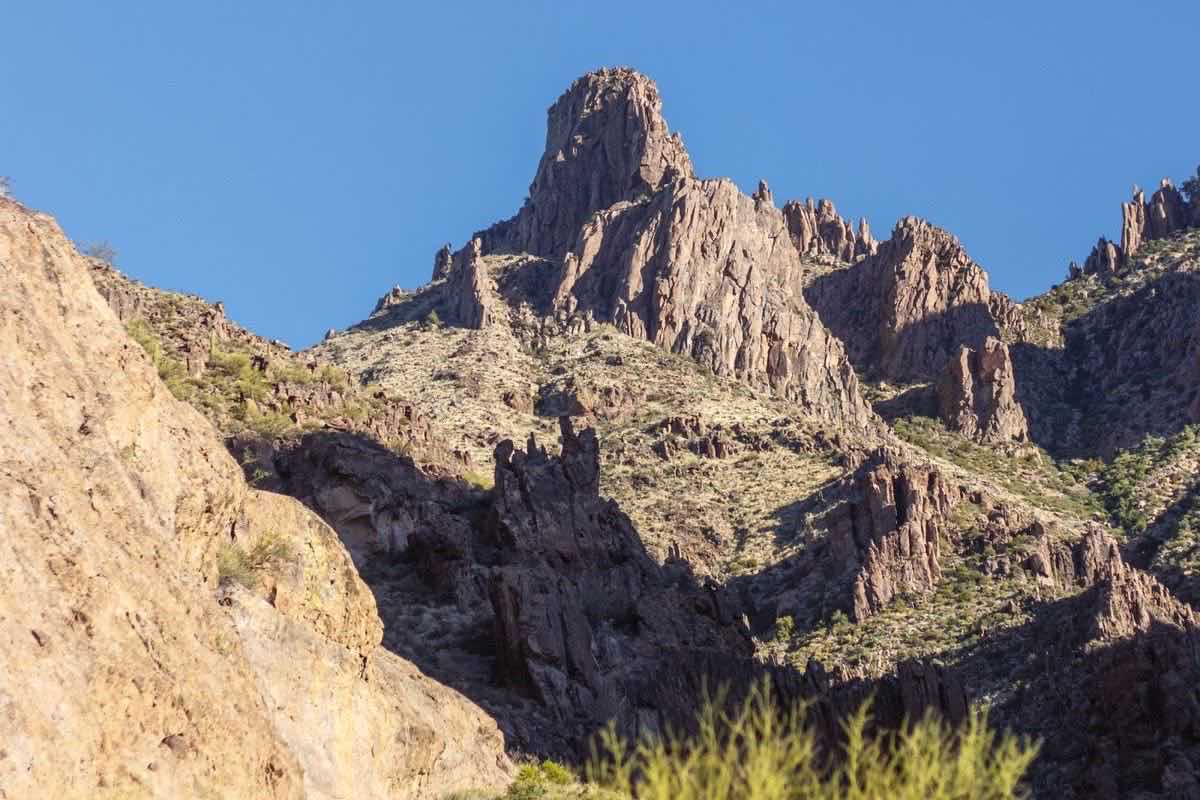
The Valley is a broad basin with mountains and preserved desert pushed right into the middle of it, and that shape explains most of the pattern above better than any city boundary does.
The preserve edges. The Phoenix Mountains, the McDowells, South Mountain, the Estrellas and the Sonoran Preserve on the north side are not parks with a fence around them — they are continuous desert habitat that runs straight up to back walls. Scorpions, crickets, kissing bugs, snakes and pack rats live there permanently, and the properties on that boundary are not dealing with an infestation so much as a supply line. That is why a home in north Phoenix, Cave Creek, Anthem, Fountain Hills or north Scottsdale can be sealed properly and still see more activity than an identical house three miles further in.
The washes. Dry washes thread through the whole metro and act as corridors, moving both wildlife and water. They flood briefly in monsoon season and then hold moisture in the sand for days afterwards, which is enough for mosquitoes and enough to draw everything that drinks. A property backing a wash gets a pulse of activity after every storm.
The Salt River bed and the canal system. The riverbed, the Arizona Canal, the Grand Canal and the laterals that branch off them carry water across the metro and support vegetation along their whole length. They are a permanent green corridor in a dry basin, and roof rats in particular use them.
The agricultural edge. Out towards Buckeye, Goodyear, Laveen, Queen Creek and the west side of Glendale, active and recently retired farmland sits directly against housing. Irrigated fields, ditches and outbuildings hold rodent and insect populations that move into the nearest development when a field is fallowed, harvested or built on.
And the heat itself. Nothing here dies back in winter the way it does in most of the country. There is no hard freeze to reset the population, so pressure is year-round rather than seasonal — it changes character through the year instead of stopping. In a Phoenix summer the drive indoors is about water, not temperature: when the ground is dry for months, the coolest and dampest thing for a mile is the inside of your house.
Service area questions
How far do you travel?
Roughly forty minutes from our base at 13832 N 32nd St, Suite D-141, Phoenix, AZ 85032, which covers the city of Phoenix and most of the surrounding Maricopa County communities. Beyond that the travel starts showing up in the price, and we would rather tell you than bury it in a quote.
Can you come out same day?
Usually, across the core Valley. Outer communities are more often next-day. Call and we will give you a real arrival window rather than an all-day slot.
Do you charge extra for outlying areas?
If a property is far enough out that travel genuinely affects the job, we say so when we quote. There is no hidden call-out fee added afterwards.
Do you service rental and vacant properties?
Yes. For vacant or tenanted properties we just need arranged access and a point of contact, and we will send the service report to whoever needs it — owner, tenant or property manager.
Do you work weekends?
Yes, seven days a week, 6am to 9pm. Most Phoenix pest control companies run Monday to Saturday, so weekend availability is worth knowing about if your schedule is the problem.
Is scorpion pressure really worse in some areas?
Yes, noticeably. Properties on the edge of desert preserve and in dense block-wall neighbourhoods carry far more than newer inner subdivisions. It is the single biggest geographic difference we see across the Valley.
Do you cover Tucson?
No. We are a Phoenix-metro company and we stay inside Maricopa County rather than pretending to cover the whole state.
Not sure if you are in our area?
Give us your suburb or cross streets and what you are dealing with. We will tell you straight away whether we cover you and how soon we can be there.