Pest control in Tempe, AZ
Tempe has been landlocked since the 1970s and cannot build its way out of anything. What changes here is not the buildings but who is in them — and that happens on a calendar.
Get a free quote
No obligation. We reply within 2 hours.
The one Valley city that cannot get any bigger
Every other place we work has somewhere left to put a subdivision. Tempe does not. It covers about forty square miles and it is completely surrounded — Mesa to the east, Scottsdale and the Salt River Pima-Maricopa Indian Community to the north, Phoenix and Guadalupe to the west, Chandler to the south. It has been landlocked since the 1970s and there is no land left for a new master plan. Roughly 180,000 people live inside a boundary that cannot move.
That one constraint explains more about pest control here than anything else. In Gilbert or Queen Creek, a large share of the housing stock is new, and new stock arrives with intact treatments, sealed penetrations and nobody’s history in it. Tempe gets none of that dilution. The buildings that are here are the buildings that will be here, and the only thing that changes is who is living in them.
The other half of the picture is Arizona State University, whose main campus sits in the middle of the city and which is one of the largest public universities by enrolment in the United States. The neighbourhoods within a mile or two of it — central Tempe, Optimist Park, Maple-Ash, the Apache corridor — carry a heavy share of investor-owned rentals, and Maple-Ash is the oldest surviving neighbourhood in the city. Old buildings, dense lots, and an occupancy that turns over on a calendar.
Where a problem goes when nothing is ever rebuilt
In a growing suburb, a pest problem is usually something that arrived recently and can be traced to something you can see. In a built-out city it is more often something that was already there.
The practical version of that: the gap under a Tempe back door has been that size for thirty years and has been used by something for most of them. The run of conduit through the wall was drilled once and patched badly once. The slab edge has been dug up for a cable, a sprinkler line and a patio extension by three different owners. Nothing here is a fresh surface, and a survey that assumes otherwise will miss most of what matters.
It also means the useful question on a Tempe property is almost never “what is wrong with this house”. It is “what has this house been doing for forty years, and what did the last four occupants do about it”. Half of what we find on a first visit in central Tempe is somebody’s previous attempt — a bait station behind a cupboard, expanding foam in a weep hole, a sheet of ply over a soffit gap. Those tell us where the problem has been for longer than any current sighting does.
There is an upside to this that is worth saying, because the rest of the page is fairly blunt. A building that has stood for forty years has already shown you its weaknesses. Nothing here is going to surprise us in year three the way a new-build can, where the first season reveals a detail nobody thought about. In Tempe the list of ways into a given building is finite, knowable and usually visible on the first visit, which is why a proper survey here is worth more than anywhere else we work and why we spend longer on it.
The handover, and why it all happens in the same fortnight

Most cities turn over their rented housing gradually, a few units at a time, all year round. Tempe does it on an academic calendar, and that changes the arithmetic completely.
Across a couple of weeks in late summer an enormous number of tenancies end and begin at once. Furniture comes out onto kerbs and into skips. Mattresses, sofas and desks get carried from one address to another, passed between friends, picked up free from a listing, or simply left by a bin and taken by whoever walks past. Units sit open with doors propped while people load vans. Then everything closes up again and the new occupants settle in.
If you wanted to design a system for moving insects around a dense city efficiently, it would look very like that. And the consequence is specific rather than general: a problem that existed in one unit in May is capable of being in several buildings by September, having travelled with objects rather than through walls. That is a different mechanism from the one most pest advice describes, and it is why we treat the late-summer weeks in Tempe as their own season.
The insects that exploit this best are the ones that travel in things rather than under their own steam. Our page on bed bug inspection and treatment covers what that looks like in a single property, and the bed bug life cycle guide explains why a population that arrives in August is often not noticed until well into the term.
The empty week almost nobody uses
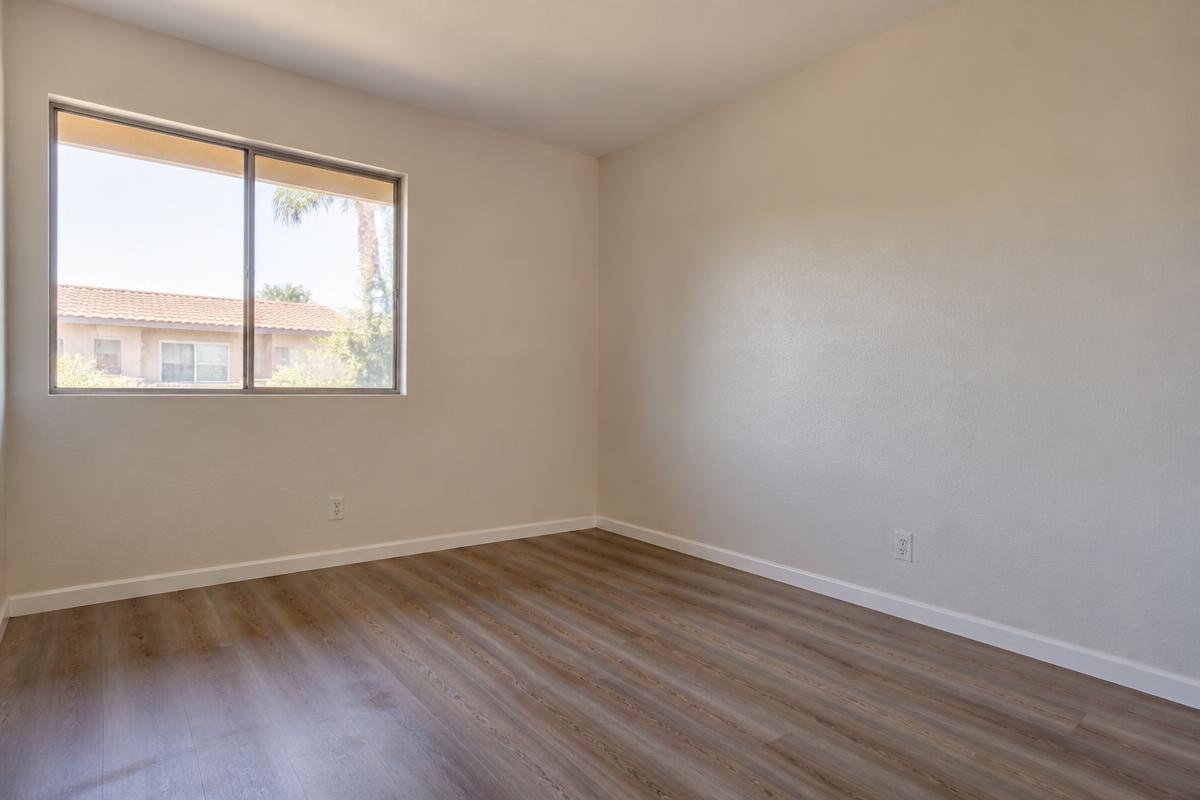
Here is the part of this page worth acting on, and it applies whether you own one unit or forty.
Between one tenancy ending and the next beginning there is usually a gap — a few days, sometimes a week or two. In that window the unit is empty, the furniture is gone, the floor is clear, and there is nobody to work around. It is the only moment in the entire year when a property can be inspected and treated properly, and in our experience it is almost always spent on paint and carpet cleaning instead.
An empty unit can be surveyed in a fraction of the time an occupied one takes, because every seam, every skirting run and every wall penetration is visible at once. Treatment that would otherwise need the occupants to prepare, vacate and return can simply be done. Sealing work that is disruptive in a lived-in flat is trivial in an empty one. And anything found is dealt with before it becomes the new tenant’s problem and the new tenant’s complaint.
If you manage property in Tempe and take one thing from this page, make it this: book the inspection into the turnover, not into the complaint. It is cheaper during the gap than it will ever be again, and it is the difference between a problem that stops with one tenancy and a problem that is handed forward with the keys.
What a block has that a house does not
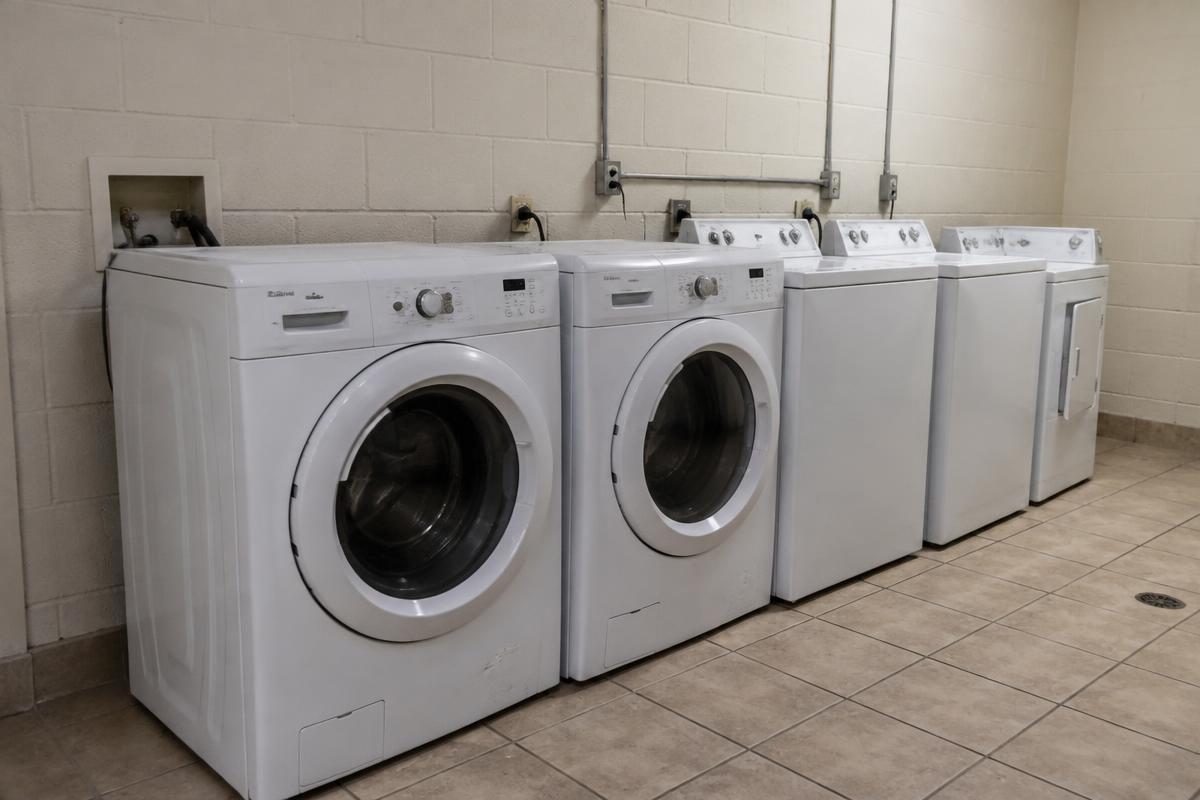
A great deal of Tempe is duplexes, fourplexes and small blocks rather than detached houses on their own lots, and those buildings have shared features that a single house simply does not.
The shared laundry
Warm, humid, used by everybody in the building and cleaned by nobody in particular. The gap behind and beneath the machines is one of the first places we look in an older Tempe block.
Breezeways and walkways
Covered, shaded, and running the length of the building at every level. They are a protected travel route and they are lit all night, which brings its own traffic.
The bin area
One enclosure serving twenty kitchens, and in late summer serving twenty kitchens being emptied at once. Distance from it predicts a great deal about which units get calls.
Shared utility runs
Water, waste and conduit threading between units through voids that were opened and closed by trades who were never going to meet each other.
Mature landscaping
Forty-year-old trees and shrubs against forty-year-old buildings, with branches touching roofs that no new-build HOA would allow for a season.
Nobody owning the edges
The strip between the car park and the fence, the alley side, the space behind the block. In a house that is somebody’s garden. Here it is often nobody’s job.
Treating one unit in a building like that and leaving the rest is usually money spent to relocate a problem rather than end it — which is the single most common thing we are asked to undo in central Tempe.
If you are moving into a Tempe rental
You have very little leverage after you sign and a surprising amount before you move anything in. Use the empty flat while it is empty.
Walk it before the van arrives rather than after. Look along the skirting runs, behind where the bed will go, and at the gap under the door to the walkway. Photograph anything you find, with the date, before any of your belongings are in the room — that single habit settles most of the arguments that follow, because it establishes what was there before you were. Check the laundry room and the bin enclosure too, since both will affect you and neither is yours.
If something turns up later, Arizona has a statute that sets out what tenants and landlords each have to do about bed bugs specifically, including a written notification duty on the tenant. We set out what it actually says, and what it pointedly does not say about who pays, in the bed bug guide. Our business is insects rather than statutes, so that section sets out what the law says and then deliberately stops, rather than wandering into advice we are not qualified to give.
And the obvious one, which people ignore every August: be careful what you take for free. A sofa on a kerb in a university neighbourhood in move-out week is the highest-risk piece of furniture in the Valley.
If you own units here
The economics in Tempe are not the same as in an owner-occupied suburb, and pretending otherwise produces bad decisions.
A problem in a rented unit is discovered later than one in an owner-occupied house, because the person living with it is not the person paying to fix it and often does not report it until it is severe. It then costs more, because severity costs more. It is also far more likely to have spread, both within the building and out of it during a handover. The way to get ahead of that is not to respond faster but to inspect on a schedule that matches the turnover rather than the complaints.
For buildings with more than a handful of units, or anything with a commercial kitchen attached, our commercial pest control page covers how documentation and scheduled visits work, which is also the record you will wish you had if anybody later disputes who knew what, and when.
What we actually do on a Tempe property
The survey is shaped by the building type far more than by the pest somebody rang about.
We ask what the building is
Detached house, duplex, block of flats, or a house converted into rooms. Each one has a different set of shared surfaces and a different honest answer about what treating a single unit achieves.
We read the previous attempts
Old bait, old foam, old patches. On a forty-year-old property these map the problem better than anything you can see today.
The shared spaces, not just yours
Laundry, bins, breezeway, the strip nobody mows. If the supply is there, work inside a single unit is a holding action.
Cockroaches get species-checked
Because the answer for a German cockroach living permanently indoors is nothing like the answer for one that came in from outside, and in dense older housing it is usually the former. Cockroach control.
Rodents, on mature lots
Old trees against old rooflines, and service penetrations drilled before anybody thought about sealing them. Rodent control.
A written route list
What is open, what closes it, and what is somebody else’s to close. That last column is what a tenant needs to hand to a landlord.
What changes the price in Tempe
Three things move a Tempe quote, and the size of the unit is the least important of them.
Whether the unit is occupied. This is the big one and it is almost entirely within your control if you plan around the handover. An empty flat is quicker to survey, quicker to treat and needs no preparation from anybody. The same job in the same flat with people and furniture in it is a different piece of work.
How many units share the structure. We will tell you honestly when treating yours alone is worth doing and when it is not. For a detached house in south Tempe it usually is. For one flat in an eight-unit block with a shared laundry, it often is not, and we would rather say so than take the money twice.
How long it has been going on. In rented property this is the variable that actually decides the invoice, because problems here are reported late by the structure of the arrangement rather than by anybody’s fault. Something caught at a turnover costs a fraction of the same thing caught in November.
Tempe pest control questions
When is the worst time of year in Tempe?
Late summer, and not for the usual weather reasons. The handover concentrates an enormous number of moves into a fortnight, furniture changes hands, and anything that travels in objects travels then. It is the one window where acting early genuinely changes the year.
I rent. Is any of this my responsibility?
Some of it. Arizona has a statute dealing specifically with bed bugs in rentals that puts duties on both sides, including a written notification duty on the tenant, and it is set out in our bed bug guide. Beyond that it comes down to your lease, and that is ground for a solicitor or a tenants’ advice line, not for us.
Is it worth treating my flat if the neighbours do not?
Sometimes, and we will tell you which case you are in before you commit. Where the supply is coming from a shared laundry, a bin area or the unit next door, treating yours alone buys time rather than a result. Where your unit is genuinely the source, it ends it.
The building is from the 1970s. Does that make it worse?
Not worse, but different. Age is not the problem; forty years of drilling, patching, digging and extending is. The openings we find in older Tempe buildings were usually made deliberately, by somebody doing an unrelated job, and never properly closed afterwards.
I am a landlord. How often should I be inspecting?
At every turnover, as a minimum, because that is when it is cheapest and easiest and when an empty unit tells you the truth. Responding only to complaints means you find things late, in rented property later than anywhere else, and late is what costs money.
Do you work with student tenants directly, or only owners?
Both. If you rent, we will survey, tell you plainly what is yours and what is the building’s, and put the second part in writing so you have something concrete to hand over rather than a complaint about insects.
Related services
Bed Bug Control
The insect that exploits a handover better than any other, and the one we see most in the weeks after it. Bed bug control.
Cockroach Control
Dense older housing with shared kitchens and shared waste is where species identification stops being academic. Cockroach control.
Commercial Pest Control
Blocks, student housing and anything with a kitchen attached, where what gets written down counts for as much as what gets sprayed. Commercial pest control.
Tell us whether the unit is empty
If it is between tenancies, say so when you call — that changes what we can do, how long it takes and what it costs. If it is occupied, tell us what the building is and how many units share it.