Cockroach control in Phoenix starts with working out which roach you have
Most roaches Valley homeowners see are outdoor species walking in — up a drain, through a garage door, drawn to a porch light in June. That is a completely different job from a German cockroach infestation, and treating one like the other is why the problem comes back.
Get a free quote
No obligation. We reply within 2 hours.
Three roaches, three different problems
Phoenix has one true indoor roach and two that live outside and come in. Identifying which you are dealing with decides everything that follows — where product goes, whether we treat drains, and whether the fix is exclusion or baiting.
American cockroach — the “sewer roach”
The big reddish-brown one, often over an inch and a half. It lives in sewers, storm drains, irrigation boxes and meter boxes, and comes up through floor drains and dry P-traps. Finding one in a bathroom at night usually means a drain, not an infestation.
Turkestan cockroach
An outdoor species established in Phoenix and Tucson since the early 1980s. It lives in water meter boxes, irrigation valve boxes, compost and leaf litter. Males fly and are drawn to lights at night, and numbers peak around June, which is when the calls start.
German cockroach
The one that genuinely infests indoors. Small, tan, with two dark stripes behind the head. It lives in kitchens and bathrooms, breeds fast, and spreads between units in apartments. This is the species that needs a real treatment programme.
The practical shortcut: a large roach seen occasionally, at night, near a drain or a door is almost always an outdoor species. Small tan roaches seen in daylight near a kitchen appliance are German cockroaches, and the count is higher than what you can see. German cockroaches are also the species that dominates commercial kitchens, which is a different job on a different timetable and is set out on our restaurant pest control page.
Why spraying makes German cockroaches worse
This is the single most useful thing on this page, so it gets its own section.
Repellents scatter them
Aerosols and over-the-counter sprays are repellent. German roaches respond by moving deeper into voids and outward into adjacent rooms — or in an apartment, into the neighbouring unit.
Bug bombs are worse
A fogger treats open surfaces and reaches almost none of the harbourage roaches actually use. What it reliably does is disperse the population and make the follow-up job larger.
Baiting works because they share it
Gel bait is carried back to the harbourage and passed through the population, including the individuals that never leave the void. That is why baiting reaches insects a spray never touches.
Spraying over bait cancels it
Residual spray on or near bait placements makes the bait unattractive. If you have sprayed recently, tell us — it changes where we can place and how long it takes.
How we treat each type
The species decides everything here. An outdoor cockroach that wandered in from the irrigation box and a German cockroach breeding under the dishwasher need close to opposite treatments, and the most commonly wasted job in Phoenix is a perimeter spray aimed at a population living entirely indoors. Identification comes first for that reason, not as a formality.
Identify
Inspection first. Species, where they are entering or harbouring, and what is sustaining them — moisture, food debris, cardboard, an open drain.
Outdoor species
Perimeter and harbourage treatment plus exclusion: door sweeps, weep screeds, utility penetrations, meter and irrigation boxes. Drains and dry P-traps get addressed, because that is the route in. It is also the single most predictable thing to go wrong in a house nobody is living in, which is why it comes up constantly on seasonal and short-term rental properties.
German cockroach
Gel baiting at harbourage points, crack-and-crevice work, and monitors to measure the drop rather than guess at it. No broadcast spraying in the kitchen.
Follow-up
German roach work needs at least one return visit — the egg cases are protected and hatch after the first treatment. We schedule that in rather than waiting for you to call back.
For outdoor species the fix is largely structural and holds for a long time. For German cockroaches expect a programme over several weeks, and expect us to ask you to change a few things in the kitchen while it runs.
What is feeding them on a Phoenix property
Irrigation and meter boxes
Buried boxes stay damp and dark year-round. They are the main Turkestan cockroach habitat in the Valley and they sit a few feet from the house.
Floor drains and dry traps
A trap in a guest bathroom or laundry that has dried out is an open pipe from the sewer. Running water down unused drains monthly costs nothing.
Porch and landscape lighting
Bright white light at night pulls flying males straight to the door in early summer. Warmer, dimmer fixtures near entrances make a measurable difference.
Cardboard and paper
Corrugated cardboard in a garage or pantry is harbourage and food at the same time. It is the first thing we ask people to clear.
Pet food and bins
Bowls left down overnight, and bin lids that do not seal. Small changes here do more than an extra treatment.
Leaks under the sink
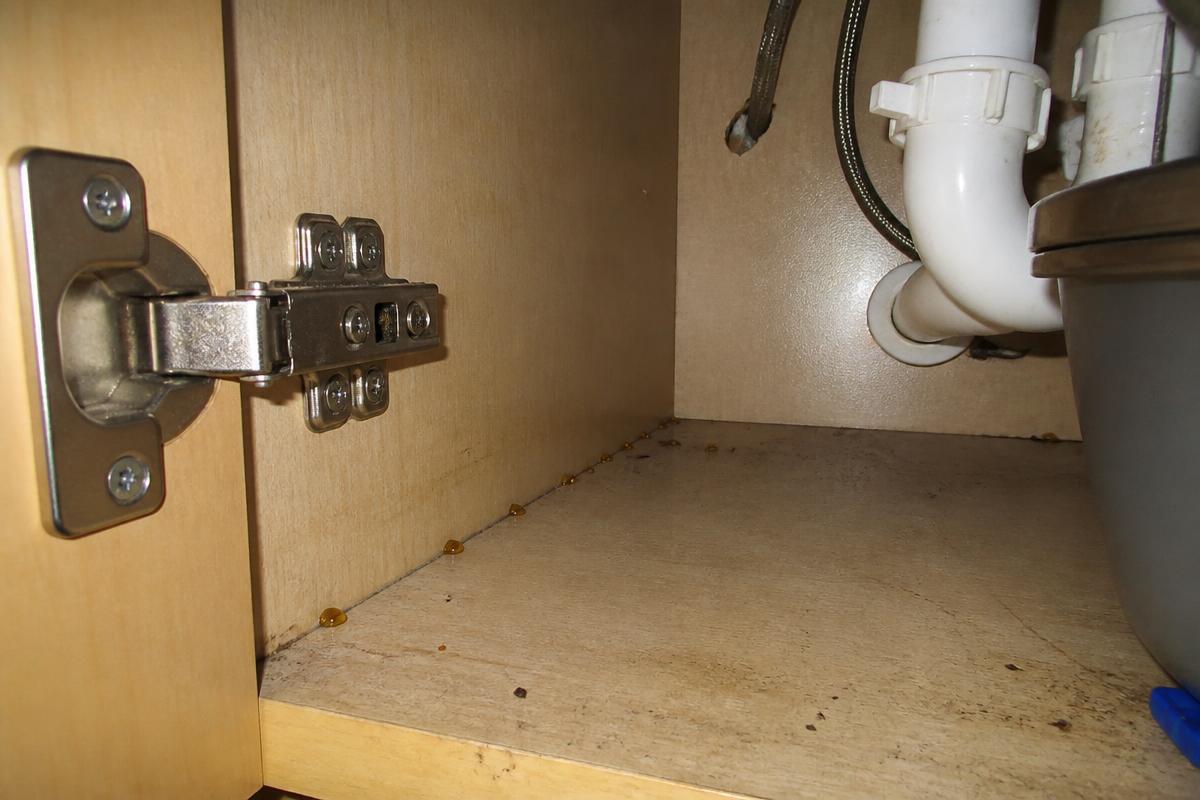
German cockroaches need water more urgently than food. A slow leak in a cabinet will sustain a population through any amount of cleaning.
What cockroach control costs in Phoenix
As a benchmark, Phoenix homeowners generally pay somewhere between $40 and $100 a month for ongoing cover, or $110 to $300 for a single general treatment. Occasional outdoor roaches are normally handled inside a general programme; a German cockroach infestation is quoted separately.
Which species
Outdoor roaches are largely an exclusion and perimeter job. German cockroaches are a multi-visit baiting programme, and priced as one.
How far it has spread
Contained to one kitchen, or already in the living room furniture and the neighbouring unit. Early is dramatically cheaper.
Building type
A single home is one job. A unit in a multi-family building means inspecting and often treating the neighbours, because otherwise it comes straight back.
Whether it has been sprayed
Recent over-the-counter spraying or a fogger adds visits, because the population is dispersed and bait placement is compromised.
You get a flat price after the inspection, with the number of follow-up visits included in it.
The drain problem, and the fix that costs nothing
If the roach you keep meeting is a big reddish-brown one in the bathroom at night, the treatment that matters is not a spray. It is a cup of water.
Every drain in the house has a P-trap: a U-bend that holds a small amount of water and forms a seal between your room and the sewer line. While the water is there, nothing can walk up. In Phoenix the water evaporates faster than almost anywhere else, and any drain that goes unused for a few weeks loses its seal completely. Once it does, the drain becomes an open pipe from the sewer into your bathroom.
The drains this happens to are predictable: the guest bathroom nobody uses, the shower in a room kept for visitors, the laundry standpipe, the floor drain in a garage or utility room, and the condensate drain from the air conditioner. A faint sewer smell in a room that is otherwise fine is usually the same story.
The fix is to pour a cup or two of water down each unused drain about once a month, which refills the trap. A splash of mineral oil on top slows the evaporation further if the room is genuinely never used. If a trap is being refilled and the smell or the roaches persist, that is a plumbing problem — a cracked line, a dry vent, or a trap that was never installed — and it needs a plumber rather than us. Some cities treat the public side of that system themselves, and Peoria treats thousands of manholes a year under contract. What that does and does not do for a household is set out on our Peoria page.
Why gel bait stops working, and what we do about it
Gel bait is the right tool for German cockroaches, and it is also the tool most often used badly. Understanding how it fails explains most of the “we baited and they came back” stories.
A bait has two parts: the active ingredient that kills, and the food matrix that persuades the roach to eat it. Populations can become averse to the matrix — not resistant to the poison, simply unwilling to eat that particular formulation — and once that happens, the bait sits there untouched and looks like a product failure. The answer is to rotate: different active ingredients, and just as importantly different matrices, rather than reapplying the same tube because it worked last year.
The second failure is competition. Bait only works if it is the most attractive food available. A greasy gap behind the cooker, a bin without a lid, crumbs under a slide-out fridge, a dog bowl left down overnight, or a cardboard stack against a warm wall will out-compete it every time. This is why sanitation is not a lecture about tidiness — it is the thing that makes the treatment work.
The third is spraying over bait. A residual insecticide applied across a baited area contaminates the bait and repels roaches away from it, so the two treatments cancel each other out. The kitchen roach-proofing guide covers what to do about that yourself. If someone has been spraying the kitchen with a store-bought product, tell us — it changes where we place bait and how long we wait.
Cockroach questions we get asked in Phoenix
I saw one big roach. Do I have an infestation?
Probably not. A single large reddish-brown roach at night, especially in a bathroom or near a door, is usually an American or Turkestan cockroach that came from a drain, an irrigation box or a porch light. It is worth sealing and treating the entry route, but it is not the same situation as German cockroaches breeding in a kitchen.
Why do roaches come out of my drains?
Because a P-trap that has dried out is an open pipe to the sewer line. Guest bathrooms, laundry sinks and floor drains that go unused for weeks are the usual culprits. Running water down them once a month refills the trap and closes the route.
Does keeping the house clean stop them?
It helps enormously with German cockroaches, which need moisture and food debris. It does very little against American and Turkestan roaches, which live outdoors and are coming in through a gap or a drain regardless of how clean the kitchen is. The stronger reason to get the numbers down indoors is allergen rather than dirt, and what the research actually says about that is set out on its own page.
Why are there suddenly loads of flying roaches in June?
Turkestan cockroach numbers peak in early summer and the males fly towards light. If your porch and patio lights are bright and white, you are running a beacon. Switching to warmer, lower-output fixtures and sealing the door sweep usually settles it.
Are the products safe around food areas and pets?
We use EPA-registered products and, in kitchens, gel bait placed into cracks, voids and hinge points rather than sprayed across surfaces. Your technician will tell you what to cover or move and when each area is clear.
How long until they are gone?
Outdoor species usually settle within days of the entry points being treated and sealed. German cockroaches take weeks, not days — the egg cases are protected from treatment and hatch afterwards, which is exactly why the follow-up visit exists.
I live in an apartment. Will treating my unit be enough?
Often not on its own. German cockroaches travel between units along shared plumbing and wall voids, so a treated unit next to an untreated one keeps receiving them. We treat the affected unit and its neighbours together, and we can deal with the property manager directly.
Can I just use bait from the hardware store?
It can help with a light German cockroach problem if you place it correctly and do not spray anything near it. Where it fails is scale and placement — the bulk of the population is inside voids people never open, and consumer bait is often put on surfaces rather than into harbourage.
Related services
Commercial Pest Control
German roach programmes for restaurants and multi-family, with health-inspection documentation.
Scorpion Control in Phoenix
Roaches and crickets are what scorpions hunt. Reducing them reduces scorpion pressure.
Rodent Control in Phoenix
The same drains, door sweeps and weep screeds let rodents in.
Not sure which roach you have?
Send us a photo or describe the size, colour and where you saw it. We can usually identify it before we arrive, and tell you whether it needs a programme or just a sealed drain.