Pest control in Surprise, AZ
Surprise had about thirty thousand people in 2000 and has around a hundred and sixty-seven thousand now. Almost all of that arrived as master-planned communities, and in a master-planned community the ground your pest problem is coming from is often not ground you own.
Get a free quote
No obligation. We reply within 2 hours.
In Surprise, your lot is a small part of the ground around your house
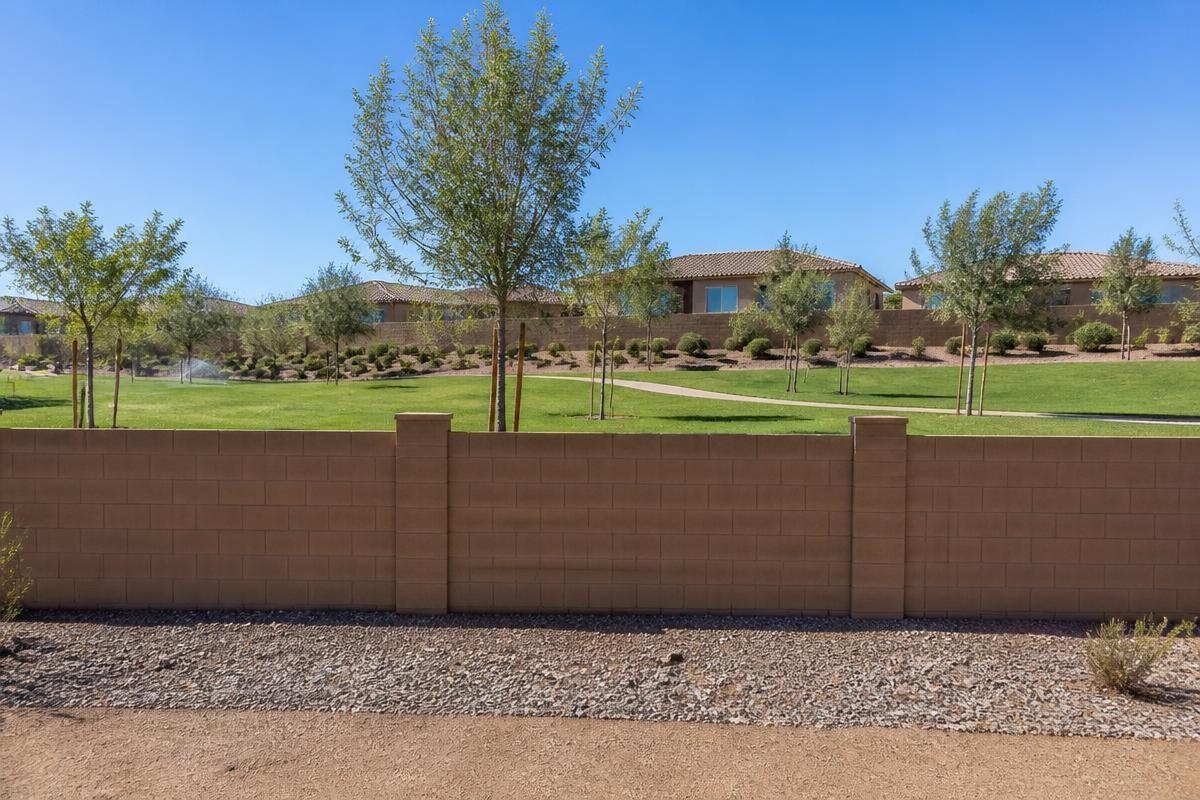
Surprise is now one of the ten largest cities in Arizona, and it got there in about twenty-five years. Growth that fast does not happen lot by lot. It happens as whole communities, planned and built as single pieces, and that is what most of Surprise is.
Sun City Grand alone accounts for roughly nine thousand eight hundred residences. Del Webb built it between 1996 and 2005 as an age-restricted community for residents of fifty-five and over. Marley Park, Asante, Arizona Traditions and Sterling Grove followed the same pattern at different scales. Between them they define what a Surprise address usually looks like: a house on a modest lot, inside a larger development that came with its own landscaping, its own street layout and its own open space.
That last part is the one that matters here, and almost nobody thinks about it until there is a problem. Stand in a Surprise back garden and the ground you own probably stops within a few steps of the wall. Beyond it is the greenbelt, the walking path, the retention basin, the landscaped strip along the collector road, the wash that the development was built around. All of that is common area. The homeowners association maintains it. You do not.
Your lot
The house, the garden inside the wall, and the few feet of gravel around the perimeter. This is the part a treatment can actually cover.
The common area
Greenbelt, retention basin, wash, verge planting, shared walls and the irrigation that keeps all of it alive. Maintained under an HOA contract, not yours.
Where they meet
Usually a block wall, and usually about twenty feet from your back door. That wall is a boundary of ownership. It is not a boundary anything living crosses.
You can treat your own property perfectly and still be re-supplied from next door
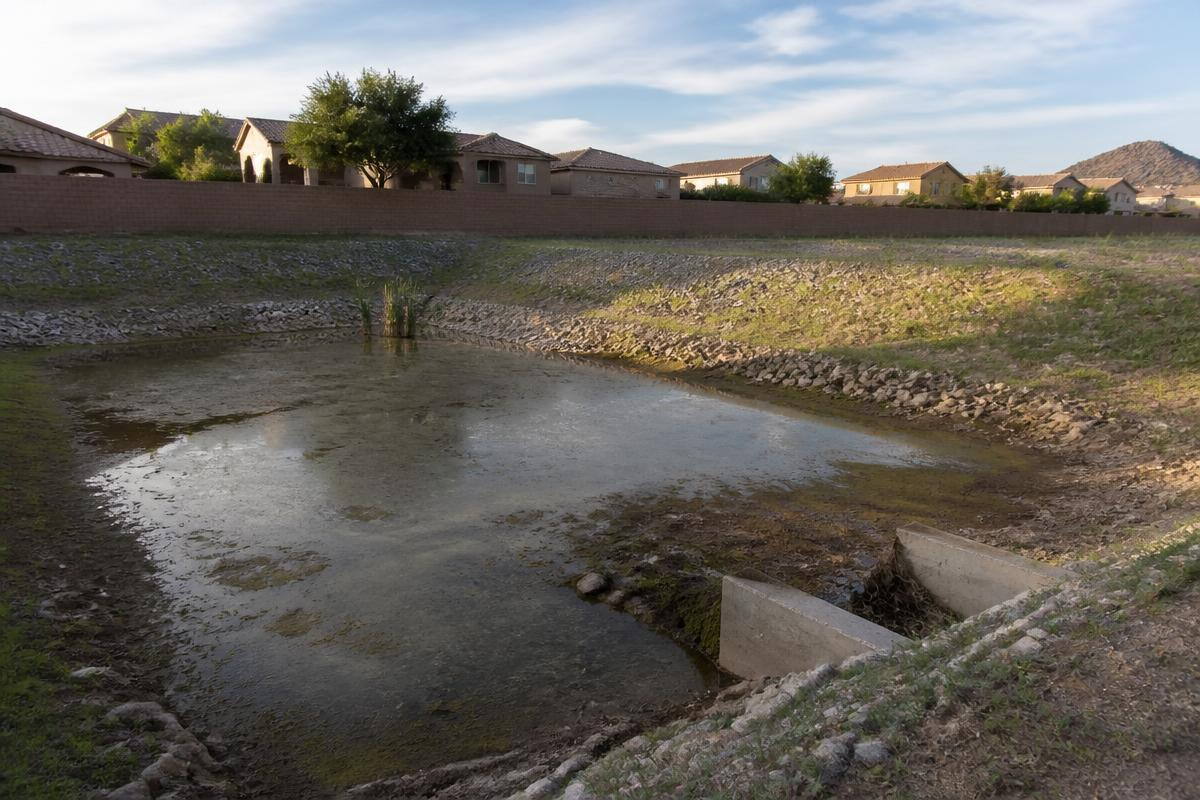
This is the whole argument, and it explains a pattern we see constantly in Surprise: a homeowner does everything right, the treatment works, and six weeks later the same thing is back.
Common area in a Phoenix master-planned community is not neutral ground. It is generally the wettest, densest and least disturbed land in the neighbourhood, because it is the part that gets irrigated on a schedule and walked through rather than lived on. A retention basin is designed to hold water after a storm, which is exactly what mosquitoes need and why mosquito work in these communities is usually about standing water you do not control. Greenbelt irrigation keeps a strip of soil damp year-round in a desert. Landscaped verges accumulate leaf litter, and the boxes and valve covers that run the irrigation stay dark and cool underneath.
So the honest sequence on a Surprise property is: treat the house and the lot properly, and then find out what is on the other side of the wall. If the answer is a permanently damp greenbelt twenty feet away, the reinfestation is not a failure of the treatment. It is a supply line, and it is one nobody has addressed because nobody who lives there is responsible for it.
None of this means a treatment is pointless. It means the expectation should be right from the start. On a house backing open common area, the realistic outcome is control that has to be maintained, not a single visit that ends it. Anyone who tells you otherwise on that kind of lot has not looked over the wall.
Retention basins
Built to hold water after rain. What holds water breeds mosquitoes, and the basin is almost never on the homeowner’s side of the wall.
Greenbelt irrigation
A strip of reliably damp soil in a desert, running the length of the street. It supports everything that needs moisture, year-round.
Valve and meter boxes
Dark, cool and undisturbed. Common-area irrigation means more of them, and they sit outside the boundary a treatment stops at.
What to do about ground you do not own
You cannot treat it and neither can we, not without the association’s instruction. What you can do is make the problem visible to the people who can, and that works better than most homeowners expect, because associations respond to documented patterns rather than single complaints.
Photograph what you find and note where and when. A standing puddle in a basin four days after rain, a valve box that never dries, an irrigation head spraying a wall rather than a plant, rubbish or green waste stacked in a common-area corner. Date the photographs. Then report it to the management company in writing rather than mentioning it to a neighbour, because written reports are what get scheduled.
If several houses on the same stretch are seeing the same thing, say so. One report is a complaint and tends to sit; three from the same street is a maintenance issue with a location attached, and that is what moves. If your association already retains a pest control contractor for common areas, ask what the schedule actually is — it is often quarterly, which leaves long gaps in the months that matter most.
For our part, we will tell you plainly which half of the problem is yours. If a survey shows the pressure is coming from over the wall, that goes in the report in writing, and it is the document you hand to the association. Associations also retain contractors directly, and that side of the work is described on our commercial pest control page. The same question arrives in a different shape in Goodyear, where the ground nobody owns is a river corridor rather than a landscaped strip.
Sun City Grand, and what nine thousand similar houses means
An age-restricted community built to a handful of floor plans over nine years has a property worth noticing: the houses are not just near each other, they are the same. The same weep screed detail runs along the base of the stucco on every one. The same garage door seal was fitted to all of them in the same decade, and they are wearing out on roughly the same schedule. The same patio slab meets the same wall in the same way.
That cuts both ways, and the useful half is that it makes diagnosis fast. If we find the way in on one house in a run, the same gap is worth checking on the neighbours, and it usually is the same gap. Nothing about that is guesswork — it follows from how the houses were built.
The other half is that a maintenance issue is rarely confined to one address. A garage door seal that has gone brittle after twenty years has gone brittle on the whole street, and the run of houses will start seeing the same thing within a season or two of each other. If a neighbour mentions something, it is worth checking your own rather than waiting.
What we actually do on a Surprise property
The first visit walks the lot boundary and the structure, and you get the findings and a number for the work before anything is agreed. On a Surprise address it includes one step we would skip in an older part of the Valley: establishing what the property backs onto, and whether that ground belongs to you.
The common calls here are the ordinary Valley ones. Scorpion work is perimeter-led and does not change much for being in a planned community, except that the wall line is longer and there is more of it shared. Rodent work covers the same ground here as anywhere, from the roof edge down to the base of the stucco. Termite control follows the standard Valley slab approach, and because most Surprise housing went up after the pre-construction treatment era began, the Chandler page is the one that explains what that soil treatment was and when it stops counting.
Where Surprise genuinely differs is the report. If the survey finds the pressure is arriving from common area, we say so on paper, with the location, so that it is useful to somebody other than us.
What changes the price in Surprise
Perimeter length does most of it, and in a planned community that is usually shorter than people expect. Lots are modest, walls are shared, and a house in the middle of a run has less exposed boundary than a corner plot on the same street. A corner or an end-of-run house backing common area is the expensive shape, because it has boundary on two or three sides and open ground behind.
The second factor is whether the work is one visit or a maintained interval. On an interior lot surrounded by other houses, one treatment and a check is often enough. On a lot backing a greenbelt or a basin, we would rather quote for an interval and be honest about why than quote a single visit we know will not hold.
Two things carry published numbers already — what an inspection costs is on the termite inspection page, and bed bug control sets out its own bands. The rest is quoted after the walk-round, because on this side of the Valley what sits behind the wall moves the figure more than the house does.
Surprise pest control questions
The problem is coming from the greenbelt. Can you treat it?
Not without the association instructing us, because it is their land and their contract. What we can do is survey your property, treat what is yours, and put in writing where the pressure is coming from and what is causing it. That report is the thing to send to the management company, and it carries more weight than a phone call.
Why does it keep coming back when the treatment worked?
Usually because the source was never on your side of the wall. A treatment clears the property and then the property gets re-supplied from adjacent ground that is damper and denser than anything you own. That is not a failed treatment; it is an unaddressed supply line, and the fix is either an interval that keeps pace with it or getting the common area dealt with.
My neighbours have the same thing. Is that a coincidence?
In a community built to a few floor plans in a short window, usually not. The same construction detail exists on every house and ages at the same rate, so a gap that opens on one tends to open on the run. It is worth comparing notes, and it is worth reporting as a street rather than as individual households.
Does the HOA already pay for pest control?
Many retain a contractor for common areas, and that is separate from anything inside your wall. Ask your management company what the contract covers and how often the visits are, because a quarterly common-area schedule leaves long gaps in the months when pressure is highest. Knowing the answer changes what you need to arrange yourself.
Is a newer Surprise house better or worse than an older Valley one?
Better in the ways you would expect and not in others. The construction is tighter and most of it had the soil treated before the slab went down, which the Chandler page explains. What newer communities add instead is landscaped common ground and irrigation on the other side of the wall, which older neighbourhoods with private gardens simply do not have.
Do you cover all of Surprise?
Yes, from the original townsite out through Sun City Grand, Marley Park, Arizona Traditions and the newer communities in the north-west toward the White Tank Mountains. When you call, say whether your lot backs onto other houses or onto common area. In this city that one detail tells us more than the street name. Sun City Grand is also not the same place as Sun City or Sun City West, which are separate unincorporated communities further east.
Related services
Mosquito Control
Retention basins and greenbelt irrigation are common-area water, and standing water is the whole argument. Mosquito control.
Scorpion Control
Perimeter-led work, and in a planned community the perimeter is mostly shared block wall. Scorpion control.
Rodent Control
Roofline to weep screed. Uniform construction means the same entry point tends to repeat down a street. Rodent control.
Commercial Pest Control
The side of this that associations and management companies contract directly, with reporting. Commercial pest control.
Termite Inspection
Scope, report and cost, including what evidence of a pre-construction treatment actually looks like. Termite inspection.
All Service Areas
How the job changes across the Valley. Glendale is the opposite extreme — housing old enough to pre-date the slab. Service areas.
Tell us what your garden backs onto
Other houses, or common area. That single answer reshapes the survey here, and nothing gets booked until the findings and the number are with you in writing.