Pest control in Peoria, AZ
Peoria covers about 179 square miles and reaches from a canal-era townsite in the south to Lake Pleasant and the Yavapai County line in the north. Telling us which end you are on changes the visit more than the pest does.
Get a free quote
No obligation. We reply within 2 hours.
A Peoria address does not tell you very much on its own
Most cities in the Valley are compact enough that one description covers them. Peoria is not, and that is the single most useful thing to know before booking anything here.
The city covers roughly 179 square miles in total, and it is long rather than round. The southern end grew out of the 1880s, when the Arizona Canal reached this part of the desert and William John Murphy recruited settlers to farm it; the plat was filed in 1897 and the city itself was incorporated in 1954. The northern end is a different world: Lake Pleasant, which Peoria annexed in 1996, the Agua Fria and New River drainages, and a stretch of the city that sits in Yavapai County rather than Maricopa.
In between, a population that went from 154,065 at the 2010 census to 190,985 in 2020 filled in a lot of ground. So a Peoria property might be a 1960s house on an old street near the original townsite, a 1990s subdivision in the middle, or a new build at the edge of open desert twenty-five miles north of it.
Those three produce different problems. The old streets are about what comes up from below and what lives in mature planting. The new north is about what walks in off the desert. And the money question — termites — behaves differently at each end. That is why the first question we ask on a Peoria call is the cross streets, not the pest.
The city treats its own manholes, and almost nobody knows it
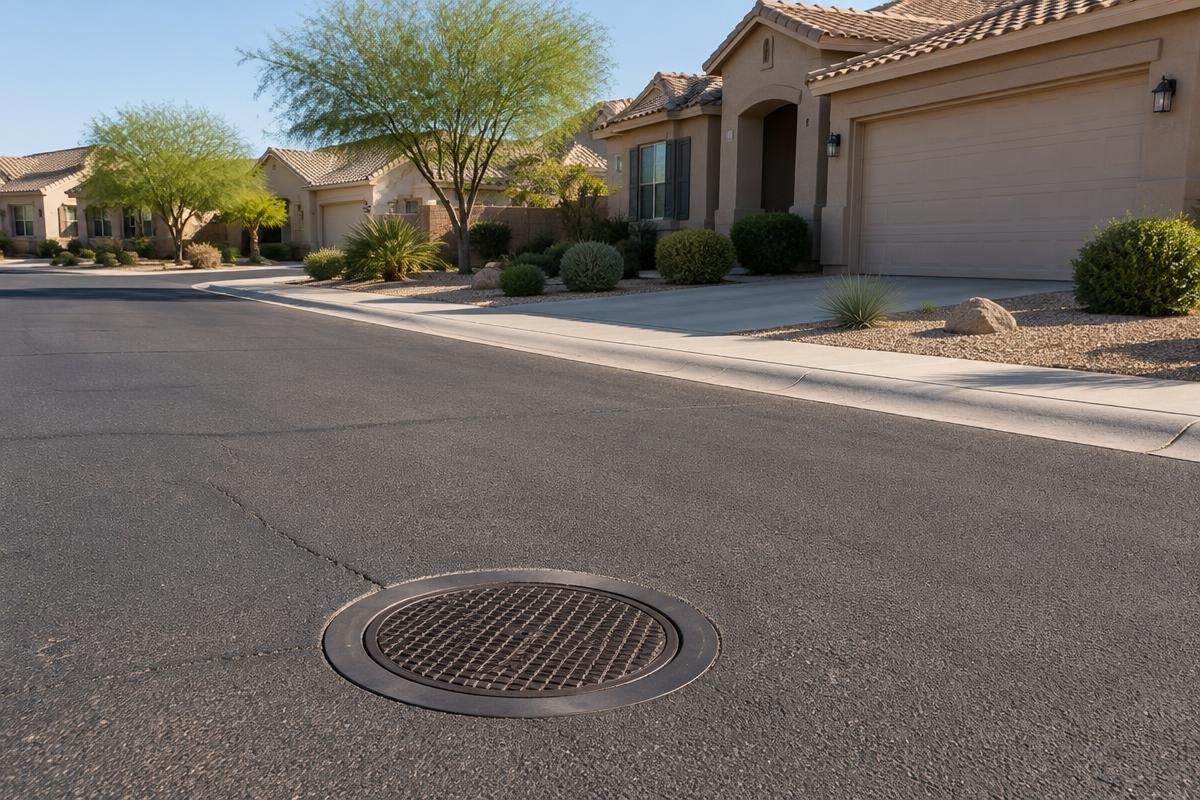
This is the most useful paragraph on this page for anyone in the older parts of Peoria, and it comes from the city’s own water service FAQ rather than from us.
The City of Peoria holds a contract with a local pest control business and, as preventative maintenance, treats five thousand of the city’s manholes every year, with each treatment good for about two years. If a resident rings in with a roach complaint, a maintenance crew is sent out to look. If the manholes in that area need doing, the contractor is called in and treats every manhole in that quarter section of the city. The city’s own advice is that residents should keep their own pest control running alongside it, because the two together are what actually thins the population out.
Why it matters: the large reddish-brown roaches that appear in a bathroom at night in an older neighbourhood are usually not living in the house. They are coming up the drain line from the sewer, and no amount of work inside a kitchen touches the source. Knowing that the city will treat the shared side of that problem — and that it responds to complaints rather than only to a schedule — turns a recurring annoyance into two phone calls.
Our side of it is the route into the building rather than the sewer itself: the unused floor drain, the guest bathroom nobody runs, the gap where a waste pipe passes through the slab. Cockroach control covers how that is surveyed and what gets done about it, including the dried-out trap problem that produces most of these calls in a house that has been quiet for a while.
North Peoria is a desert boundary with houses on it
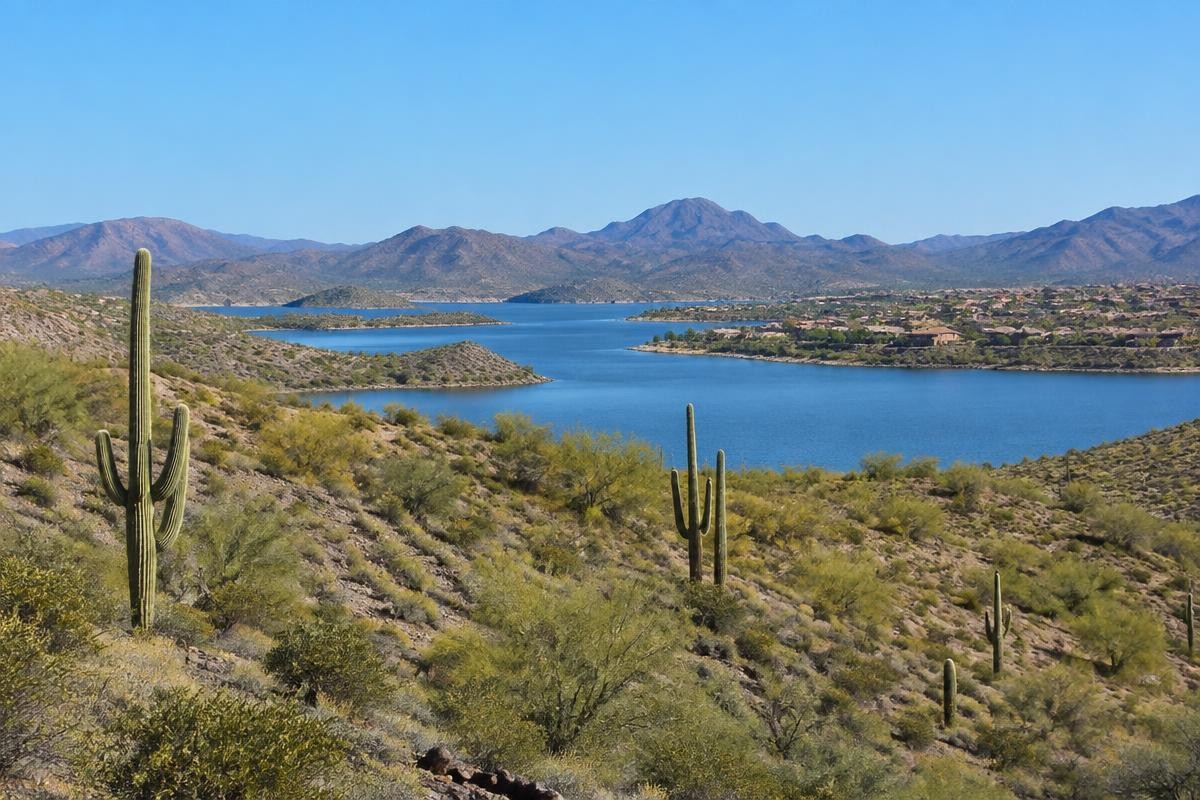
Twenty-odd miles north of Old Town the city stops being a suburb and starts being an edge, and the work changes with it.
Up here the street ends at open ground, not at another street. Sunrise Mountain, the Hieroglyphic Mountains and the ground around Lake Pleasant are right there, and what lives on that ground does not respect a property line. Bark scorpions come in off it at night. Pack rats build in the middle of a cholla or under a parked trailer and then move into an engine bay. The pressure arrives from one direction, which is the single most useful thing about it.
That makes the treatment asymmetric. A perimeter spread evenly around a house wastes most of itself on the side facing other houses; the work belongs on the boundary facing the open ground, at the base of the wall, in the block cavities and at every gap in the elevation on that side. It also puts the building ahead of the yard: one that cannot find a way through the weep screed stays outside, which is the only outcome that lasts.
Our scorpion control page covers the night inspection and the sealing sequence, and rodent control covers pack rats, including the wiring damage that makes them expensive rather than merely unpleasant.
Termites are the quiet expense here
Of everything people search for in Peoria, termite work is the one where the gap between what it costs to check and what it costs to ignore is widest.
Subterranean termites need soil contact and moisture, and both ends of the city supply them in different ways. On the older southern streets it is decades of settled landscaping, irrigation that has run in the same places for years, timber additions built at different times by different people, and soil that has been disturbed and refilled more than once. Up north it is newer construction where the soil treatment under the slab has a service life, patios and pool decks poured after the house was finished, and ground that is watered on a drip system against the wall.
What a homeowner can do without paying anybody is a ten-minute walk. Look along the base of the stucco for a mud tube the width of a pencil, check the inside of the garage where the slab meets the wall, look at any timber that touches soil, and press a screwdriver into skirting near a bathroom wall. Tubes are the giveaway, and they are easy to see once you know they are flat, sandy and stuck to the surface.
Beyond that, termite control covers treatment routes and what a warranty is actually worth, and termite inspection covers the formal report, which matters whenever a Peoria property changes hands.
There is more water here than anywhere else we work
Peoria contains a lake, two river courses and a major wash. In a desert city that is unusual, and it shows up in the calls after a wet week.
The Agua Fria and New River are the two rivers that run through the city, Skunk Creek is the notable wash, and Lake Pleasant sits at the northern end. None of that puts mosquitoes in your kitchen by itself — what produces them is small, still water close to the house, and a property within reach of a drainage corridor simply gets more traffic passing through.
So the survey after monsoon is about the small stuff: the saucer under a pot, the low corner of a lawn that holds water for a fortnight, a pool cover with a puddle on it, a blocked roof drain, an irrigation box that never dries. Our mosquito control page sets out how the sources get found and treated.
Where the water is not on your property, Peoria sits in Maricopa County, so the route is Maricopa County Environmental Services vector control on 602-506-6616. Mosquitoes, flies, feral bees and roof rats are all within their remit, and a green pool on an empty house is exactly what that service exists for.
What we actually do on a Peoria property
The survey is the same discipline everywhere; what changes between the two ends of the city is where the time goes.
On an older southern property the time goes below and behind: drains and traps, the line where slab meets wall, mature planting against the building, the original garage, and any addition that was built later than the house. That is also where we look hardest for termite evidence, because the conditions have had longer to develop.
On a northern property the time goes to the boundary and the elevation facing open ground: weep screed, block cavities, thresholds, roof line, utility penetrations, and anything stored against the wall on that side. The yard matters less than people expect and the gaps matter more.
Either way you get the findings and the price in writing before work is booked, with the items separated into treatment, small repairs that will outperform treatment, and anything that belongs to the city or the county rather than to you.
What changes the price in Peoria
Age and position do most of it, and they pull in opposite directions.
An older property takes longer to survey. More has been added, altered and replanted, there is usually more accessible timber, and the drains have a history. A newer property surveys faster but often needs more physical work at the boundary, because the gaps that let desert arrivals in are still open and nobody has closed them yet.
After that it is lot size, how much of the boundary faces open ground rather than neighbours, and whether the problem is being resupplied from outside. Where it is — a wash behind the fence, a neighbouring property nobody maintains — the quote says maintenance, because a one-off figure for a problem with an outside supply would be a figure we could not stand behind.
Peoria pest control questions
Roaches keep coming up the drains. Will the city do anything?
Yes, and it is worth using. The City of Peoria treats five thousand manholes a year under contract as preventative maintenance, each treatment lasting about two years, and a roach complaint brings a maintenance crew out to check the area. If the manholes need treating, the contractor does every manhole in that quarter section. The city also says to keep your own programme going alongside it, which is the honest advice.
Why is pest control different in north Peoria?
Because the city is about 179 square miles and the north end backs onto open desert and the ground around Lake Pleasant. Pressure arrives from one direction, so the treatment concentrates on the boundary and the elevation facing it, and sealing the building does more than treating the yard. On the older southern streets the same money is better spent on drains, timber and mature planting. The southern end runs straight into Glendale and the north-west into Surprise, while Sun City sits inside the city’s reach without being part of it.
Part of Peoria is in Yavapai County. Does that change anything?
Not for the work. It can matter for anything official, because county departments handle nuisance and mosquito complaints and the two counties run separate ones. Most Peoria addresses are in Maricopa County, where vector control takes those complaints on 602-506-6616. If you are at the far northern end, check which county your property tax bill names before making a call.
Does living near Lake Pleasant mean more mosquitoes?
Not on its own. Mosquitoes are produced by small still water rather than by large open water, so what decides your summer is what is standing within a few steps of your house: a pot saucer, a low corner of lawn, a cover with a puddle on it. Deal with those and proximity matters far less than people assume.
How do I know if I have termites before I pay anyone?
Walk the base of the walls and look for mud tubes about the width of a pencil, flat and sandy and stuck to the surface. Check where the garage slab meets the wall, look at timber touching soil, and press a screwdriver into skirting near bathrooms. Tubes are the clearest sign. If you find them, stop poking and get it looked at properly.
My house is in the middle of the city, neither old nor on the edge. What then?
Then it is a straightforward perimeter service and the details decide it: what the irrigation does against the wall, how close the planting sits to the building, whether the drains in unused rooms get run. That is most of Peoria, and it is the easiest part of the city to keep quiet once the obvious gaps are closed. Keep going north-east and the elevation keeps climbing. Anthem is high enough that its season opens later and closes earlier than anywhere on the Valley floor.
Related services
Cockroach Control in Phoenix
Drains, traps and the route from a sewer line into an older house.
Termite Control in Phoenix
Treatment routes and what a warranty covers, at both ends of a city this size.
Termite Inspection
The formal report, and what it means when a property is bought or sold.
Scorpion Control in Phoenix
Ultraviolet survey after dark, then closing the gaps they are actually using.
Rodent Control in Phoenix
Pack rats off open ground, and the wiring damage that makes them costly.
All Service Areas
Every suburb on our list, with what makes each of them its own job.
Tell us which end of Peoria you are on
Cross streets are enough. An old street near the townsite and a new build north of the 303 need different visits, and we would rather know before we load the van.