Pest control in Chandler, AZ
Chandler grew from 30,000 people in 1980 to more than 240,000, which means almost every house here was built new on ground that used to be a field. That has one consequence most owners never hear about: your home was treated for termites before the slab was poured, and that protection came with a clock.
Get a free quote
No obligation. We reply within 2 hours.
The termite treatment your Chandler house already had, and the clock that ran out
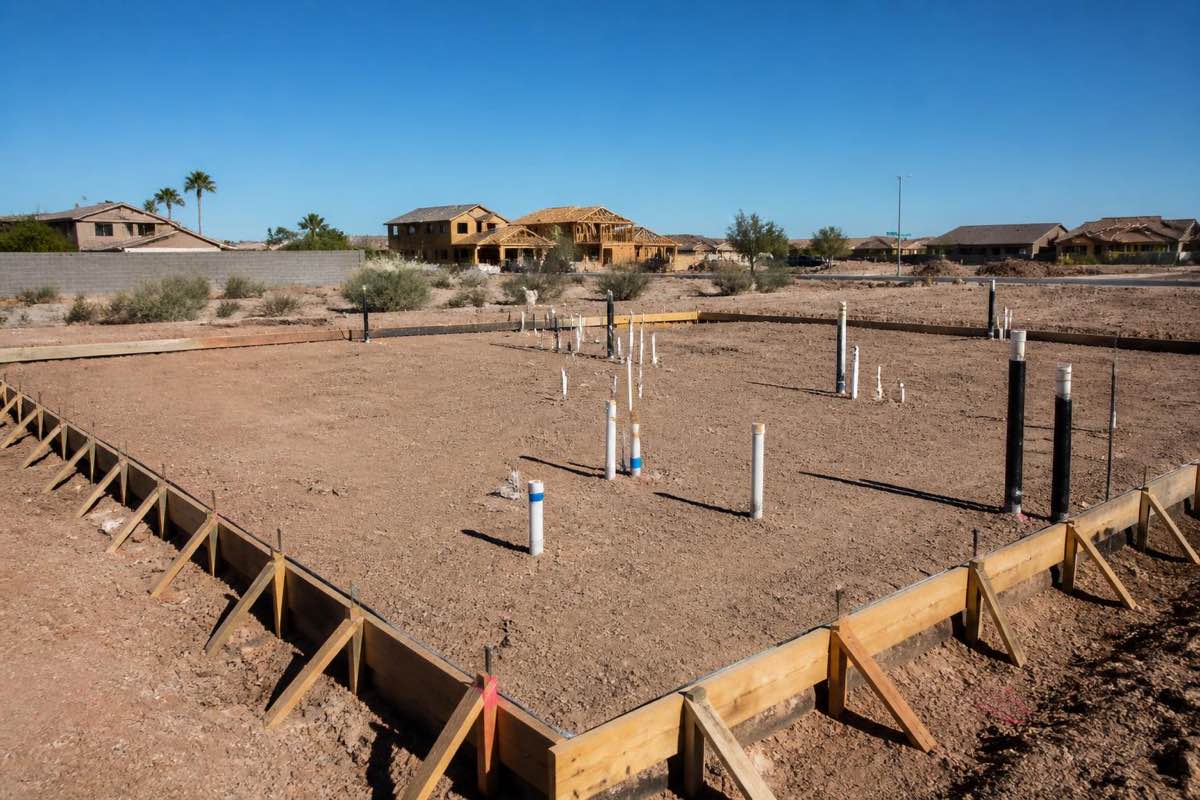
If your home was built as a single-family house or a duplex in Chandler, the soil under your slab was almost certainly treated with termiticide before the concrete went down. You did not arrange it and you may never have been told about it, but it happened, it was a legal requirement, and there is a public record of who did it.
A pre-construction treatment is a continuous chemical barrier laid into the raw soil between the earth and the underside of the slab. Its job is to stop subterranean termites travelling up out of the ground into the framing timber and sill plates. The Arizona Department of Agriculture is explicit that only a licensed pest control operator may apply it, and that FHA and VA HUD rules, along with municipal codes in many Arizona communities, make it mandatory for single-family homes and duplexes, and for any property sold with FHA or VA financing.
Here is the part that matters, and the part almost nobody in Chandler knows. Under Arizona regulations the company that applied that pre-construction treatment is legally obliged to treat any subterranean termite occurrence for three years from the date of the original treatment, at no cost to the homeowner. Three years. Not thirty, and not for as long as you own the house.
Now hold that against Chandler’s timeline. The city went from 30,000 residents in 1980 to more than 240,000, and the great bulk of that housing went up through the 1990s and 2000s. If your house was finished in 2004, its builder-side termite obligation ended in 2007. The barrier itself may well still be doing its job, because these treatments are effective and long-lived. What has gone is the free retreatment, and the assumption that somebody else is responsible.
The useful thing is that none of this is a mystery you have to accept. The Department’s Pest Management Division will tell you the name of the licensed firm that treated your property, their telephone number, and the precise application date. That single call settles whether you are inside the three-year window or a long way outside it, and it tells you who to ring first if you are still in it. The Division’s public line is (602) 542-4373.
What was actually done
A continuous liquid termiticide barrier applied to the graded soil before the slab was poured, by a licensed operator, under the product label and state rules.
The three-year obligation
The applicator must treat subterranean termite occurrences free of charge for three years from the treatment date. After that the responsibility is yours.
How to find your record
The Arizona Department of Agriculture Pest Management Division can supply the treating firm, its phone number and the exact application date. Call (602) 542-4373.
The barrier is continuous until somebody digs, and Chandler digs a lot
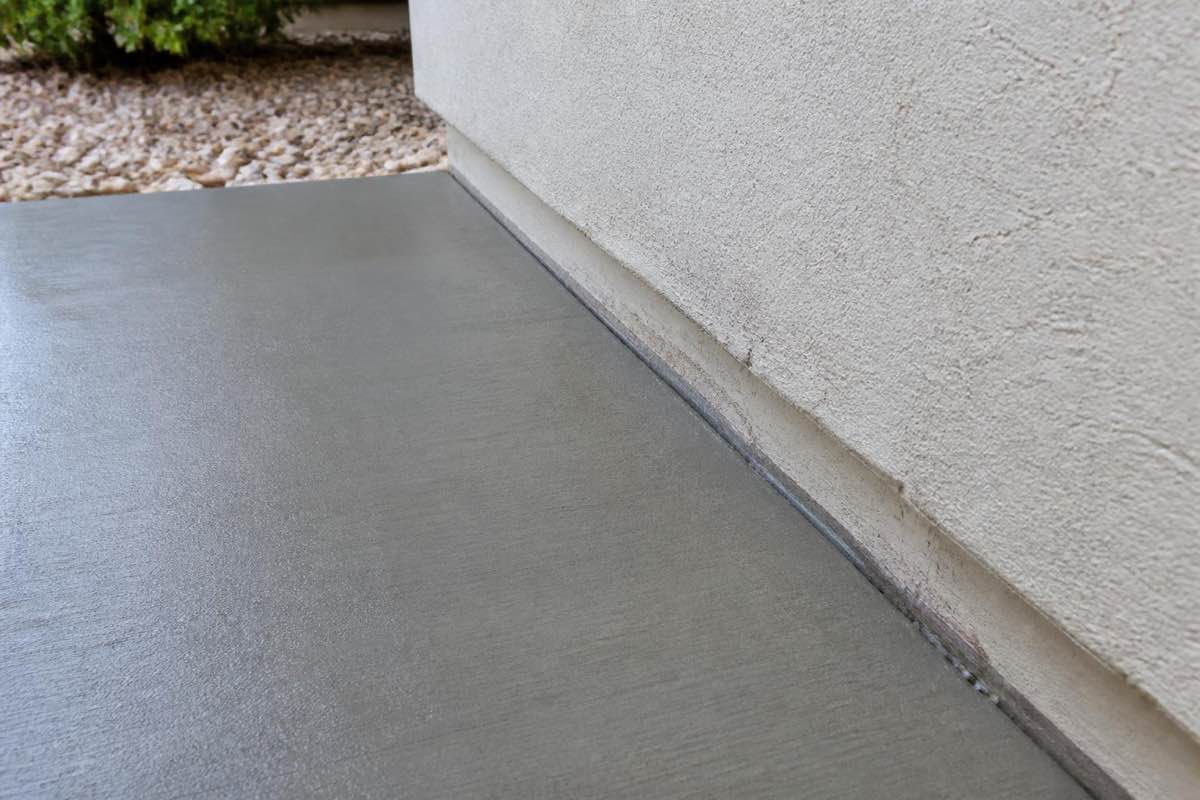
A pre-construction barrier only works while it is unbroken. The Department of Agriculture is blunt about this: cutting into the slab, or disturbing the soil that touches the outside of the foundation, breaks the treated layer and has to be reported to the treating firm so the disturbed section can be retreated. In a city of newer homes with young gardens, that happens constantly.
Think about what happens to a Chandler house in its first fifteen years. The builder hands it over with a gravel yard and a few whips in the ground. Then comes the pool, the extended patio, the casita, the built-in barbecue, the raised beds along the back wall, the drip line looped in closer to the house because the shrubs were not thriving. Every one of those is a spade going into the exact strip of soil that was treated before the slab went down.
The Department is equally clear about additions. Any new concrete for a patio, room addition, garage or carport needs its own adjacent soil treatment, and it warns that failing to do so creates a direct route underground into the structure. Almost nobody books a pest control company as part of a patio extension, which is precisely why we find termite activity in Chandler homes at the join between the original slab and something added five years later.
The Department also publishes a short list of property modifications to avoid. It is worth reading as a checklist for your own back garden, because most Chandler properties have done at least two of them without a second thought.
Grading water back to the wall
Re-shaping the soil so drainage runs toward the house keeps the foundation soil wet, which is what subterranean termites need in a desert.
Drip lines too close in
High-volume drip loops run tight to the slab do the same thing on a timer. Moving emitters away from the foundation is free and it works.
Wood bridging soil to siding
Fence posts, trellises and decorative timber that touch both the ground and the house give a colony a route that goes around the barrier entirely.
Planting tight to the foundation
Dense shrubs and landscaping set within sixteen inches of the concrete foundation, which is the distance the Department names.
Concrete flush against the slab
Cool-deck paths and pool extensions poured hard against the main foundation, with no treatment of the soil underneath first.
Any addition, untreated
Patios, room additions, garages and carports all need adjacent soil treatment. Skipping it is the most common gap we find here.
Chandler was a farm before it was a subdivision
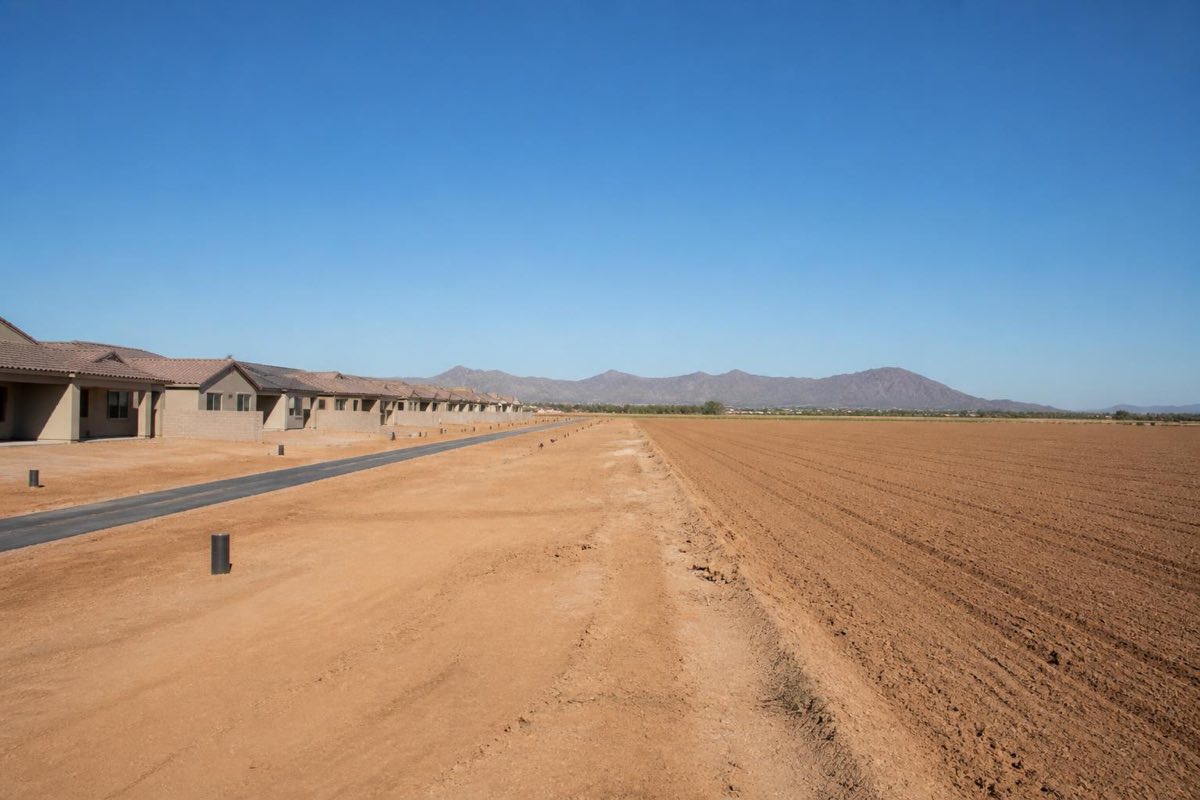
Dr Alexander Chandler was a veterinary surgeon who bought eighty acres south of Mesa in 1891, studied irrigation engineering, and built canals across what was then bare desert. By the turn of the century he held an eighteen thousand acre ranch, and the town he laid out in 1912 sat in the middle of it.
What grew on that ground was cotton, grains and alfalfa, alongside cattle, sheep and, for a while, ostriches farmed for the feather trade. Cotton became the most profitable crop of all. The Commonwealth Canal ran straight through the middle of the original townsite park. That is not decorative local colour: it is the reason the ground under a large part of this city spent decades being irrigated, cultivated and kept damp on a schedule.
Land that goes from field to subdivision does not arrive empty. Ground that has been farmed carries an established insect population and the rodents that live on it, and when a field is finally scraped and built on, that population does not disappear. It moves into the nearest structure, which is the new house standing where the crop used to be. This is why a brand new Chandler home in a half-finished phase can have a difficult first two or three seasons and then settle down, while the identical house four streets over in a built-out neighbourhood stays quiet.
It also explains something owners find counterintuitive. People assume a new house is a sealed house. In construction terms it usually is tighter than an older one, but it is standing on recently disturbed ground with a live edge nearby, and that combination produces pressure that has nothing to do with how clean the kitchen is.
What we actually do on a Chandler property
The first visit is mostly survey. On a Chandler house we want three things before anything is applied: roughly when it was built, what has been added since, and where the soil sits against the foundation now compared with where the builder left it. The third question is the one that finds problems, because it points straight at the places the original barrier was cut.
Newer stucco-over-frame construction gives us a specific advantage. There is a weep screed running along the base of the wall where the stucco stops, and it is a findable, checkable line rather than a guess. Where soil, mulch or a new concrete edge has been brought up over that line, the inspection has somewhere definite to start. What an inspection covers, and what it costs, is set out on our termite inspection page, and the treatment routes if a report comes back positive are on termite control.
Termites are not the only thing a Chandler property calls about, and the rest follows the same logic of disturbed ground and young landscaping. Crickets and roaches move in from irrigated planting, and the scorpions that eat them follow. That work sits on the scorpion control page rather than being repeated here, and general species identification is on our pest identification guide.
What changes the price in Chandler
Three things move a Chandler quote more than anything else. The first is what has been built since the house was finished, because a property with a pool, an extended patio and a casita has considerably more foundation edge to inspect and treat than the same floor plan untouched. The second is lot size and planting maturity, since a fifteen-year-old garden holds far more harbourage than a five-year-old one. The third is simply what you are dealing with, because a single wasp nest and a suspected termite entry at a slab join are not the same piece of work.
Before you price anything, make the free call. Finding out from the state whether your property is still inside its three-year pre-construction window can change what you need entirely — if you are inside it, the first call is to your builder, not to us. Outside it, published figures for the fixed pieces of work are on the termite inspection, bed bug control and commercial pest control pages. Anything else is quoted off the survey, in writing, before a technician is booked. Gilbert sits immediately east of here and is a very different proposition — the water there was dug on purpose, and pest control in Gilbert starts with working out which insect you actually have. North of here, pest control in Tempe deals with the opposite housing story — nothing built since the 1970s, and a handover every summer that moves furniture across the whole city.
Chandler pest control questions
Was my Chandler house treated for termites when it was built?
Almost certainly, if it is a single-family home or a duplex. FHA and VA HUD rules and municipal codes in many Arizona communities require a soil treatment before or during construction, applied by a licensed operator. The Arizona Department of Agriculture Pest Management Division can confirm it for your address and give you the treating firm and the application date.
How long does the builder’s termite treatment cover me?
Three years from the date of the original treatment. Under Arizona regulations the company that applied it must treat subterranean termite occurrences in that window at no cost to you. Given that most Chandler housing went up in the 1990s and 2000s, the large majority of homes here are well outside it.
How do I find out who treated my house and when?
Call the Arizona Department of Agriculture Pest Management Division on (602) 542-4373. They hold the record and can supply the name of the licensed firm, its telephone number and the precise application date. If you are still inside the three-year window, go to your builder or general contractor first.
Does termite activity mean the pre-construction treatment failed?
Not necessarily. The Department lists several things that affect a barrier over time without anyone doing anything wrong: equipment calibration on the day, soil type and moisture, settling under the slab, and weather during application. The far more common cause is mechanical — the barrier was physically broken later by digging, drilling or new concrete.
I am adding a patio or a pool. Do I need to do anything about termites?
Yes, and this is the step most people miss. New concrete for a patio, room addition, garage or carport needs the adjacent soil treated, otherwise the addition creates a route underground into the structure. The same applies to any work that cuts the slab or disturbs the soil against the foundation. Tell us before the concrete goes in rather than after.
How far from the house should planting be?
The Department of Agriculture names sixteen inches from the concrete foundation as the line to keep dense shrubbery and landscaping outside. It also advises against grading soil so that drainage runs back toward the walls, and against running high-volume drip loops tight against the slab. All three keep foundation soil damp, which is the condition subterranean termites need.
Why does my brand new Chandler house have more bugs than my old one?
Because it is standing on recently disturbed ground, often with an unfinished phase or open land nearby. Construction displaces whatever was living in that soil and it moves into the nearest structure. New builds are usually tighter than older houses, but tightness does not help against pressure arriving from outside. It generally settles once the surrounding phases are finished and landscaped.
Do you cover all of Chandler?
Yes — downtown and the original townsite, the 1990s phases, and the newer south and east build-out. Worth saying when you call roughly when your part of Chandler went up, because that alone tells us which of the two problems on this page is more likely to be yours.
Related services
Termite Inspection
What the inspector checks, what a WDIIR is, and what an inspection costs. Termite inspection.
Termite Control
Treatment once a report comes back positive, the two routes available, and what a warranty covers. Termite control.
Scorpion Control
Perimeter-led work for properties with young landscaping and open ground nearby. Scorpion control.
Rodent Control
Roofline survey, sealing and removal. Rodent control.
Pest Identification Guide
Mud tubes, frass and discarded wings — what the evidence actually means. Identify what you found.
All Service Areas
The rest of the Valley, and why the same job is priced differently across it. Mesa is the closest neighbour, where a flood irrigation calendar drives the timing instead. Service areas.
Tell us the year it was built and what you have added
Those two answers shape a Chandler quote more than anything else, and both take you ten seconds. Written price first, no obligation to take the work.