Pest control in Glendale, AZ
Glendale was laid out as a townsite in 1892 and had its first planned neighbourhood by 1914, decades before the concrete slab became the standard way to build in Arizona. That leaves a share of Glendale houses that most Valley pest control advice quietly does not fit.
Get a free quote
No obligation. We reply within 2 hours.
Almost every piece of Valley pest advice assumes a slab. Parts of Glendale are older than that
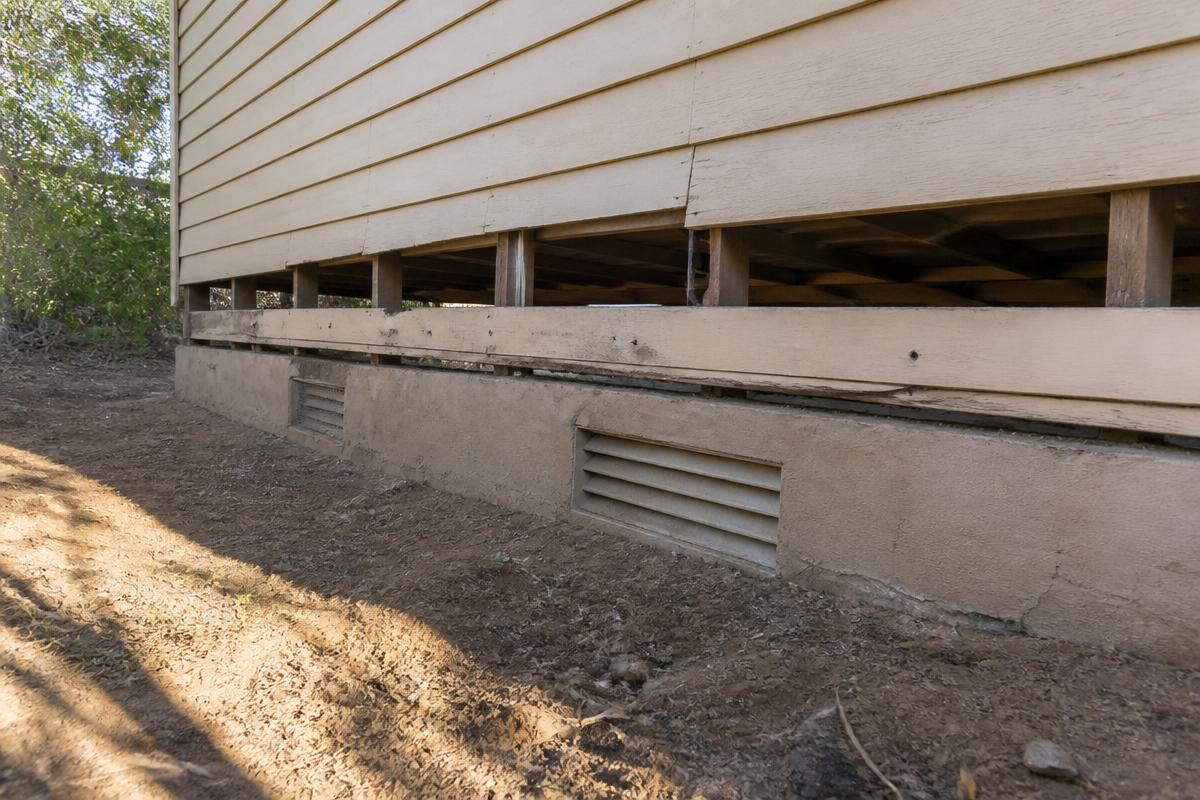
Read anything written about termites or rodents in Phoenix, including our own service pages, and it takes one thing for granted: the house sits directly on a concrete slab. That is a fair assumption across most of the metro. It stops being fair in the older parts of Glendale, and it changes the job more than people expect.
Before slab-on-grade became the default, Arizona built bungalows with a raised floor. The house sits up on piers or a perimeter foundation wall, the timber floor structure spans between them, and underneath there is a crawl space. Phoenix bungalows of that era were designed to show it, with the foundation expressed as part of the elevation and the floor line noticeably above the ground. Concrete was the usual material, though earlier and Craftsman examples used masonry units or rock piers.
Here is why that matters, and it is not the bad news people assume. On a slab house the structural timber is buried. An inspector cannot see the sill plate or the framing where it meets the concrete, so the work is probing skirting, tapping door frames and window casings, and reading the evidence indirectly. On a raised-floor house you can get underneath and look at the things termites actually eat — sills, joists, headers, the piers themselves. The inspection stops being inference and becomes observation.
The trade is that a crawl space is a space rather than a barrier. It is dark, sheltered, usually cooler than the yard, and it sits directly on soil. Rodents nest in it. Anything looking for somewhere out of a Phoenix summer will consider it. So an older Glendale house is generally easier to inspect for termites and has one more room to worry about for everything else. Peoria starts immediately to the north-west and was built later on the whole, which is why two houses a mile apart can need completely different work.
On a slab house
The framing where timber meets concrete is buried. Detection is probing, tapping and reading evidence at skirting and frames, because nothing structural is visible.
On a raised-floor house
Sills, joists, headers and piers can be seen and touched. The inspection becomes direct observation instead of inference, which is a genuine advantage.
What the crawl space adds
Dark, sheltered, cooler than the yard and sitting on bare soil. It is habitat, not just structure, and it needs treating as a room in its own right.
Catlin Court, and what a hundred years does to a house

Otto R. Hansen, a businessman from Wisconsin, subdivided a tract in Glendale by 1914 and named it Catlin Court after his wife’s maiden name. It was the first organised building expansion in the city, it is bungalow country, and it was listed on the National Register of Historic Places on 9 June 1992.
The district sits in the block bounded by Gardenia Avenue, 59th Avenue, Palmarie Avenue and 58th Avenue, and if you have walked it you already know the character: deep porches, low rooflines, mature planting and houses that have been lived in continuously for a century. That last part is the pest story. A house does not stay sealed for a hundred years. Every re-roof, every rewire, every swamp cooler that went in and later came out, every kitchen that moved, every porch that was enclosed — each one left a penetration, and some of them were sealed properly and some were not.
So on a Catlin Court survey we are not really looking for one hole. We are reading a hundred years of alterations and working out which of them still leaks. That is slower than a walk around a five-year-old house, and it is the reason we quote older Glendale properties on time rather than on floor area.
It also changes what a sensible outcome looks like. On a new build you can reasonably aim to seal a house shut. On a 1920s bungalow the honest goal is different: find the routes that matter, close those properly, and accept that a century-old structure will always have more ways in than a modern one. Anybody promising you a perfectly sealed historic house has not been under it.
Working a crawl space properly
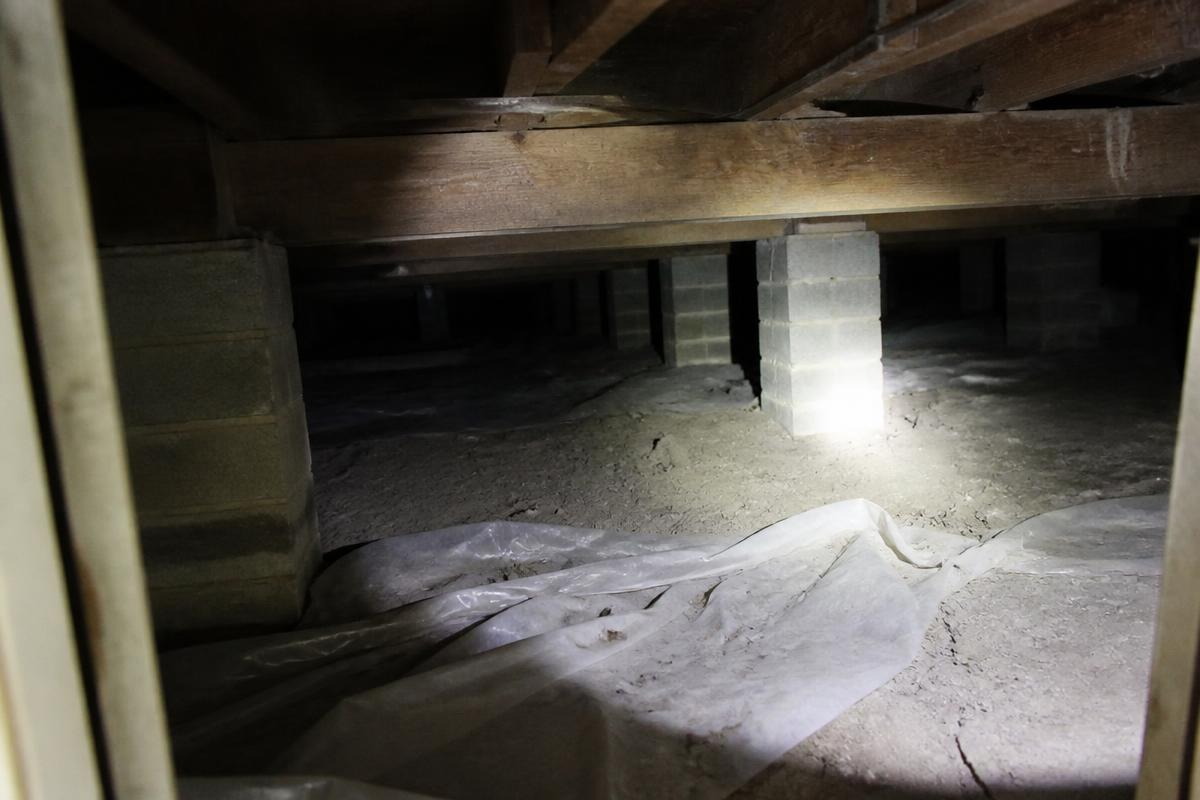
If your Glendale house has a crawl space, it is the single most useful place a technician can spend twenty minutes, and it is the place most quotes never mention. Here is what actually happens down there.
The first pass is structural. Piers, sill plates, joists and the underside of the floor get checked directly, along with anywhere timber touches soil. Wood in ground contact matters everywhere in Arizona, but under a raised floor it is not hypothetical — you can see whether a pier has been packed around with earth over the decades, or whether a later addition dropped a post straight into the dirt.
The second pass is occupancy. Droppings, runways in the dust, nesting material dragged in from the garden, and the smell, which is usually the first thing you notice. A crawl space records history in a way a slab never does, so it tells you not just whether something is living there now but roughly how long it has been going on.
The third pass is the perimeter, from the inside out. Vents that have rusted through, screens that were never replaced, the gap where a service pipe enters, and the access hatch itself, which on a lot of older houses is a loose board. Sealing a crawl space is genuinely achievable in a way that sealing the whole house is not, and it is usually the highest-value hour on an older Glendale property.
Structure
Piers, sill plates, joists and the floor underside, plus every point where timber meets soil. Visible here, invisible on a slab.
Occupancy
Droppings, runways in the dust, nesting material and odour. A crawl space keeps a record, so it shows how long rather than just whether.
The way in
Failed vents and screens, service pipe gaps, and the access hatch. This is the part that can genuinely be closed for good.
The other Glendale, north of the historic core
None of the above applies to a large part of the city, and it is worth saying plainly so nobody books the wrong visit. Glendale runs a long way north and west of its 1892 townsite, and Arrowhead, Marshall Ranch, the Thunderbird corridor and the newer west-side phases are conventional modern construction: slab on grade, stucco over frame, gravel landscaping, block walls.
On those properties the work looks like the rest of the Valley. The perimeter and the weep screed matter, the treatment is preventive rather than investigative, and a survey takes a fraction of the time. The reason this page spends so long on the older half is not that the newer half is unimportant. It is that the older half is the part nobody else writes about, and the part where generic advice quietly fails.
When you call, the single most useful thing you can tell us is roughly when your house was built, and whether the floor sounds hollow underfoot. Those two answers put you on one side of this page or the other before a technician leaves the depot. Keep going west and the ground changes again: Goodyear has a river running through it, which turns the moisture question into a different argument altogether.
What we actually do on a Glendale property
On an older house the first visit is longer and mostly investigative. We want under the floor if there is a way under, and we want the history: what has been added, what has been re-roofed, where a cooler used to sit. On a newer house the same visit is a perimeter survey and takes half the time. Both end the same way, with a written scope and a price before anything is booked.
Termite work on a raised-floor house is genuinely different from the slab treatment most Phoenix companies describe, because accessible timber changes both what can be found and what can be done about it. The termite inspection page covers scope and cost; termite control covers the routes available afterwards.
Rodents are the other common older-Glendale call, and a crawl space changes the sequence rather than the method — the survey starts below the floor instead of at the roofline. That work is described on the rodent control page. For anything you have found and cannot identify, the pest identification guide covers droppings, damage and the species behind them.
What changes the price in Glendale
Age does most of the work here, and it does it through time rather than through materials. A century-old house with a crawl space, an enclosed porch and three generations of alterations takes longer to survey than a 2004 build with the same floor area, and that survey time is the honest bulk of the difference. Access is the second factor: a crawl space you can get into changes the quote in your favour, and one that is half-full of stored timber does the opposite.
Fixed figures we already publish: inspection pricing on the termite inspection page, bed bug work on bed bug control. Everything else on an older Glendale property waits for the survey, because we would rather look under the floor first than quote a number we have to revise once we are down there.
Glendale pest control questions
How do I know whether my Glendale house has a crawl space?
Two quick checks. Stand outside and look at how far the floor line sits above the ground — a raised floor is usually obvious once you look for it, and older Glendale bungalows were designed to show the foundation rather than hide it. Inside, a timber floor over a crawl space sounds and feels different underfoot from concrete. There is also normally an access hatch, often on an outside wall behind planting.
Is a crawl space worse than a slab for termites?
Not worse, different, and in one respect better. On a slab the structural timber is buried and has to be assessed indirectly by probing and tapping. Under a raised floor the sills, joists and piers can be inspected directly, so problems are found by looking rather than by inference. The offset is that the crawl space itself is sheltered habitat, which a slab does not give you.
My house is in Catlin Court. Does the historic listing restrict treatment?
Pest treatment is not the sort of work that historic district status is concerned with — that governs the appearance and fabric of the building, not what is applied to soil or into a void. Where it does matter is physical exclusion. If sealing work would change something visible, check with the city before anyone starts cutting or fixing to the exterior.
Why does an older Glendale house cost more to survey?
Time, almost entirely. A century of re-roofs, rewires, enclosed porches and removed coolers leaves a lot of penetrations to check, and each one has to be looked at rather than assumed. A crawl space adds a whole area that a slab house does not have. It is not that materials cost more; it is that the survey genuinely takes longer.
Can an old house actually be sealed against rodents?
The crawl space can be, and that is the part worth doing properly — vents, screens, service penetrations and the access hatch are all closeable. The whole house is a different claim. A hundred-year-old structure will always have more routes than a modern one, so the realistic goal is to close the ones that matter and keep the rest monitored, not to promise a sealed building.
I am in Arrowhead, not the historic part. Does any of this apply?
Very little of it. Arrowhead, Marshall Ranch and the Thunderbird corridor are modern slab-on-grade construction, so the work there is the conventional perimeter and weep screed approach used across the rest of the Valley, and a survey takes far less time. Tell us roughly when the house was built and we will know which visit you need.
Should I store things in the crawl space?
Ideally not, and cardboard and timber least of all. Stored material gives rodents cover and nesting stock, hides the structure from anyone trying to inspect it, and puts more cellulose in contact with soil in a space that is already the closest point between the ground and your floor. It also raises what a survey costs, because access is what we are paying for down there.
Do you cover all of Glendale?
Yes, from the original townsite and Catlin Court out through the newer north and west of the city. When you call, mention the decade your house was built — on this side of the Valley that single detail decides more about the visit than the address does.
Related services
Termite Inspection
Accessible timber changes what an inspection can see. Scope, report and cost. Termite inspection.
Termite Control
The routes available once something is found, and what a warranty is really worth. Termite control.
Rodent Control
On a raised floor the survey starts underneath, not at the roof. Rodent control.
Scorpion Control
For the modern north and west of the city, where the work is all perimeter. Scorpion control.
Pest Identification Guide
Working out what left it, from a photograph, before anyone comes out. Identify what you found.
All Service Areas
How housing stock and pest pressure shift from one side of the metro to the other. Scottsdale is the sharpest contrast: there it is occupancy rather than age that decides the visit. Service areas.
Tell us the decade your house was built
On this side of the Valley that single answer shapes the visit more than your address does. You see the figure before anyone is booked.