Pest control in Sun City West, AZ
Sun City finished building in 1978 and Sun City West began the same year. Twenty years of housebuilding separate them, and nearly all of the difference sits above head height.
Get a free quote
No obligation. We reply within 2 hours.
Two communities, twenty years apart
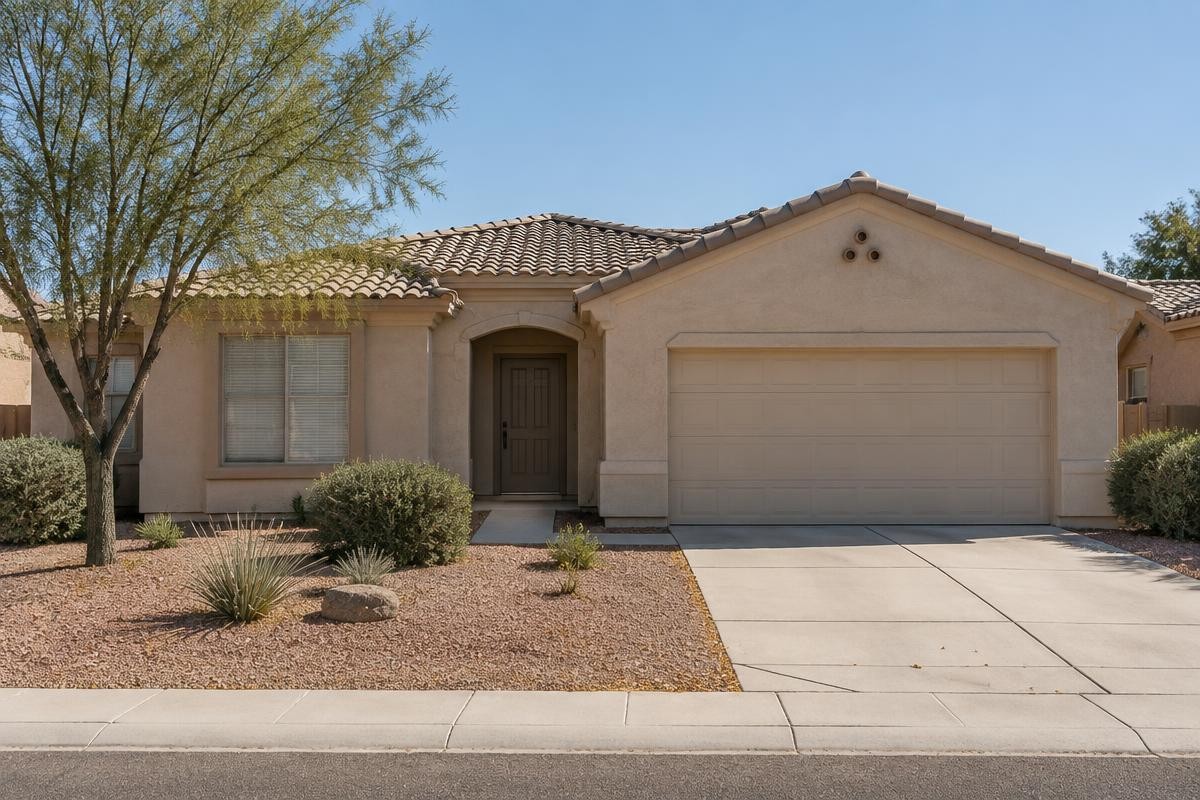
Sun City West was built by the Del E. Webb Construction Company on an eleven-thousand-acre site west of its older neighbour, part of what had been the Lizard Acres cattle ranch. Work started in 1978 and the last of it was finished in 1997.
Those two dates are the useful part. The original Sun City ran from 1960 to 1978; this community picked up exactly where that one stopped and carried on for another twenty years. They sit against each other on the map and from a car window they look like the same idea twice. They are not. They are consecutive eras of Arizona housebuilding, and what changed between them is mostly out of reach from the pavement.
A house from the first era was designed around an evaporative cooler standing on a low roof. A house from the second is far more likely to carry concrete tile laid over battens, engineered trusses beneath it, a real attic in between, vented eaves feeding air into that attic, and refrigerated air rather than a cooler. None of that is a defect. It is a different building with a different set of openings, and the openings are high up.
Which is why this page is mostly about the roof. The search data points the same way: after the general term, the thing people here look for most often is rodent control, and on this kind of housing a rodent is a roof problem long before it is anything else.
The three-part route into a tile roof
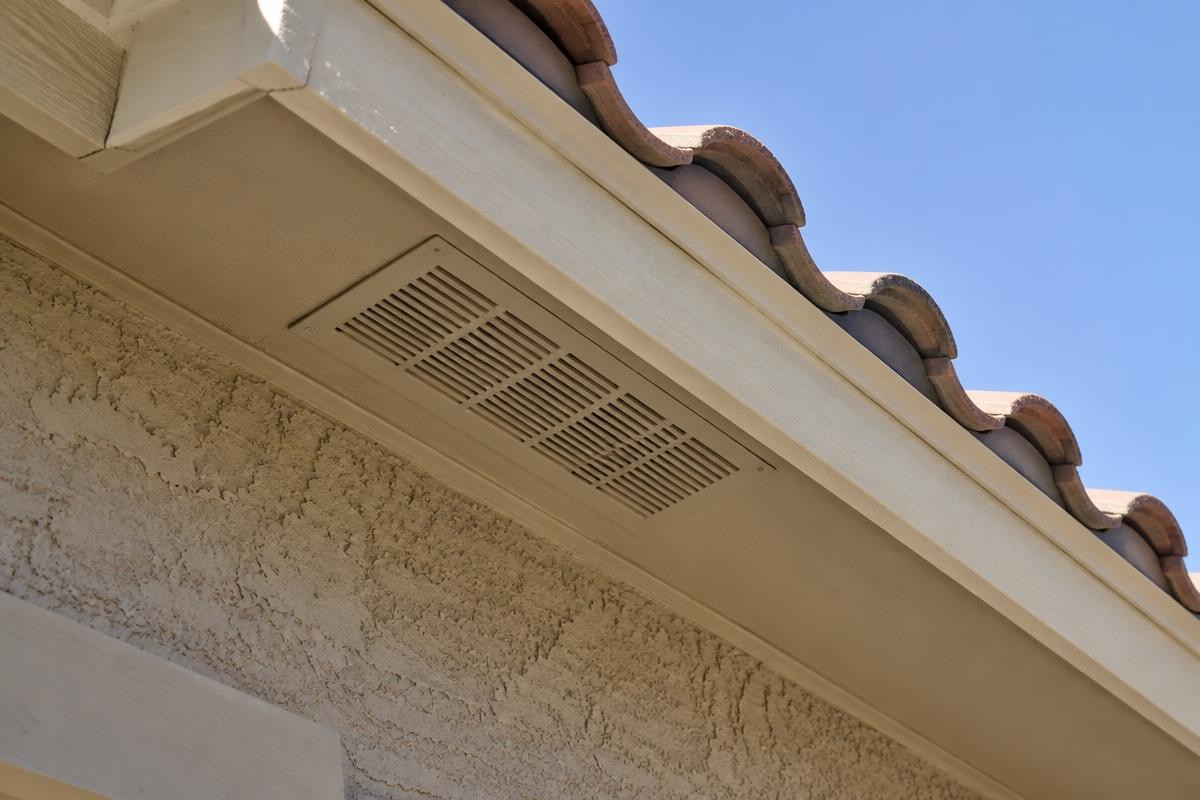
Roof rats do not chew their way in. They use what the building already offers, and on a tiled roof that is a sequence of three things, in order.
First the tile. Concrete tile is laid over battens, so it stands clear of the underlayment with a void beneath it, and at the eaves and along the hips that void is open unless somebody deliberately closed it. Birds usually find it before anything else does, and what a bird leaves behind makes the space more attractive to the next tenant rather than less.
Second the eave vent. An attic has to breathe, so the eaves are vented, and the vents are covered either by screen or by a perforated soffit panel. Screen corrodes. Panels spring at the corners as the fascia moves with the seasons. A vent that has given up half a square inch is a door, and from the ground it looks exactly like a vent that has not.
Third the truss space. Once something is inside the attic it has a level, dry, insulated run above every ceiling in the house, wiring to follow and nothing at all to interrupt it. People hear the noise at night above a bedroom and assume it is inside the wall. It is very rarely inside the wall.
Work back along that sequence and the remedy is undramatic: close the tile line at the eaves, re-screen the vents in metal rather than plastic, then deal with whatever is already up there. Doing it the other way round, trapping first and sealing afterwards, buys a quiet fortnight and no more. Our rodent control page deals with the animals themselves across the Valley; what is particular to this community is that the way in is a roofing detail rather than a door sweep.
What a solar array does to a roof

Panels sit on a frame a few inches clear of the tile, and that gap runs the whole length of the array.
It is shaded all day, sheltered from rain, walked through by nobody and looked at by almost nobody. Pigeons nest in it. Roof rats treat it as a covered road from one side of the house to the other. The wiring runs through the same space, which is what turns a nuisance into an expensive one.
An array also makes a roof harder to survey, not easier. You cannot lift a tile that has a panel over it. You cannot see the eave behind the mounting feet from ground level. And the feet themselves are penetrations made through the tile by an electrical contractor rather than by a roofer, which is reason enough to look at them properly, because water and animals take the same opportunities.
The usual answer is mesh clipped round the perimeter of the array, fitted so that it can come off again when the panels need servicing. Done well it is invisible from the street. Done badly it shuts a bird in underneath, which is worse than leaving it alone, so it is worth asking anyone who quotes for it how they intend to get it back off.
We would far rather look at an array before anything has moved into it. Once a colony is established under panels the job stops being pest control on its own and becomes a roofing appointment as well.
Getting up there, and who does it
A survey led by the roof has an obvious practical problem, and it is better said out loud than left hanging.
Eighty-five per cent of this community is sixty-five or over, and the answer to a roof question is never going to be a suggestion that the householder climb up and take a look. It is our ladder and our survey, and you get the photographs afterwards. On a roof those matter more than they would anywhere else, because none of the finding is visible from where you are standing.
In practice that means walking the eave line on every elevation, lifting the first course of tile wherever it will lift, checking every vent and every soffit panel, running an eye along the ridge, and photographing whatever needs attention. Where there is an array, the perimeter and the mounting feet get their own look. Then the attic is opened from the inside, because half of what a roof is doing only becomes legible from underneath it.
If a finding belongs to a roofer rather than to us, we will say so and explain why. A clear photograph of a cracked tile does you more good than a treatment sold underneath a hole in the roof.
Ground level on an eighties and nineties house
The roof is the argument here, but the bottom of the wall still does its share of the damage.
Houses of this vintage tend to be stucco over frame rather than painted block, and stucco needs a weep screed along the base, a strip that lets water escape from inside the wall. It is a functional gap by design. It is also a covered lane for ants, which is why it wants gravel and daylight around it instead of soil, bark mulch or a raised bed banked up against the render.
Irrigation is the other one. A drip line looped along the foundation holds a permanently damp strip in precisely the place you would least choose, and in a garden laid out thirty years ago the emitters have usually crept closer to the building than anybody intended.
Bark scorpions take both of those, plus the expansion joint at the garage and the space behind a length of loose trim. The survey for them happens at night with ultraviolet, since they fluoresce and nothing else on the lot does, which turns a guess into a map. Scorpion control sets out how that work is done.
Termites, and why a nineties house is not too new
Somebody with a house finished in 1993 often assumes termites are an older property’s problem. Desert subterranean termites do not read build dates.
They live in the soil right across the Valley and they reach a slab house through the same handful of places whatever its age: a crack in the pour, the gap where a pipe passes through, an expansion joint, a patio poured later on its own footing. A newer building offers fewer of those than a sixty-year-old one. Fewer is not none.
What a house from this window does have is a treatment history, and it is usually invisible. Anything built and sold in those years was very likely treated during construction, and the chemistry used then stopped doing anything a long time ago. A property that has changed hands two or three times may also carry a lapsed warranty attached to an owner nobody can now name. Termite control covers what treatment actually involves, and the termite inspection page describes the formal report, which is the document that matters when a house is sold.
What changes the price here
Access decides most of it, and on this housing stock access means the roof.
A single-storey house with a walkable pitch and clear eaves is quick. A steeper pitch, a two-storey element, mature planting grown up hard against the fascia, or an array covering most of one elevation all add time, and the array adds it twice over, because both the survey and any meshing have to work round the panels.
After that it is the ordinary things: how many separate structures stand on the lot, whether there is a casita or a converted garage, and whether what you need is one visit or an interval. Clubs, offices and the shops along the boulevards are a different kind of job and belong on our commercial pest control page.
Nothing is quoted from a description given over the telephone. A figure follows somebody having been up and looked, it arrives with the photographs attached, and it says plainly which parts of the roof could not be reached.
Sun City West pest control questions
Is this the same thing as Sun City?
No, and the difference is worth knowing before you book anything. They are two separate unincorporated communities with separate organisations, built in consecutive twenty-year stretches. The older one has its own page here, pest control in Sun City, and the work we do there starts from a different place, because the houses do. If you are not certain which side of the line you are on, the ZIP code settles it. Sun City Grand is a third community again and sits inside the city of Surprise.
With no city government, who do I ring about standing water or a bee colony?
Maricopa County handles it. Environmental Services is on 602-506-6616, and that line covers standing water and mosquitoes, flies, a swarm that has settled, and rats. Anything to do with the deed restrictions is a separate matter: PORA no longer keeps that office and directs residents to the one now at the Recreation Center, on 623-544-6661.
PORA has a vendor list. Should I just pick from that?
It is a reasonable place to start. PORA runs a vendor services database of more than four hundred and twenty-five community partners across more than a hundred and twenty-five categories, and members can ask for referrals from it. What a list cannot tell you is whether the company understands the buildings here. Whoever you ring, from that list or anywhere else, ask them one question: what will you do about the roof? The answer sorts them out quickly.
Will putting mesh around my solar panels affect the warranty?
It can, and it depends entirely on your installer and the mounting system, so ask them before anybody fixes anything. What we will not do is drill the array or its rails. The mesh clips to the frame and comes away again for servicing, which is the arrangement most installers accept, but it is your warranty and your call, and the question is better asked first than argued about later.
Something is moving above the bedroom ceiling at night. Is it in the wall?
Almost certainly not. On a trussed roof there is a continuous space above every ceiling in the house, and sound carries along it, so what you hear over the bed may have come in above the garage. That is why a treatment aimed at the room you can hear it from tends to fail. The survey follows the space, not the noise, and it starts at the eaves.
Do you walk on the tile, or work off a ladder?
Both, depending on the roof. Concrete tile is brittle and it breaks under a boot in the wrong place, and a cracked tile that nobody mentions becomes a leak in August. We walk where the pitch and the battens make it safe, use a ladder at the eaves for everything else, and photograph as we go. If we break something, we tell you and we sort it out.
Do you treat bed bugs in Sun City West?
Yes, and the room worth asking about first is usually the spare one. A guest bedroom used three weeks a year is the quietest place in a house for an introduction to go unnoticed: visitors arrive with luggage, the bed is stripped afterwards, and the door closes until the next trip. Nobody sleeps there, so nobody is bitten, and the signal that would normally prompt a look never arrives.
How would I know if a spare room has bed bugs?
Not from bites, because nobody is in there to be bitten. Look at the mattress instead — the seams and piping, the headboard joint, and the screw holes in the bed frame. Dark spotting, pale shed casings and eggs cemented into a joint outlast the insect and are far easier to find than a live one. Ten minutes before the next visit beats a day of treatment after it, and a bed bug inspection is the same look done properly.
Related services
Rodent Control in Phoenix
Tile, eave vents, and the attic run that sits above every ceiling.
Scorpion Control in Phoenix
Weep screed, expansion joints, and a survey done under ultraviolet.
Termite Control in Phoenix
A slab treated once during construction, decades ago, and what follows.
Termite Inspection
What the formal report says when a house is changing hands.
Commercial Pest Control
Clubs, offices and the shops along the boulevards.
All Service Areas
Everywhere else we cover, and what makes each one its own problem.
Tell us about the roof
Tile or shingle, single storey or not, and whether there is an array on it. That much, plus a cross street, is enough for us to know what sort of visit to plan and how long to allow.