Pest control in Goodyear, AZ
Nearly all pest advice written for this valley treats water as an event — a storm, a watering day, a leak somebody fixes. Goodyear has a river running through it, and that changes the answer.
Get a free quote
No obligation. We reply within 2 hours.
A city with a river running through it
Goodyear covers a hundred and ninety-one square miles. From the old town centre the limits run five miles north to the Glendale line and thirty miles south-southeast into the Rainbow Valley, and somewhere in the middle of all that the Gila River passes straight through.
That fact is absent from every other page written about pest control in this city, and it is the one that decides most of the work. Estrella, the largest community here, sits on the far side of the river with lakes inside it and the Estrella Mountains behind. The city itself began in 1917, when the Goodyear Tire and Rubber Company bought sixteen thousand acres to grow cotton for tyre cords — and land bought to grow cotton was chosen because it could be watered.
Add one more number to that: nine hundred and sixty-eight feet. Goodyear sits on lower ground than anywhere else we cover, lower than the Sun Cities, lower than the eastern edge of the metro, lower than the Scottsdale foothills. Low ground in Arizona means the warm season opens earlier in the year and closes later.
Put those together and you have a place where moisture is a condition rather than an occasion. Across most of the Valley the honest advice about water is seasonal: watch the monsoon, watch your watering day, find the leak. Here there is a permanent corridor, there are lakes, there is a century of ground that was irrigated on purpose, and the warm months around all of it run longer at both ends. Three things follow, and the rest of this page is about them. The mosquito season never properly shuts. Roof rats get a green road that still works in July. And subterranean termites, which need damp to do anything at all, find it here more dependably than they do almost anywhere else in the metro.
Termites, and the three damp places on an ordinary lot
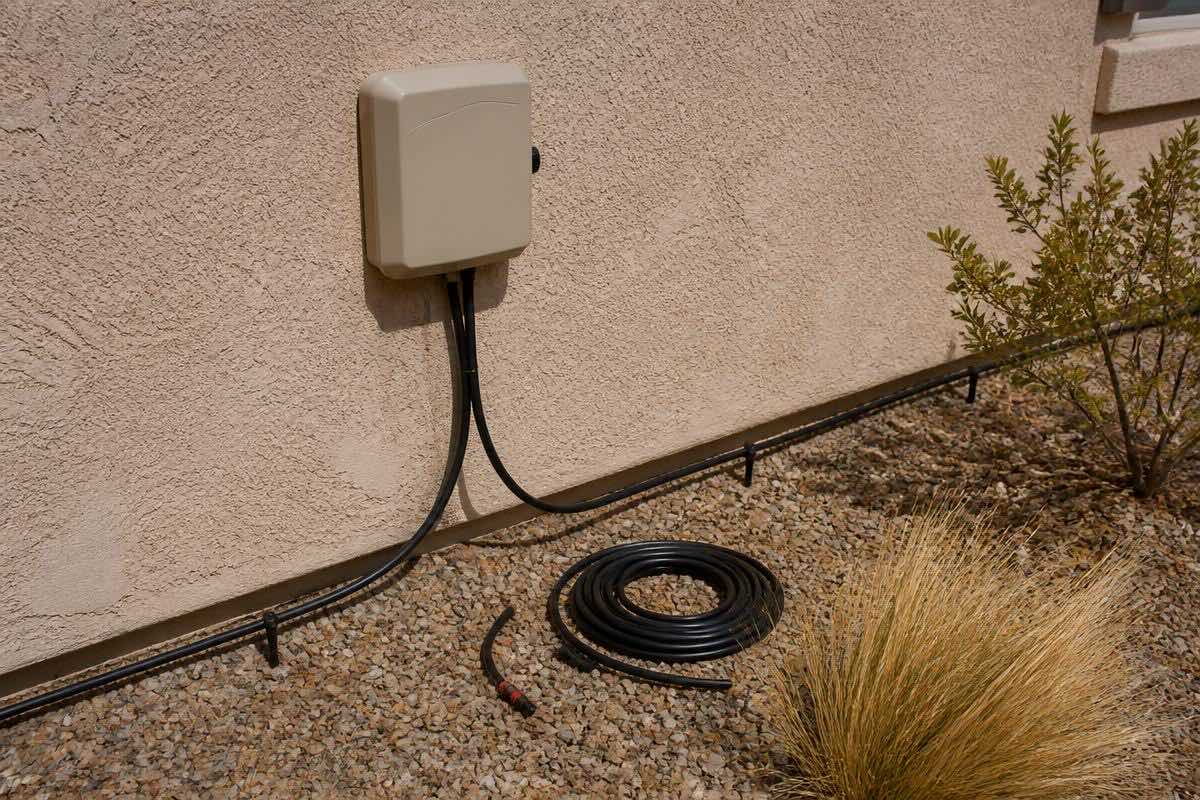
More households in Goodyear go looking for termite help than for anything else, and the ground underneath the city is the reason.
The desert subterranean termite lives in soil, and it lives in soil everywhere in Arizona. What decides whether they reach one particular house is not whether they are present but whether the conditions beside that house let them work, and the condition that matters is moisture. They build shelter tubes out of soil and saliva to stay damp while they travel, and every inch of tube costs them effort. Ground that stays wet near a foundation takes that cost away.
On a lot here the damp is usually coming from one of three places, and only one of them has anything to do with the river. The first is the drip line. A loop of irrigation run along the foundation to keep shrubs alive delivers water to the slab edge every time it comes on, and in a garden planted when the house was new the emitters have often been nudged nearer the wall over the years. The second is grading. The soil around a young slab was backfilled, backfill settles, and once the ground tilts back toward the building instead of away from it, every rain and every cycle drains to the foundation. The third is planting depth: bark mulch and dense shrubs pressed against render hold the damp in and hide the wall at the same time.
That is where a survey starts, and it is also where the cheap fixes are. Moving an emitter a foot and a half out, regrading a border so it falls away from the house, pulling a planting bed back off the render — none of that costs anything and all of it changes the conditions for good. Treatment applied over ground that is still being watered against the slab is working uphill.
What can be seen matters as well. Tubes on an open stem wall are obvious to anyone. Tubes behind a raised planter, under a paver run, or in a garage where boxes are stacked against the wall are not, which is why termite control in Goodyear is a lifting-and-moving job before it is a spraying one. Our termite control page covers how treatment is applied and what a warranty does and does not promise, and the termite inspection page sets out the formal report if a property is being bought or sold.
A mosquito season that never properly shuts
In most of the Valley mosquitoes are a summer argument. Here they are a longer one.
The species that bother people breed in still water and they need very little of it; a saucer under a plant pot will do. What is different about this city is that the water on the wider landscape does not vanish between storms, and the warm months at this elevation run at both ends of the year rather than only through the middle of it.
The order of work is the same as anywhere, though, and it begins on your own ground rather than at the river. A pool that has turned, a pool at a house nobody is living in, a drainage gap in a block wall that holds an inch after every watering, a bin lid, a bird bath, a saucer, a blocked roof drain, a tarpaulin over the garden furniture, the sump of an evaporative cooler. All of those are within arm’s reach, and between them they produce far more of what is biting you than a corridor half a mile away does.
When the source genuinely is not yours — water sitting on an empty lot, or out on open ground — the county is the route rather than us. The vector programme for this part of the Valley is run by Maricopa County Environmental Services, and the number for it is 602-506-6616. The same line handles flies, a colony of bees that has settled somewhere awkward, and rats. Mosquito control explains how we go about tracking down the water that is breeding them.
The green road
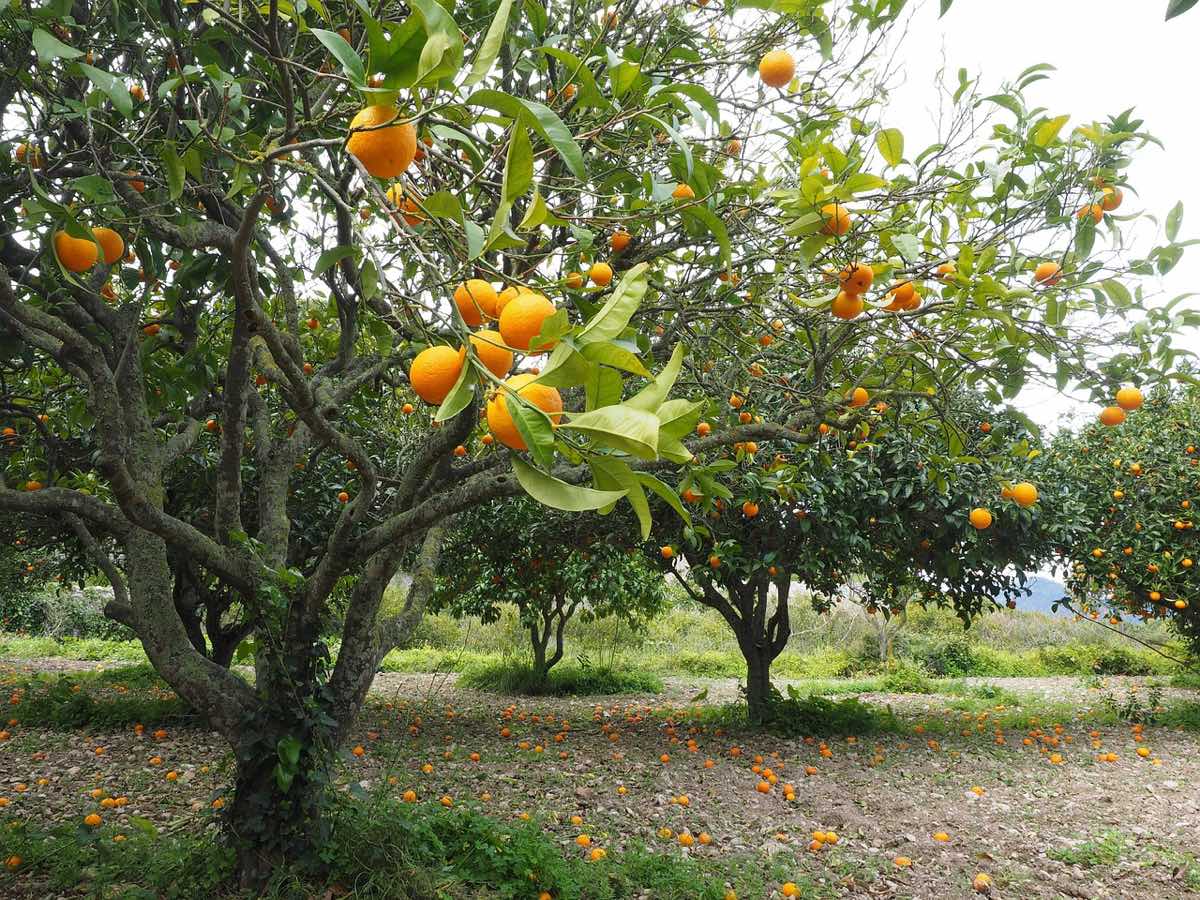
Roof rats are the other thing that permanent water buys you.
They want three things every day: water, something to eat, and a covered way of getting between the two. A landscape that stays green hands them all three without their ever having to cross open ground. Mature citrus and fig, oleander hedging, the dead skirt on an untrimmed palm, a line of trees along a wall, watered verges — together those make a road at roof height. In a dry suburb that road closes in high summer. Beside ground that stays green it does not close at all.
What that changes is the order of the work rather than the products. Cutting back whatever touches the roof and clearing fallen fruit from under a tree is worth more than anything that comes out of a tank, because it takes away the road instead of the animals using it. Then the building: roof drains, the point where a run of tile meets the fascia, vent screens, and wherever a service line goes through a wall. Trapping comes after those, not before them. Rodent control covers the animals themselves and how a job is run across the Valley.
Scorpions, and the southern edge
Scorpions come up far less often here than termites do, and it is more useful to say that plainly than to pad the page out with them.
Where they do come up it tends to be on the southern and western edges, where lots run out against the regional park, the mountains, or ground nobody has built on yet. Bark scorpions travel along walls and they climb, so the work that pays is a survey after dark with ultraviolet light to establish where they are actually sitting, followed by sealing at the places the survey names rather than everywhere at once. A lot four streets inside the built area is a different proposition from one on the boundary and should never be quoted as though the two were the same. Scorpion control sets out the method.
What a visit here covers
Every survey in this city includes a look at the water, and it is not an extra.
We walk the irrigation before we walk the walls: where the emitters actually sit, whether any of them are delivering against the slab, which way the ground falls, and whether anything on the lot is holding water between cycles. Then the building — the base of the render, the weep screed line, thresholds, utility penetrations, roof drains and the roof line itself. Then the boundary, and which direction pressure is arriving from, which on a lot near the corridor or the park is usually obvious within a minute of standing in the garden.
Whatever is found comes back to you in writing with photographs and a price, before anything is booked. Where the answer is a plumbing job or a landscaping job rather than a pest job, we say so. That happens more often here than it does in the drier parts of the metro, and it is a good deal cheaper to hear it from us than to pay for a treatment that the watering schedule is going to undo.
What changes the price
Where a property sits in relation to water is the first question, and it is not the same question as the postcode.
A lot backing the corridor, the park or a lake is a boundary job with a direction to it, and it is usually quoted for an interval rather than a single call. An interior lot in a built-out community three miles away is a perimeter job and normally a shorter one. Between those two ends, the irrigation layout moves the figure more than the size of the house does. Immediately west, Buckeye runs on canal water with no fixed delivery schedule at all, which changes the approach again.
After that come the ordinary variables: the age of the house and whether anything has been added to it, how many outbuildings there are, and whether you need one visit or a schedule. Where a property needs its watering changed as well as treating, both go in the quote, with the landscaping part described clearly enough that you can do it yourself if you would rather not pay anybody for it.
Businesses are a separate arrangement. Goodyear has a substantial working side — the industrial ground along the interstate, the airport with its maintenance hangars, and the shops and restaurants that arrived with a population up by almost a third since 2020 — and that side of things has a page of its own, commercial pest control. For a household, nobody gets a figure from us over the telephone; an exterminator quoting a Goodyear property sight unseen is quoting an average, and the averages here are wide.
Goodyear pest control questions
Which side of the river am I on, and does it matter?
Estrella and everything below it sits south of the Gila; the older parts of the city and the newer communities off the interstate sit north of it. It makes no difference at all to whether we come out, and quite a lot of difference to what we expect to find, because a lot south of the river is more likely to have a boundary with open ground, the park or a lake. Telling us which side, and what your garden backs onto, is more useful than the street name.
My house is only three years old. Can it really have termites?
Yes, and a new house is not the exception people assume. Age is not what protects a building; conditions are. A three-year-old slab with a drip line running along the foundation and a border that has settled back toward the wall is a friendlier prospect than a forty-year-old house on dry, well-graded ground. If you are inside a builder’s cover, find out what it says before you pay anybody — the termite pages linked above go through what treatment and a report each involve.
Do I have to change my irrigation, or can you just treat it?
We can treat it either way, and we will say plainly which of the two you are buying. Treatment on its own works, and it works for less time when the ground beside the slab is being watered every other day. Most of what we suggest is free and takes an afternoon: shift a few emitters away from the wall, pull a bed back off the render, put the fall back into a border. Nobody is obliged to do any of it, but you should know what difference it makes before you decide.
Is it worse near the lakes in Estrella?
Not worse, different, and less than people expect. Managed water is generally looked after; it is the unmanaged kind that causes trouble, and most of that is on private lots rather than in a lake. What a nearby lake does change is the reasonableness of expecting a single visit to settle things for a year. On that kind of boundary we would rather quote an interval and explain why than sell you one call.
If the season is longer here, when should I actually book?
Before the warm months open rather than once something has appeared indoors. On this ground that means acting earlier in the year than the standard Valley advice suggests, and not assuming the problem has gone away because the weather turned in October. The pattern we see is people ringing in May about something that was visible in March.
Do you cover all of Goodyear? It is an enormous city.
Yes, from the Glendale line in the north down through the older centre and across the river into Estrella and the Rainbow Valley. It is a hundred and ninety-one square miles, so cross streets genuinely help when you ring; a journey from one end of this city to the other is longer than a journey across two of the towns either side of it.
Related services
Termite Control in Phoenix
Moisture decides it, so the ground beside the slab comes first.
Termite Inspection
What an inspector is looking for, and when you need one in writing.
Mosquito Control in Phoenix
Finding the water that is producing them, beginning on your own lot.
Rodent Control in Phoenix
Roof rats, the routes at height, and closing them before any trap is set.
Scorpion Control in Phoenix
Boundary lots, a survey after dark, and the gaps worth sealing.
Commercial Pest Control
Warehouses, workshops and restaurants on the working side of the city.
Tell us where the water is
Roughly how your irrigation is laid out, whether the garden backs onto open ground or a corridor, and about when the house was built. Those three answers decide what the visit needs to be.