Termite control in Phoenix, and the WDIIR report your lender will ask for
Arizona sits in one of the highest termite-pressure regions in the country. We treat subterranean and drywood termites, and we issue the wood-destroying insect inspection report that escrow needs.
Get a free quote
No obligation. We reply within 2 hours.
Termite treatment in Phoenix starts under the slab
Almost every termite call we take in Phoenix comes down to one species group: desert subterranean termites working up from the soil into a slab-on-grade home. They do not arrive through the roof or the windows. They come up through cracks, expansion joints, plumbing penetrations and the gap where the slab meets the stem wall — which is why termite control in Phoenix is a soil and perimeter job before it is anything else.
Drywood termites are the second group, and they behave nothing like the first. They live entirely inside the timber, need no soil contact, and turn up in roof timbers, door frames and furniture. A trench-and-treat programme aimed at subterranean termites will not touch them, which is why identifying the species is the first thing that happens on site. Moisture is the other half of it, and it is not spread evenly across the Valley. Our Goodyear page goes through the three places on an ordinary lot where the ground stays damp against a slab.
The signs Phoenix homeowners actually notice first
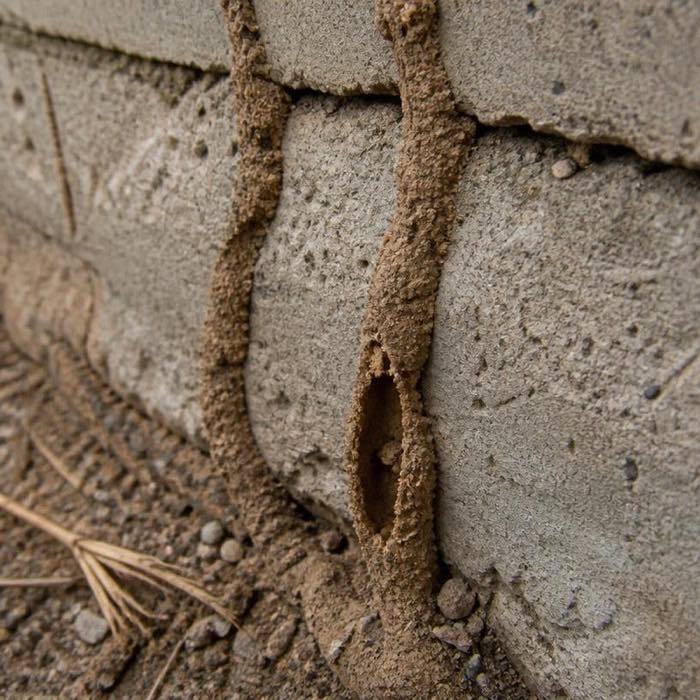
Almost nobody in Phoenix ever sees a termite. What people see is what the colony leaves behind, and it is usually found by accident — moving a box off the garage wall, or repainting a skirting board that gives slightly under the brush. That matters for timing, because subterranean colonies work out of sight for a long while before anything reaches the surface. The first sign you notice is rarely an early one.
Mud tubes
Pencil-width tubes of soil running up a foundation, stem wall, block wall or the inside of a garage. This is the single most common first sign of subterranean termites in the Valley.
Blistered or hollow trim
Skirting, door frames and window casings that sound hollow when tapped, or paint that looks bubbled from underneath.
Frass
Small piles of what look like coarse coffee grounds or sawdust beneath timber. Frass means drywood termites, not subterranean.
Discarded wings
Piles of identical wings on window sills or in spider webs after a warm evening, usually following rain. That is a swarm, and it means an established colony nearby.
Mud in a wall crack
Soil packed into an expansion joint or a crack in the slab, where there is no reason for soil to be.
A previous treatment sticker
Many Phoenix homes carry an old treatment notice in the garage or on the electrical panel. Worth checking — it tells us what was done and when.
How we treat termites in Phoenix
Inspection
A full interior and exterior inspection: perimeter, garage, stem wall, plumbing penetrations, attic timbers and any timber in ground contact. We identify the species and map the activity before quoting.
Treatment plan
Subterranean work means trenching and rodding the soil around the perimeter and treating slab penetrations. Drywood work is targeted — localised injection, or fumigation where the infestation is widespread.
Treatment
Applied to the areas identified, with a written record of what was treated and where. You are told which areas to stay clear of and for how long.
Monitoring and warranty
Re-inspection at agreed intervals, with bait stations where the site calls for them. The warranty terms are put in writing before work starts, and how we work explains the rest of what you should expect.
Termite inspection for a Phoenix home sale
The inspection itself has its own page, including what it costs in the Valley and what the inspector physically checks: termite inspection and WDIIR reports in Phoenix.
This is a separate service from termite treatment, and it is the one most people leave too late. If you are selling, buying or refinancing a property in Arizona, the document involved is the Wood-Destroying Insect Inspection Report — the WDIIR.
What it is
A standard two-page Arizona report recording visible evidence of wood-destroying insects, any visible damage, and the conditions that invite them, as they were on the day of inspection.
Who can issue it
Only a pest control business licensed by the Arizona Department of Agriculture. A general home inspection does not replace it, and a home inspector cannot issue one.
How long it lasts
Most lenders and title companies treat a WDIIR as valid for roughly 30 to 90 days from the inspection date. Order it too early in a long escrow and you may be asked to redo it.
What it does not do
It records what was visible and accessible on the day. It is not a warranty, and it does not cover what is hidden behind finished walls or stored goods.
The practical advice: book it once escrow timelines are firm, not in the last week before closing, and make sure the crawl space, garage perimeter and attic access are actually reachable on the day. An inspector who cannot reach an area has to note it as inaccessible, and that is what holds up a file.
Why Phoenix construction makes termites easier
Slab-on-grade
Most Valley homes sit directly on a slab. Two exceptions are worth knowing. Parts of Glendale pre-date slab construction and sit on raised floors over crawl spaces, which changes what an inspection can actually see. And on newer builds the soil was often treated before the slab went down — the Chandler page covers what that pre-treatment is worth and when it stops counting. Every expansion joint, plumbing penetration and settlement crack is a potential route from soil to timber, and none of it is visible once the floor is down.
Stucco to grade
Where stucco runs down past the weep screed to the soil, termites can travel up behind it completely hidden. It is one of the most common conducive conditions we write up.
Irrigation against the wall
Drip lines and flood irrigation keep the soil at the foundation damp year-round, which is exactly what subterranean termites need in a desert.
Timber in ground contact
Fence posts, patio posts, planter boxes and stored firewood against the house all give a colony a starting point a few feet from the structure.
What termite treatment costs in Phoenix
Termite work is quoted after inspection rather than from a price list, because the number is driven almost entirely by the structure rather than by the pest.
Linear feet of foundation
Trenching is priced by the perimeter that has to be treated, so footprint matters more than square footage.
Subterranean or drywood
Two different treatments. Localised drywood work can be modest; whole-structure fumigation is a different scale of job.
Access
Patios, pavers, planters and decking over the treatment line all add labour. So does a garage packed to the walls.
Existing damage
Treatment stops the colony. Repairing damaged timber is separate work, and we will tell you plainly if we think you need a builder rather than us.
A WDIIR inspection for a property sale is priced separately from treatment, and having one done does not commit you to treating with us.
The two treatment routes, and how to tell which one you were sold
Almost every termite quote in Phoenix is one of two things, and they behave differently enough that it is worth knowing which you are being offered before you compare prices.
A liquid termiticide barrier is the traditional route and still the most common here. A trench is cut around the foundation and treated at the label rate down to the footing, and anywhere concrete meets the house — patio slabs, garage floors, driveway abutments, porch decks — is drilled at intervals so the product can be injected underneath and the holes patched. The point is a continuous treated zone with no untreated gap, because a gap is exactly what a colony will find. Done properly it works quickly and the protection is measured in years. It is also the more disruptive option: drilling makes dust and noise, and patched holes in a decorative patio stay visible.
A bait system puts monitored stations in the soil around the perimeter at intervals, and swaps in an active bait when termites find one. The bait is carried back and shared through the colony, so it works on the colony rather than on a barrier line. There is far less drilling, and it suits properties where trenching is impractical — heavy hardscape, a well, or a slab you do not want cut. The honest trade-off is time: elimination is measured in months rather than days, and the stations only work if someone actually comes back to service them on schedule.
Neither is universally better. A structure with active mud tubes and a lender waiting on a report is usually a liquid job. A property with a history of repeat activity, or one where drilling is genuinely a problem, is often a better fit for baiting. The identification guide shows how to tell subterranean evidence from drywood frass before you call anyone. What matters is that whoever quotes you can explain why they chose the one they chose for your building, in terms of your foundation and your hardscape. Build date is a clue in itself. A house finished between 1978 and 1997 was almost certainly pre-treated during construction, and that chemistry stopped doing anything a long time ago, which is where our Sun City West page begins.
What a termite warranty actually covers
This is where termite jobs differ most, and where the price difference between two quotes usually lives. Ask these before you sign rather than after.
Retreat-only or repair?
A retreat warranty means they come back and treat again for free if termites return. A repair warranty also covers fixing the damage. Repair cover costs more and is far less common. Most quotes are retreat-only, and many people assume otherwise.
How long, and what renews it?
Typical terms run a year initially with the option to renew annually. Find out what the renewal costs, whether it requires an inspection, and what happens to your cover if you skip a year.
Is it transferable?
If you sell, can the warranty move to the buyer, and is there a fee? A transferable warranty is a real selling point in escrow, so it is worth knowing.
What voids it?
Usually the things that break the treated zone: adding a patio or planter against the wall, changing the grade, drilling through a treated slab, or a leak left running. Ask for the list in writing.
What is actually excluded?
Drywood termite activity is often excluded from a subterranean treatment warranty, because it is a different pest reached a different way. Check which one you are covered for.
Who holds it?
A warranty is only as good as the business behind it. Confirm the company name on the paperwork matches the licensed business, and keep the treatment record — you will want it at sale.
We put the terms in writing before work starts rather than in a folder afterwards, and we will tell you plainly which of the two treatment routes we think your property needs and why. Before any of that, it is worth knowing which of them you actually have — our guide to termites in Arizona covers the three species that matter here, and the common one that does not.
Termite questions we get asked in Phoenix
How do I know if it is termites or ants?
The quickest tell is the waist and the wings. Termite swarmers have a straight body with no pinch at the waist, and four wings all the same length. Flying ants have an obvious narrow waist and front wings noticeably longer than the back pair. If you have a pile of identical discarded wings on a window sill after a warm night, that is almost always termites.
Do I need a termite inspection to sell my house in Phoenix?
Arizona property sales commonly involve a wood-destroying insect inspection report, and lenders frequently require one before closing. It is not automatic on every transaction, so check with your agent or lender early — but if it is going to be needed, book it once your escrow dates are firm rather than in the final week.
How long is a WDIIR valid?
Most lenders and title companies treat it as good for around 30 to 90 days from the inspection date. That window is why timing matters: an inspection done at the very start of a long escrow can expire before closing and have to be repeated.
Can I treat termites myself?
Over-the-counter products deal with the termites you can see, which is a fraction of a colony. Subterranean termites live in the soil and reach the structure through routes you cannot access without trenching. DIY treatment usually delays a proper one by a season, and the damage continues in the meantime.
How fast do termites cause damage?
Slowly enough that people miss it, and steadily enough that it matters. Damage accumulates over months and years rather than weeks — which is why the homes with the worst damage are usually the ones where mud tubes were noticed and left alone for a year or two.
Do termites come back after treatment?
A treated perimeter is a barrier, not a permanent seal. Landscaping changes, new plumbing work, added patios and settlement cracks can all open a route later. That is what the re-inspection schedule is for, and it is why we put the warranty terms in writing before starting.
Is treatment safe around children and pets?
We use EPA-registered products applied to the soil and to targeted structural points rather than to living space. Your technician will tell you exactly which areas to keep clear and for how long, and will point out anything that needs moving before we start.
We had a treatment years ago — are we still covered?
Only if the warranty was renewed. Many Phoenix homes carry a treatment sticker in the garage from a previous owner with no live agreement behind it. Send us a photo of the sticker and we can usually tell you what was applied and roughly when.
Found mud tubes, or need a report for escrow?
Tell us what you have seen and where, or give us your closing date. Inspection first, written findings, and a flat price before any treatment starts.